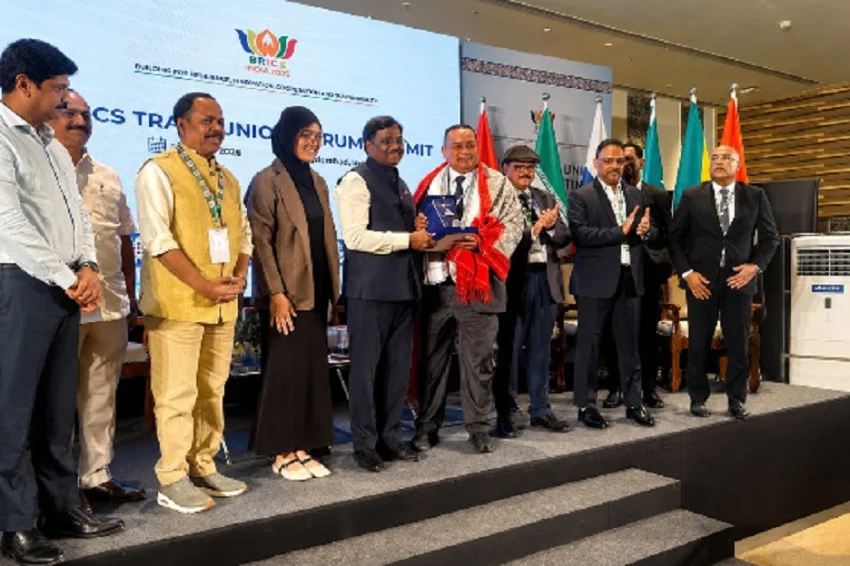
Indonesian Union Pushes for Worker-Centric AI at BRICS Forum 2026
Indonesian labor union KSPSI AGN announced its intention to advocate for the development of Artificial Intelligence (AI) in a manner that protects workers' rights at the BRICS Forum in 2026. This move stems from concerns over AI's impact on the labor market.
The Indonesian labor union KSPSI AGN (Konfederasi Serikat Pekerja Seluruh Indonesia - Dewan Pimpinan Pusat Asosiasi Gerakan Nelayan) has announced its intention to strongly advocate for Artificial Intelligence (AI) technology to be developed with a focus on workers' rights at the upcoming BRICS Forum in 2026. This proposal arises from concerns over the rapid advancement of AI technology, which has the potential to bring significant changes to employment patterns and working conditions. KSPSI AGN argues that AI should not merely be a tool for efficiency or profit maximization, but should be introduced and utilized with consideration for aspects such as workers' rights protection, fair wages, and the maintenance of safe working environments. BRICS (Brazil, Russia, India, China, South Africa) is a framework for deepening cooperation among emerging economies and is increasingly important as a forum for discussing global technological innovations like AI. Through this forum, KSPSI AGN aims to appeal to not only Indonesia but also all BRICS member states, and furthermore, the international community, regarding the importance of worker-centric AI development and implementation. AI development is predicted to drive automation and efficiency in a wide range of sectors, from manufacturing and services to white-collar professions. On the other hand, risks such as increased unemployment, widening skill gaps, and enhanced surveillance have also been pointed out. Labor unions are seeking an approach that prioritizes worker protection, working in cooperation with policymakers and companies to address these challenges.
多角的分析
AIの労働市場への影響は、生産性向上による経済成長の可能性と、一部職種の代替による失業リスクという両面を持つ。KSPSI AGNの提言は、AI導入による経済的恩恵が一部の企業や資本家に集中せず、労働者にも公平に分配されるメカニズムの構築を求めるものと解釈できる。これは、所得格差の拡大を防ぎ、持続可能な経済成長を目指す上での重要な論点となる。
AI技術への投資は、その恩恵が生産性向上や新たなビジネスモデル創出に繋がることから、投資家にとって魅力的である。しかし、労働者の権利保護を重視する動きは、AI導入コストの増加や、一部のAI開発・導入プロジェクトの遅延に繋がる可能性も示唆する。投資家は、AI技術の進化と並行して、労働市場の安定化や社会的な受容性も考慮した、より長期的な視点での投資判断が求められるだろう。
AIによる自動化は、特にルーチンワークに従事する労働者や、特定のスキルを持たない層に影響を与える可能性がある。KSPSI AGNの提言は、AI導入によって職を失う、あるいは労働条件が悪化する可能性のある労働者たちの不安を代弁するものである。インドネシアのような多様な社会構造を持つ国では、地域間や産業間のAI導入格差が、新たな社会的不平等を生まないかという懸念も存在する。AI技術の普及は、教育システムや職業訓練プログラムの変革も促すだろう。
AIの発展は、一般市民の生活にも間接的、直接的に影響を与える。例えば、AIによるカスタマーサービスの自動化は、利便性を高める一方で、人間との温かいやり取りを求める層には不満を生むかもしれない。また、AIによる情報分析や推薦システムは、個人の情報消費行動を大きく左右する。KSPSI AGNの提言は、AIが市民生活の質を低下させることなく、むしろ向上させる形で活用されるべきだという、市民の潜在的な願望を反映しているとも言える。
背景・歴史的文脈
AI技術の急速な発展は、2010年代後半から顕著になり、2020年代に入りさらに加速している。特に、生成AIの登場は、これまで人間が行ってきた知的作業の一部を代替する可能性を示唆し、世界中の労働市場に大きな関心と懸念を引き起こした。インドネシアにおいても、製造業を中心に自動化が進む一方で、サービス業やIT分野でのAI活用が期待されている。しかし、AI導入による雇用への影響や、労働者のスキル再教育の必要性については、これまでも労働組合や政府の間で議論が重ねられてきた。今回のKSPSI AGNのBRICSフォーラムでの提言は、こうした国内での議論を、国際的な舞台で展開しようとする動きである。
原文ソース
Sindonews