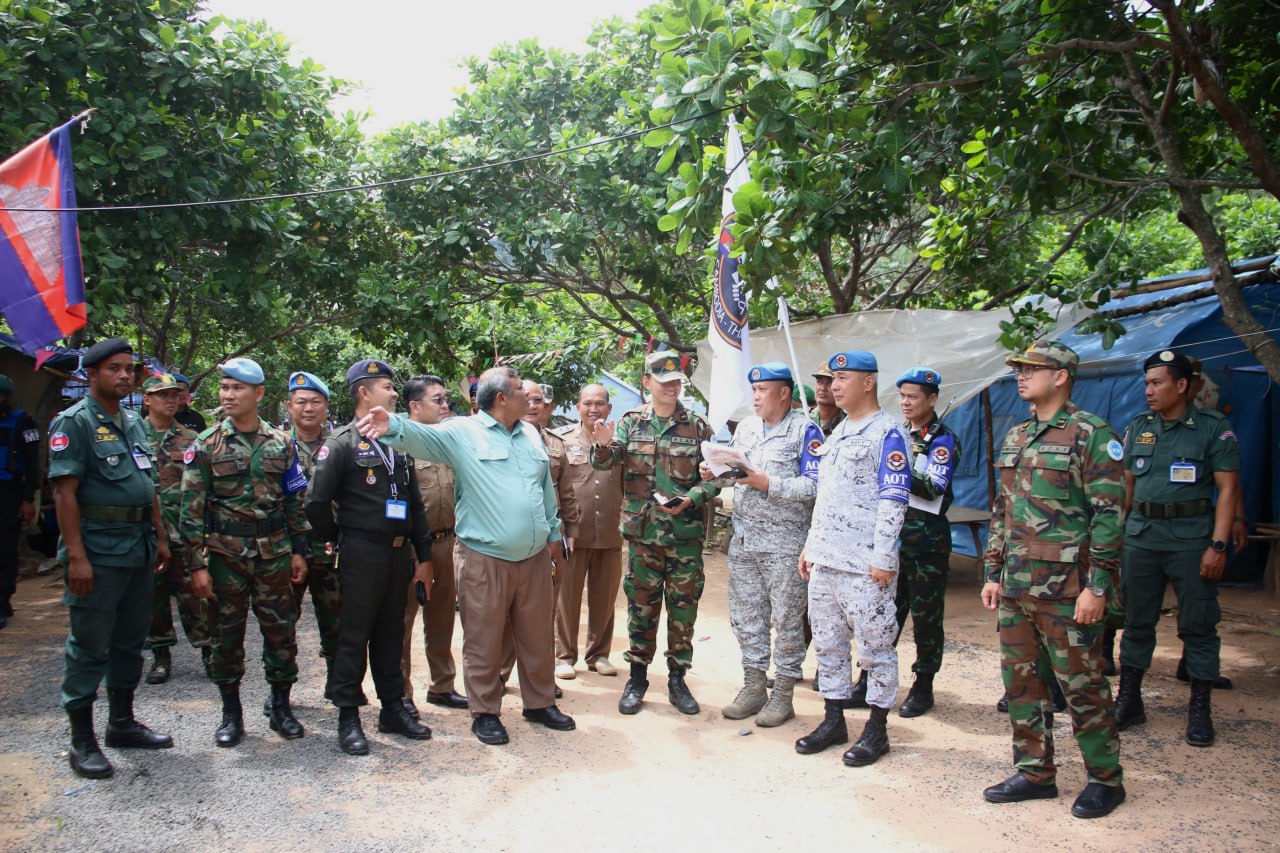
ASEAN Observers Visit Cambodian Refugees, Border Issue Urgency Highlighted
An ASEAN Observer Team visited approximately 300 Cambodian families displaced by a border dispute in Preah Vihear province. The team inspected their living conditions, highlighting that illegal occupation by Thai forces and destruction of property prevent their return, underscoring the urgent need for joint border demarcation.
On July 14, 2026, Major General Maley Suchata, spokesperson for the Ministry of National Defence, announced that the ASEAN Observer Team–Cambodia (AOT-KH), led by the Chief of Mission from the Republic of the Philippines, visited and inspected the living conditions of approximately 295 families of temporarily displaced Cambodian citizens at Wat Peung Ngam Safety Center in Tbaeng Meanchey District, Preah Vihear Province. These displaced citizens have not yet been able to return to their homes due to illegal occupation of Cambodian territory by Thai military forces in certain areas, involving the installation of barbed wire and containers, as well as the destruction of their homes. The observation and visit by the ASEAN Observer Team underscore the absolute necessity of commencing border demarcation work by the Joint Border Committee (JBC) of Cambodia-Thailand as soon as possible. This aligns with the agreement reached in Point 3 of the Joint Communiqué of the 3rd Special Meeting of the Cambodia-Thailand General Border Committee (GBC) on December 27, 2025, to allow innocent Cambodian civilians to return to their homes safely and with dignity, without obstruction. Cambodia firmly upholds its position in defending the international border line between Cambodia and Thailand, as inherited from the Indochina-Siam Boundary Commission. This is in accordance with international law, the principle of 'Uti Possidetis Juris,' the French-Siam conventions and treaties, and the boundary demarcation maps and minutes of the Indochina-Siam Boundary Commission, as well as other relevant agreements and documents previously agreed upon by both parties. Cambodia unequivocally rejects any alteration of border lines resulting from the use of force.
多角的分析
タイ軍による国境地帯の不法占拠とインフラ破壊は、カンボジア側の経済活動に直接的な打撃を与えている。土地の利用制限、農業や牧畜への影響、そして避難民の生活支援にかかるコストは、地域経済の停滞を招く。また、国際的な境界紛争は、外国からの投資家にとってリスク要因となり、直接投資や観光客の減少につながる可能性がある。カンボジア政府は、早期の境界確定を通じて経済的安定を取り戻す必要がある。
国境地帯におけるタイ軍による不法占拠とインフラ破壊の事実は、カンボジアへの投資リスクを増大させる。特に、国境付近での土地利用や資源開発に関心を持つ投資家にとって、政治的・軍事的な不安定さは懸念材料となる。ASEANオブザーバーチームの視察は、国際社会がこの問題に関心を寄せていることを示唆するが、具体的な解決策が早期に実施されない場合、投資家はより安定した市場へと資本をシフトさせる可能性がある。カンボジア政府による明確な対応と、タイとの早期解決に向けた外交努力が、投資家の信頼回復には不可欠である。
タイ軍による国境地帯の不法占拠と住居破壊により、約300世帯のカンボジア市民が故郷を追われ、避難生活を余儀なくされている。これは、彼らの生活基盤を奪い、精神的な苦痛を与えている。避難センターでの生活は、食料、水、医療、教育などの基本的なニーズを満たす上での困難を伴う。また、国境紛争の長期化は、地域社会の分断や民族間の緊張を高める可能性も否定できない。市民は、一日も早い安全な帰還と、失われた生活の再建を強く願っている。
タイ軍による国境地帯の不法占拠と住居破壊により、プレアビヒア州の約300世帯が避難生活を送っている。彼らは、安全な住居を失い、日々の生活に困窮している。避難民の中には、農業や漁業で生計を立てていた者も多く、帰還できないことで収入源を断たれている。子供たちの教育機会も失われ、将来への不安を抱えている。避難民は、一日も早く故郷に戻り、平穏な生活を取り戻せることを切望している。
背景・歴史的文脈
カンボジアとタイの国境問題は、植民地時代に遡る複雑な歴史的経緯を持つ。特にプレアビヒア寺院周辺の国境線は、1907年のフランス・シャム条約とそれに続く地図によって定められたが、その解釈を巡って両国間で長年対立が続いている。2008年にはプレアビヒア寺院の世界遺産登録を契機に両国間で軍事衝突が発生し、緊張が高まった。その後、ASEANの仲介や国際司法裁判所の判断などを経て、一定の緊張緩和が見られたものの、国境地帯における領土問題や不法越境、資源問題などは依然として火種となっている。今回の事案は、過去の紛争の記憶を呼び覚ますとともに、両国間の信頼関係構築の難しさを示している。
原文ソース
CPP Cambodia