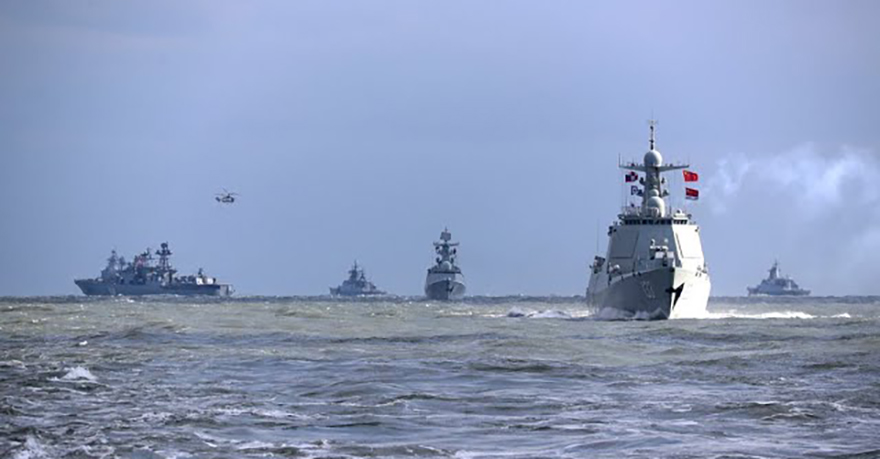
China and Russia Conclude Major Joint Naval Drills in Yellow Sea
China and Russia have concluded a major joint naval exercise in the Yellow Sea. Both nations stated the drills aimed to enhance mutual trust, improve joint operational capabilities, and deepen traditional friendship. Training included anti-submarine operations, anti-ship attacks, and rescue missions.
China and Russia have concluded a major joint naval exercise in the Yellow Sea. According to photos released by the Russian Ministry of Defense on July 13, warships from China and Russia conducted joint military drills in the Yellow Sea last week. The joint exercise commenced on July 6 at the military port of Qingdao in Shandong Province, eastern China, and concluded on July 11. In a statement on July 12, the Chinese Ministry of National Defense stated that the joint exercise could further enhance mutual trust between the two sides, improve joint operational capabilities, and strengthen the traditional friendship between the two countries. According to Moscow, warships from both countries trained together for several days for missions including anti-submarine operations, combat against enemy ships on the sea surface, and rescue operations. The exercise also simulated operations to repel drones and drone ships on the sea surface. The joint naval exercise has been held annually since 2012 and demonstrates increasingly strong military cooperation between Russia and China. According to Chinese officials, the 2026 joint naval exercise is set to include the participation of Russian and Chinese submarines. The Chinese Ministry of National Defense emphasized that the armed forces of both countries proceeded to the Pacific Ocean to conduct joint patrols at sea.
多角的分析
本演習は、直接的な経済的影響は限定的であるものの、中国とロシアの軍事協力強化は、東アジアおよびグローバルな安全保障環境に間接的な影響を与える可能性がある。特に、海上交通路の安全保障や、地域における軍事バランスの変化は、貿易や投資のリスク要因となり得る。カンボジア経済は、対中関係や国際情勢の安定に依存しているため、こうした地政学的な動きは注視する必要がある。
中露の合同軍事演習は、地域における地政学的な緊張の高まりを示唆する。投資家にとっては、これは安全保障リスクの増加と見なされる可能性がある。特に、台湾海峡や南シナ海といった主要な海上交通路の安定性に対する懸念が高まれば、サプライチェーンの混乱や貿易ルートの変更リスクが増大し、アジア太平洋地域への投資判断に影響を与える可能性がある。カンボジアへの投資においても、こうした国際情勢の不安定化は、経済成長の見通しに不確実性をもたらす要因となり得る。
この合同演習自体がカンボジア国民の直接的な生活に影響を与えるわけではないが、中国とロシアの連携強化は、より広範な国際政治の力学に影響を与える。カンボジアは中国との経済関係が深いため、中露の軍事協力の進展は、カンボジアの外交政策や国際社会における立ち位置に間接的な影響を及ぼす可能性がある。また、地域における軍事的な緊張の高まりは、カンボジア国内の安定や将来への見通しに対する漠然とした不安を生む可能性も否定できない。
今回の演習は黄海で行われ、カンボジア市民の直接的な生活に影響はない。しかし、中国とロシアという二大国の軍事協力強化は、国際情勢の不安定化を招く可能性があり、カンボジアが依存する国際貿易や観光業に間接的な影響を与えることが懸念される。特に、地域紛争の激化は、カンボジア経済の回復にブレーキをかける要因となり得る。
背景・歴史的文脈
中国とロシアは、2012年から毎年合同海軍演習を実施しており、両国間の軍事協力の深化を示している。この演習は、米国とその同盟国に対する共同の抑止力として機能する側面がある。特に、近年、中国の海洋進出やロシアのウクライナ侵攻を巡る国際情勢の緊迫化を受け、両国の連携は一層強まっている。今回の演習は、太平洋地域における両国の影響力拡大と、既存の国際秩序への挑戦という文脈で捉えることができる。
原文ソース
Koh Santepheap Khmer