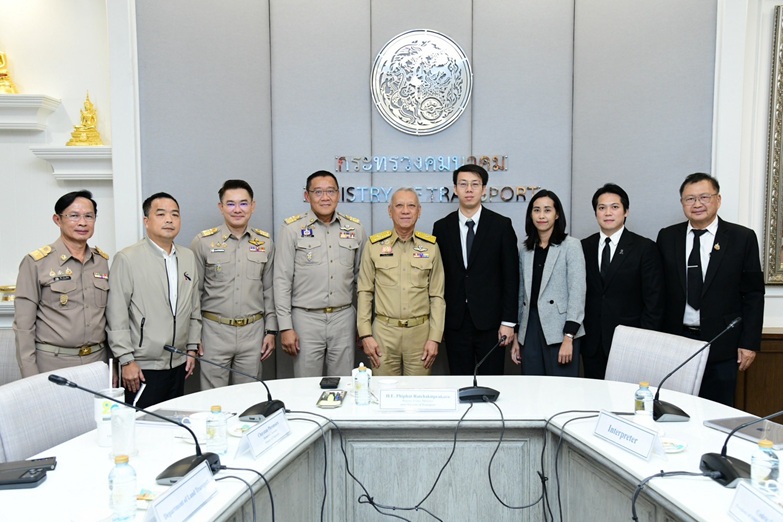
Thailand to Set EV and Autonomous Driving Standards to Support Future Mobility
The Thai government is pushing for the establishment of national standards for electric vehicles (EVs) and autonomous driving systems. This initiative aims to enhance the country's capacity to adapt to the rapidly evolving future mobility sector, fostering related industries and strengthening international competitiveness.
The Thai government is set to promote the establishment of national standards for electric vehicles (EVs) and autonomous driving systems. This initiative aims to enhance the country's capacity to adapt to the rapidly evolving future mobility sector, fostering related domestic industries and strengthening international competitiveness. This effort is viewed as a crucial step for Thailand to maintain and improve its position as an automotive industry hub in Southeast Asia. Electrification and autonomous driving technologies are driving a paradigm shift in the automotive sector, and as countries race to standardize, Thailand is also introducing concrete policies to avoid falling behind. The establishment of national standards is essential for ensuring product safety, compatibility, and consumer trust. This will enable domestic manufacturers to proceed with development based on clear guidelines, and is expected to promote foreign investment and technology transfer. Furthermore, the development of related infrastructure, such as charging networks and communication systems, may also proceed in parallel with standardization. Thailand has historically played a leading role in the automotive industry within the ASEAN region, and its future growth hinges on its ability to adapt to next-generation technologies like EVs and autonomous driving. This move towards standardization signals Thailand's commitment to strengthening strategic investments and policies towards the realization of a sustainable mobility society.
多角的分析
タイ政府によるEVおよび自動運転システムの国家標準策定は、国内自動車産業の高度化と国際競争力強化に向けた戦略的な経済政策と言えます。標準化により、部品の互換性向上やサプライチェーンの効率化が期待され、EV関連技術への投資を呼び込む可能性があります。これは、タイが従来のエンジン車中心の産業構造から、次世代モビリティへの転換を加速させるための重要な触媒となり得ます。特に、ASEAN地域における自動車製造拠点としての優位性を維持・拡大するためには、先進技術への早期対応が不可欠です。
EVおよび自動運転システムの国家標準策定は、投資家にとって明確な市場の方向性を示すシグナルとなります。標準化された基準は、新規参入企業や既存企業の開発リスクを低減させ、設備投資や研究開発への資金投入を促進する可能性があります。特に、EVバッテリー、充電インフラ、ソフトウェア開発などの分野への投資機会が増加すると考えられます。ただし、標準策定の具体的な内容やスケジュールによっては、投資判断に影響を与える可能性もあるため、今後の動向を注視する必要があります。
EVや自動運転システムの標準化は、タイ国民のモビリティ体験に直接的な影響を与えます。安全で信頼性の高い次世代車両が普及することで、交通事故の削減や移動の利便性向上が期待されます。また、環境負荷の低減は、都市部の大気汚染問題の改善にも寄与する可能性があります。一方で、新しい技術への適応や、それに伴う雇用構造の変化(例:従来の自動車整備士のスキルシフト)への対応も、社会的な課題として考慮されるべきです。
タイ政府がEVと自動運転の国家標準を策定するというニュースは、バンコク市民の日常生活に大きな変化をもたらす可能性があります。例えば、自動運転タクシーやバスの導入が進めば、通勤のストレス軽減や移動コストの削減につながるかもしれません。また、EVの普及は、バンコクの深刻な大気汚染問題の改善に貢献することが期待されます。しかし、新しい技術へのアクセスが一部の層に限られる可能性や、充電インフラの整備が地域によって偏る懸念も考えられます。
背景・歴史的文脈
タイはASEAN地域における自動車生産の中心地として長年発展してきました。しかし、世界的なEVシフトの波は、従来のエンジン車中心の産業構造に変化を迫っています。タイ政府は、この変化に対応し、自動車産業の競争力を維持・強化するため、EV関連技術への投資を奨励し、インフラ整備を進めてきました。今回の国家標準策定の動きは、こうした長期的な産業戦略の一環であり、EVおよび自動運転技術の安全かつ効率的な普及を促進し、タイを次世代モビリティ分野のリーダーへと押し上げることを目指しています。
原文ソース
MGR Online (Business)