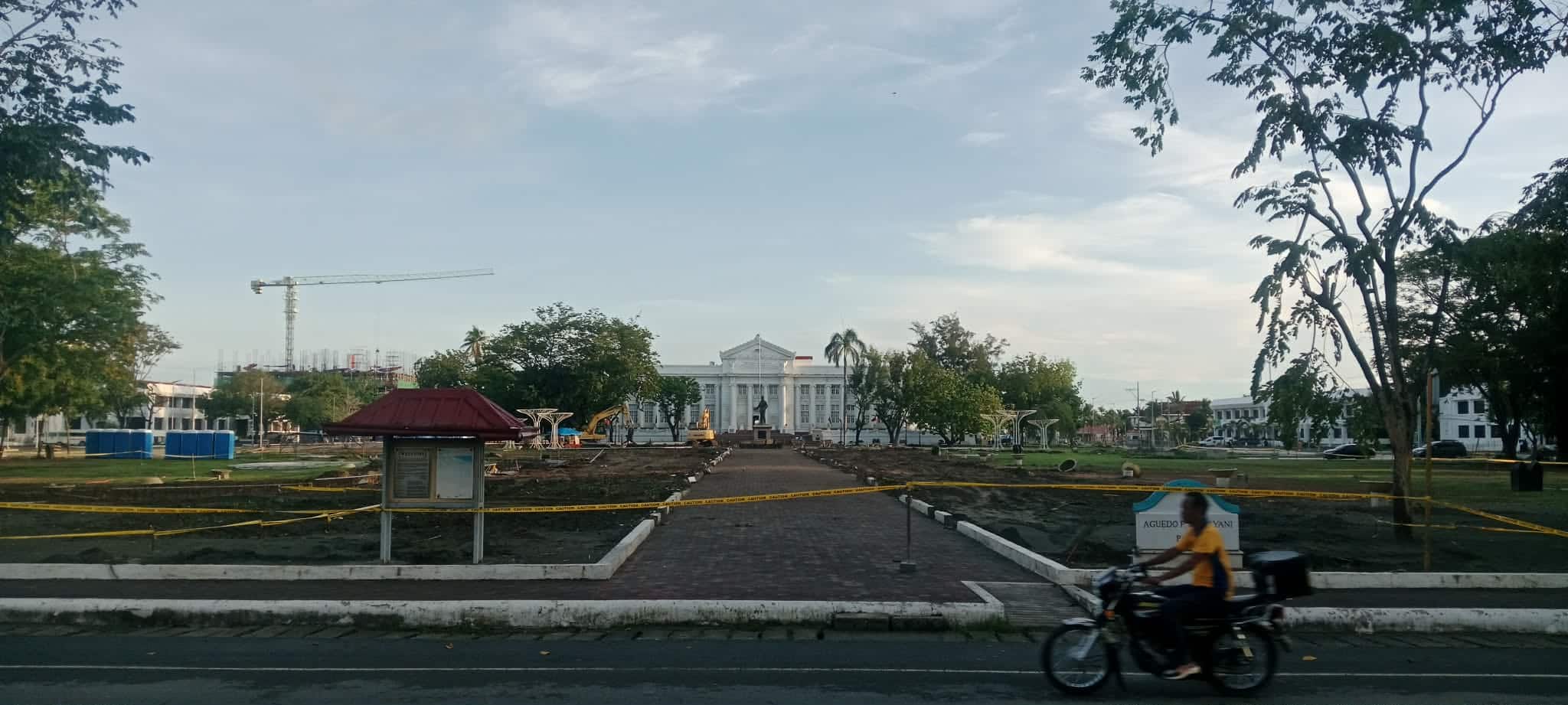
Environment advocates decry felling of old trees for Pangasinan capitol development
Infrastructure
2026年7月3日
5
Inquirer NewsInfo

Environment advocates decry felling of old trees for Pangasinan capitol development

AI サマリー

Environment advocates have strongly condemned the felling of dozens of old trees on the Pangasinan provincial capitol grounds for a development project, stating that "natural heritage should not be sacrificed." The provincial governor explained that the removed trees were non-native species and that native species would be preserved and replanted.

LINGAYEN, Pangasinan, Philippines — Environment advocates have condemned the cutting of decades-old trees within the Pangasinan provincial capitol grounds, asserting that redevelopment should not come at the cost of natural heritage. At least 25 trees lining the central pathway to the capitol facade were felled starting Monday noon and continued until the early hours of Tuesday, according to a local resident who spoke to the Inquirer on condition of anonymity for security reasons. The Department of Environment and Natural Resources (DENR) had granted the provincial government a permit to cut 192 trees on August 8 last year. The trees scheduled for removal as part of the ongoing development of the capitol grounds are between 10 and 50 years old. Community Environment and Natural Resources Officer Noriel Nisperos stated that the permit issuance "went through [a] process" and that the "trees covered already have cavities." Pangasinan Governor Ramon Guico III, in a phone interview, said the trees cut were non-native and invasive species like mahogany. He assured that native species, such as balete, would be preserved, and those removed would be replaced. "They will be replaced with dita (indigenous evergreen tree) and possibly Palawan cherry ('balayong'), which are both native species," he told the Inquirer. Guico clarified that the project is for "urbanscaping or open space planning, and no building will be built on the site." He added, "Everything is planned, including drainage, traffic lights, and it will be pedestrian friendly. We will commission an artist to make a sculpture of Princess Urduja that will be placed in the middle as a symbol to unify all of us." According to local legend, Princess Urduja, revered for her courage and leadership, ruled the Kingdom of Tawalisi (located somewhere along the coastline of modern-day Pangasinan) in the 14th century. Guico said, "Just give us a couple of months. What is taking a long (time) is the construction of the drainage, but the already grown (balled) native trees will be planted in the area and with the rains, will flourish." In earlier interviews, he said the projects planned at the once tree-filled grounds were "something of cultural substance, a place where families can enjoy frolicking on weekends, iconically inspiring, intellectually engaging, and historically nostalgic." The area behind the capitol has been redeveloped with the construction of a reflecting pool and an interactive fountain. However, the Pangasinan People’s Strike for the Environment (PPSE) stated that the project "exemplifies an alarming development paradigm where redevelopment, commercialization, and infrastructure expansion are increasingly prioritized over ecological protection and the public’s right to a healthy environment." The group argued in a statement, "The trees that stand within the capitol grounds are more than landscape features. They are living environmental infrastructure that has taken decades to grow—absorbing carbon emissions, regulating urban temperatures, mitigating flooding, improving air quality, and providing refuge for local biodiversity. Their destruction is not merely an alteration of the landscape; it is the irreversible loss of ecological services that no newly planted sapling can immediately replace." PPSE acknowledged the need for development and infrastructure improvement but "reject[s] the false choice that development must come at the expense of nature." They concluded, "Genuine progress should enhance, not diminish, the ecosystems that sustain our communities. Redevelopment should be designed around environmental preservation—not the other way around."

多角的分析

経済的影響

州庁舎敷地の再開発は、地域経済への直接的な影響は限定的であると考えられる。しかし、環境保護団体が指摘するように、開発が生態系サービスを損なう場合、長期的に見れば観光資源の劣化や、洪水などの自然災害リスクの増大を通じて、地域経済に間接的なコストをもたらす可能性がある。また、在来種への植え替え計画は、苗木の生産・供給業者や造園業者にとって新たなビジネス機会となり得る。

投資家心理

このニュースは、直接的な投資機会を示すものではない。しかし、フィリピンにおけるインフラ開発と環境保護の間の緊張関係は、環境・社会・ガバナンス(ESG)要因を重視する投資家にとって、地域開発プロジェクトのリスク評価において考慮すべき点となる。特に、環境アセスメントや地域社会との合意形成プロセスが不十分な場合、プロジェクトの遅延や評判リスクにつながる可能性がある。

社会的影響

パンガシナン州庁舎敷地での老木伐採は、地域住民にとって、長年親しんできた景観の変化や、緑地減少による環境悪化への懸念を引き起こしている。特に、伐採された木が提供していた日陰や、地域に根差した生物多様性の喪失は、住民の生活の質に影響を与える可能性がある。一方、州知事は、新しい彫刻や歩行者フレンドリーな空間の整備を通じて、市民の憩いの場や地域文化の象徴となる空間を創出する意図を示しており、開発の意義を訴えている。この対立は、開発と環境保全のバランスを求める地域社会の声と、行政の推進する開発計画との間の、公共の課題としての側面を浮き彫りにしている。

市民の声

パンガシナン州の住民にとって、州庁舎前の緑豊かな空間は、日々の生活の中で親しみのある景観の一部であった。数十年にわたり成長してきた木々が伐採されたことは、多くの住民にとって残念な出来事であり、特に環境保護を重視する人々からは、開発が自然遺産を犠牲にしているという強い懸念が表明されている。一方で、知事が語るように、再開発によってより快適で文化的な空間が生まれることへの期待も一部には存在するだろう。しかし、伐採された木がもたらしていた恩恵、例えば日陰や涼しさ、そして生物多様性の喪失といった、目に見えにくい、しかし生活に根差した影響について、住民は不安を感じていると考えられる。

背景・歴史的文脈

フィリピンでは、経済成長とインフラ開発が優先される傾向にあるが、同時に国民の間で環境保護への意識も高まっている。過去にも、都市部での道路拡張工事や大規模開発プロジェクトにおける樹木伐採に対し、環境保護団体や市民からの反対運動が度々起こっている。DENRによる伐採許可制度は存在するものの、その運用や、開発計画における環境アセスメントの透明性、地域住民の意見反映のあり方については、常に議論の的となっている。特に、開発と環境保護の間の「偽りの選択肢」というPPSEの指摘は、フィリピンにおける開発パラダイムへの根本的な問いかけを含んでいる。

原文ソース

Inquirer NewsInfo

原文を読む