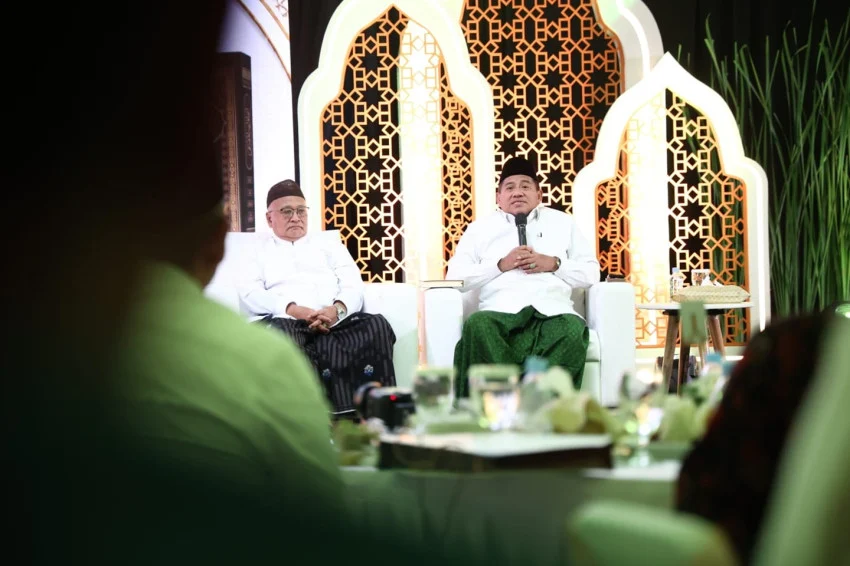
NU Needs Leaders Like Kiai Zulfa to Bridge Islamic Texts with Modern Issues, Says Gus Aab
Gus Aab stated that Nahdlatul Ulama (NU) in Indonesia requires leaders capable of connecting Islamic classical texts (turats) with contemporary societal issues. This highlights a challenge for NU in maintaining its leadership and societal influence.
A view has been expressed that the Indonesian Islamic organization Nahdlatul Ulama (NU) needs leaders who can bridge Islamic classical texts (turats) with the various issues facing contemporary society. This perspective was stated by Gus Aab, suggesting that for NU to maintain its societal influence and continue to play its role in modern society, the presence of leaders capable of building bridges between traditional Islamic thought and complex contemporary challenges is indispensable. NU is one of the most influential Islamic organizations in Indonesia, and its teachings and leadership have had a significant impact on Indonesian society, culture, and politics. However, in a rapidly changing modern society, the question arises as to how traditional Islamic teachings can be applied to contemporary issues such as technological advancements, economic disparities, environmental problems, and the coexistence of diverse values. Gus Aab's observation suggests that as a countermeasure to these challenges faced by NU, it is urgent to cultivate and appoint leaders who possess not only a deep understanding of Islamic classics but also sharp insight into the trends of modern society and the needs of the people. Such leaders are considered to play a crucial role in preventing NU's teachings from becoming outdated and in continuing to earn the trust of not only its followers but also society as a whole. Source: Sindonews
多角的分析
本件は直接的な経済的影響を報じていないが、NUのような大規模組織の指導力は、イスラム経済やハラル産業の発展方向性、さらには社会全体の消費行動や倫理観に間接的な影響を与える可能性がある。現代的課題への適応が遅れると、経済的な機会損失や、イスラム経済圏における競争力の低下を招くことも考えられる。
投資家にとって、NUの指導力はインドネシアの社会経済的安定性、特にイスラム教徒人口が多い地域における消費市場の動向を理解する上での一つの指標となり得る。現代社会の課題への適応能力が高い指導者が現れることは、社会の安定と経済活動の持続可能性へのポジティブなシグナルと解釈される可能性がある。
NUが現代的課題への適応に苦慮した場合、特に若年層や都市部住民との間に価値観の乖離が生じる可能性がある。グス・アーブ氏の指摘する「Kiai Zulfa」のような指導者の不在は、NUの社会的な求心力の低下を招き、多様化する社会におけるイスラム教徒のアイデンティティ形成や、社会統合の課題を浮き彫りにする。具体的には、SNS上での伝統的教義と現代的価値観の対立といった摩擦が生じうる。
インドネシア市民、特にNUの信徒にとっては、指導者が現代社会の複雑な問題に対して、伝統的なイスラムの教えに基づいた、分かりやすく、かつ実生活に即した指針を示せるかどうかが重要となる。もし指導部が現代的課題への対応に遅れれば、日々の生活における倫理的な判断や、社会問題への向き合い方において、混乱や不安が生じる可能性がある。
背景・歴史的文脈
ナフダトゥル・ウラマー(NU)は1926年に設立され、インドネシア最大のイスラム組織として、その教義と社会活動を通じて長らくインドネシア社会に大きな影響力を行使してきた。特に、インドネシアの多様な文化や地域性を尊重しつつ、イスラムの教えを広める「イスラム・ヌサンタラ(Nusantara Islam)」の概念は、国家の統一と国民統合に貢献してきた。しかし、グローバル化の進展や情報技術の普及により、社会は急速に変化しており、伝統的なイスラムの解釈と現代社会の諸問題との間に乖離が生じ始めている。この状況下で、NUがその影響力を維持し、現代社会における役割を再定義するためには、伝統と現代を結びつける指導者の育成が喫緊の課題となっている。
原文ソース
Sindonews