General articles are free for 24 hours after publish.
Da Nang City Adopts 41 Resolutions at Fourth Session, Focusing on Social Welfare and Economic Growth
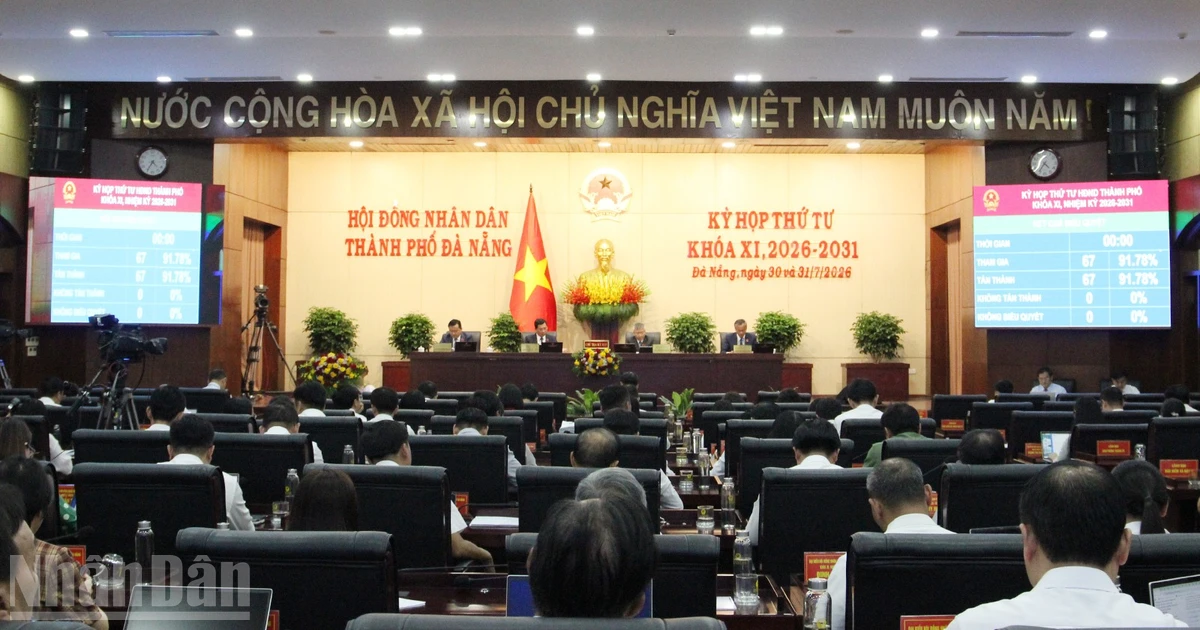
Da Nang City, Vietnam, adopted 41 resolutions during its fourth session of the 11th People's Council. The resolutions focus on improving social welfare and sustaining economic growth, with particular emphasis on housing support and advancements in education and healthcare.
Da Nang City, Vietnam's key central hub, has concluded its fourth session of the 11th People's Council for the 2026-2031 term. Over two days, the council adopted 41 resolutions, comprising 33 legal normative resolutions and 8 individual resolutions. Key among the adopted resolutions are policies aimed at improving citizens' lives. These include support mechanisms for social housing development, assistance for relocating three dilapidated public housing complexes, subsidies for cremation services, additional support for voluntary social insurance contributions, and aid for students, officials, workers, and boarding schools in border areas. Funding has also been allocated for providing common textbooks to students across the city from the 2026-2027 to the 2028-2029 academic years. Reports and discussions during the session indicated that the city's economy continues to maintain its growth momentum, with many development drivers being consolidated. Social welfare has been prioritized, and national defense and security have been maintained. However, the session also highlighted pressures that require more decisive action in the remaining months of the year. In his closing remarks, Mr. Nguyen Duc Dung, Chairman of the Da Nang City People's Council, urged the City People's Committee to focus on several key areas: * Reviewing resolutions issued by the City People's Council since the merger and classifying those requiring solutions for timely reporting. * Updating the scenario for the latter half of the year by sector, field, locality, revenue source, project, and growth driver, clearly assigning targets, timelines, deliverables, and responsibilities to each department and locality. * During the implementation of the 2026-2030 medium-term public investment plan, urgently researching, evaluating, and classifying projects to allow communes to receive, manage, and implement those of appropriate scale. * For land, site clearance, resettlement, public assets, and prolonged projects, implementing them according to specific lists with defined timelines, responsible agencies, and expected outcomes. * Making administrative reforms more substantive, encompassing both administrative procedures for citizens and businesses, and internal administrative procedures within state agencies. Alongside economic development, the city must focus on addressing tasks directly related to people's lives in the coming months, including education, healthcare, labor, poverty reduction, ethnic minority areas, national defense, security, and order. Proactive planning for natural disaster prevention, search, and rescue, with early and localized assessments of specific situations, is also crucial. Regarding issues raised during the questioning session, the City People's Committee and relevant departments and agencies are requested to thoroughly review their responses and commitments, clearly define necessary actions, deadlines, and specific deliverables, and report the results to the Standing Committee of the City People's Council for monitoring and supervision.
Original source
Nhan Dan