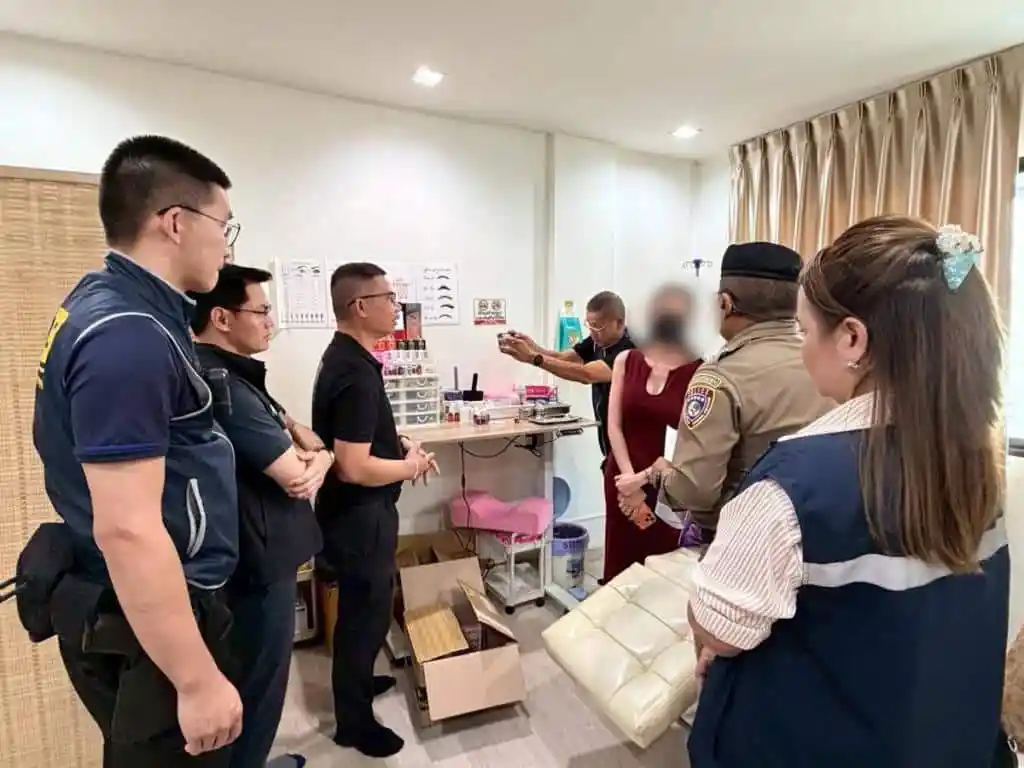
Two Women Arrested for Operating Illegal Botox Clinic in Bangkok
Two women were arrested in Bangkok for operating an unlicensed cosmetic clinic offering Botox and filler injections. They admitted to learning the trade at beauty clinics and earning significant monthly incomes, promoting services via social media.
Two women were arrested by the Consumer Protection Police Division in Bangkok for offering cosmetic injections such as Botox and fillers without a medical license. The suspects, who claimed to have learned the procedures from previous employment at beauty clinics, admitted to operating the illegal services from residential homes and earning substantial monthly incomes. Pol. Maj. Gen. Kongkrit Lertsitthikun, commander of the Consumer Protection Police Division, along with the Department of Health Service Support, conducted a search of two locations following reports of unauthorized cosmetic injection services. Inside ordinary-looking residential houses, temporary treatment rooms were discovered. The arrested women, identified as 31-year-old Thanthathorn and 25-year-old Nawaporn, were found to be performing injections despite lacking medical licenses. A large quantity of medical tools, treatment supplies, and unregistered skincare products were seized as evidence. Thanthathorn stated she had worked in beauty clinics for six to seven years, gaining sufficient knowledge to offer injections independently. She promoted services via Facebook, with package deals for Botox and fillers ranging from 790 to 4,990 baht. She claimed to have been operating for over two years, serving two to five customers daily, and earning approximately 100,000 to 120,000 baht per month. Products were purchased online. Nawaporn, who had several years of experience in beauty clinics, began administering skin-booster injections. Initially serving friends, her client base grew through word-of-mouth. Her prices ranged from 1,000 to 5,000 baht, and she reported a monthly income of around 30,000 baht from her two years of practice. Both women were charged under the Private Hospital Act of 1998 for allowing unlicensed individuals to perform medical work. The case is now under further investigation by Division 4 of the Consumer Protection Police Division.
多角的分析
無資格者による美容施術は、正規の医療機関や医師のサービスと比較して低価格で提供されるため、価格競争の歪みを生じさせます。また、使用される薬剤や器具の品質管理が不十分な場合、健康被害のリスクを高め、長期的に見れば医療費の増加や公衆衛生への負担増につながる可能性があります。さらに、こうした違法行為が横行することは、正規の事業者への信頼を損ない、業界全体の健全な発展を阻害する要因ともなり得ます。
今回の摘発は、タイにおける美容・ヘルスケア市場の成長と、それに伴う規制の必要性を示唆しています。投資家にとっては、正規のライセンスを持つ医療機関や、厳格な品質管理体制を持つ美容クリニックへの投資がより安全であるという認識を強めるでしょう。一方で、規制の抜け穴を突くようなビジネスモデルが一時的に利益を上げる可能性も示唆されますが、これは法執行リスクを伴うため、長期的な投資対象としては不適格と考えられます。
バンコクでは、美容整形や美容施術への関心が高まっており、SNSを通じて手軽に情報が入手できる環境があります。しかし、今回の事件は、安価な施術を求める消費者が、資格や安全性の確認を怠るリスクを浮き彫りにしました。施術を受けた顧客が健康被害に遭った場合、その影響は個人のみならず、家族や友人にも及びます。また、美容クリニックの「見習い」が、十分な訓練なしに施術を行うという構造は、美容業界における人材育成と倫理観の欠如という、より広範な社会的問題を示唆しているとも考えられます。
バンコク市民、特に美容に関心のある層にとっては、今回の事件は身近なリスクとして捉えられます。SNSで魅力的な広告を目にしても、施術を受ける前に提供者の資格やクリニックの正規性を確認することの重要性が再認識されるでしょう。また、所得の低い層や若年層が、手軽な副業としてこうした違法行為に手を染める背景には、経済的な困窮や、高収入を得られる機会の限定性といった社会的な要因も推測されます。これは、社会全体で職業倫理や安全教育を推進する必要性を示唆しています。
背景・歴史的文脈
タイでは、美容・ヘルスケア産業が経済成長の重要な柱の一つとなっています。特にバンコクを中心に、美容クリニックやエステティックサロンが急増し、国内外から多くの人々が施術を受けに訪れています。しかし、この成長に伴い、無資格者による施術や、不法な医療機器・薬剤の使用といった問題も散見されるようになりました。2023年7月6日の今回の摘発は、こうした違法行為に対する当局の取り締まり強化の一環として行われました。過去にも同様の摘発事例はありますが、SNSを通じた集客や個人での施術が拡大する傾向にあり、新たな課題となっています。
原文ソース
Chiang Rai Times