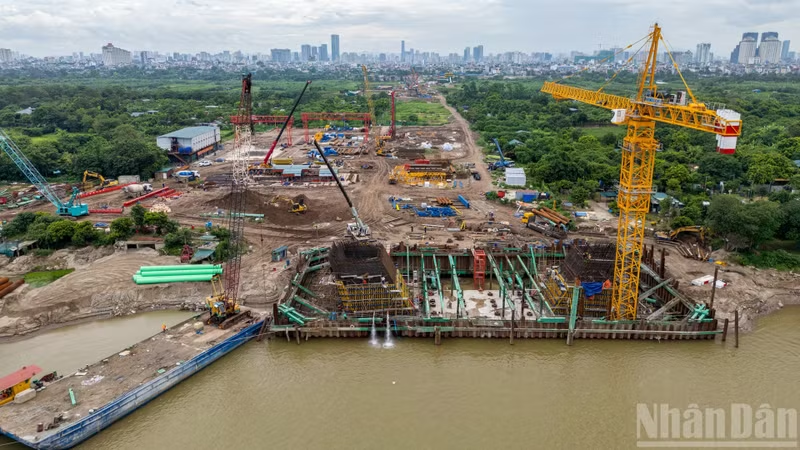
Tu Lien Bridge Project Accelerates Pace Ahead of Tet Holiday
The Tu Lien Bridge project in Hanoi is seeing accelerated construction efforts day and night, aiming to meet targets before the Tet (Lunar New Year) holiday. Despite challenging conditions like rising Red River water levels, the construction unit is implementing measures to ensure the project's timeline. Resettlement for affected residents is progressing, pushing the project towards its targeted completion in the second quarter of 2027.
In Hanoi, Vietnam's capital, the construction of the significant infrastructure project, Tu Lien Bridge, is accelerating ahead of the Tet (Lunar New Year) holiday. Engineers and workers are diligently working day and night at the construction site along the Red River. Despite unfavorable conditions such as rising water levels in the Red River, the contractor is actively implementing various plans to ensure the project's progress. This demonstrates that infrastructure development in Vietnam is proceeding as planned, even amidst challenging natural conditions. The advancement of this project cannot be achieved without the cooperation of local residents. To secure land for the bridge construction, Hanoi City has issued 200 "So Do" (land ownership certificates) as resettlement sites for residents of Hong Ha ward. This has led to Hong Ha ward largely completing the handover of land for the Tu Lien Bridge and Tran Hung Dao Bridge, balancing the rebuilding of residents' lives with infrastructure development. Hanoi aims to put the Tu Lien Bridge and Tran Hung Dao Bridge into operation by the second quarter of 2027. This is expected to significantly contribute to alleviating traffic congestion in urban areas and stimulating economic activity. Land acquisition and handover for a section of the Tu Lien Bridge construction site, specifically in the alley at 310 Nghi Tam street, are also being expedited, with continuous efforts to prevent delays in the overall project. Under Vietnam's one-party system, large-scale government-led infrastructure projects are positioned as one of the top priorities for national development, tending to be driven by swift decision-making and execution. In particular, infrastructure development in the capital, Hanoi, is an indispensable element for maintaining and enhancing domestic and external competitiveness, especially for Vietnam, which has strong economic ties with China, as a foundation supporting economic growth.
多角的分析
トゥリエン橋のような大規模インフラプロジェクトは、ベトナム経済の成長を支える重要な要素である。建設投資は直接的な雇用創 تحف(創出)と関連産業への波及効果をもたらす。完成後は、ハノイ都市圏の交通網を強化し、物流コストの削減、ひいては地域経済の活性化に寄与すると期待される。ベトナム政府は、外国直接投資(FDI)を誘致し、製造業のハブとしての地位を確立するため、インフラ整備を最優先課題の一つとしている。特に、中国との経済的結びつきが強い中で、国内インフラの強化はサプライチェーンの安定化と競争力維持に不可欠である。
トゥリエン橋プロジェクトの進捗加速は、ベトナムのインフラ開発へのコミットメントを示すものであり、投資家にとってポジティブなシグナルとなる。特に、不動産開発や物流関連企業にとって、交通網の改善は事業展開の恩恵となる。2027年の供用開始目標は、長期的な投資計画を立てる上で重要な指標となる。ベトナム政府によるインフラ投資は、外国直接投資(FDI)の誘致にも繋がり、市場の成長ポテンシャルを示唆する。ただし、建設遅延リスクや、紅河の水位上昇のような予期せぬ事態への対応能力は、引き続き注視すべき点である。
トゥリエン橋建設に伴う住民の移転は、生活再建という側面で社会的な影響が大きい。ハノイ市が200件の「ソー・ド」を発行したことは、住民への補償と再定住を一定程度配慮していることを示唆する。しかし、移転先の生活環境やコミュニティの維持、生計手段の確保といった課題は、今後も住民にとって重要な懸念事項となる。また、建設作業員の過酷な労働環境や、テト休暇前の工期短縮へのプレッシャーは、労働者の福祉という観点からも注目されるべき点である。インフラ整備と住民生活の調和は、ベトナム社会が直面する普遍的な課題の一つと言える。
トゥリエン橋建設は、ハノイ市民、特に橋の周辺地域に住む人々にとって、交通利便性の向上という恩恵をもたらす一方、建設期間中の騒音や交通規制といった一時的な不便も伴う。紅河の水位上昇という困難な状況下での工事は、住民の安全確保と、工期遵守のバランスをいかに取るかが課題となる。2027年の供用開始目標は、多くの市民にとって、渋滞緩和への期待につながる。しかし、移転を余儀なくされた住民にとっては、新しい生活への適応が最も重要な課題となるだろう。
背景・歴史的文脈
ベトナムにおける大規模インフラプロジェクトは、ドイモイ(刷新)政策以降、経済成長の原動力として重視されてきた。特に首都ハノイの交通網整備は、人口増加と経済発展に対応するため、長年にわたり優先課題とされてきた。トゥリエン橋は、紅河を横断する主要な橋の一つとして、ハノイ市内の交通渋滞緩和と、都市開発の促進を目的として計画された。過去には、プロジェクトの遅延や用地買収の問題が指摘されることもあったが、政府は外国からの投資誘致や、国内資源の活用を通じて、インフラ整備を加速させている。中国との国境を接し、経済的にも密接な関係にあるベトナムにとって、国内インフラの強化は、経済的自立と国際競争力維持の観点からも戦略的に重要視されている。
原文ソース
Nhan Dan