Vietnam Accelerates Growth Amid Supply Chain Realignment and Green Transition
Vietnam's industries are accelerating their green transition amidst global supply chain realignments and a focus on sustainability. The textile and apparel sector, in particular, faces challenges in increasing localization rates, while digitalization and recovering domestic consumption are boosting growth.
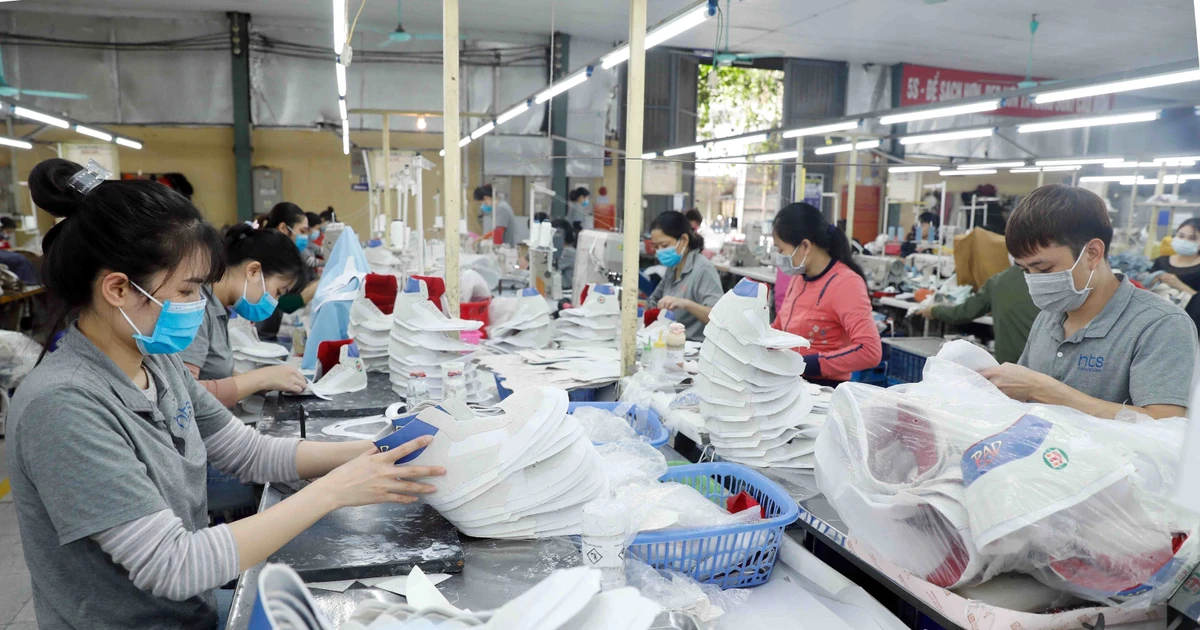
Statistics from the Ministry of Industry and Trade (MoIT) show that the localisation rate of Vietnam’s textile and garment industry accounts for only about half of the value chain, meaning a significant portion of production revenue is spent on imported fabrics and other inputs. As global supply chains are being restructured towards diversification, sustainability and digital transformation, Vietnamese Trade Counsellor to India Bui Trung Thuong noted that this is an opportune time for both countries to deepen cooperation towards building integrated value chains and enhancing product value. With a population exceeding 100 million and a rapidly expanding middle class, Vietnam is regarded as a highly promising market for fashion, footwear and apparel. Among the cases were 367 involving the illegal trade and transport of prohibited or smuggled goods, 692 related to commercial and tax fraud, and 162 concerning counterfeit products, imitation goods and intellectual property infringements. Criminal proceedings were launched in 231 cases, with 406 suspects facing criminal proceedings, while 957 cases were settled through administrative penalties. Digital transformation, artificial intelligence (AI), product traceability and e-commerce are increasingly reshaping Vietnam's agricultural sector, helping farmers and businesses improve product quality, meet stricter market requirements and enhance competitiveness. With domestic demand recovering, tourism expanding and new consumption spaces emerging, the trade and service sector is expected to become not only the outlet for production but also a catalyst for broader economic growth, helping Ho Chi Minh City achieve its ambitious double-digit GRDP target in 2026. Describing the RoK as a strategic partner of VIFC-HCMC, a leader of the centre said cooperation potential is significant given the country’s developed capital market, modern banking system, technological strengths and experience in building financial centres in Seoul, Busan and Incheon. The resolution calls for a shift in development mindset, positioning FDI as a key driver of growth model transformation, with a focus on quality, value addition and continuous improvement of intrinsic capacity and self-reliance of the economy. Many experts and businesses believe the policy provides a timely strategic boost, helping Vietnam to capitalise on the ongoing global supply chain realignment. This milestone reaffirms Sun Group's pioneering role spanning nearly two decades in bringing the world's leading international hotel brands to Vietnam, raising the country's hospitality standards, diversifying the guest experience, and strengthening Vietnam's competitiveness as a global tourism destination. Ho Chi Minh City is currently home to 20,259 FDI projects with total registered capital of nearly 142 billion USD from 152 countries and territories. In the first half of 2026, the city attracted more than 6.8 billion USD, fulfilling 62% of its annual target. Enterprises would receive State support covering 50% of interest payments on commercial loans used for technology application, transfer and innovation projects, capped at 6% a year for up to five years. The campaign is expected to stimulate domestic consumption, boost retail sales, support economic growth, promote Vietnamese brands and encourage consumers to prioritise locally made products while attracting international visitors via shopping events. The figures recorded in the first half of 2026 just reflected positive short-term results. Long-term success would depend not only on the growth pace but also on the quality and resilience of the economy and the sustainability of growth engines. With the current trading band of +/- 5%, the ceiling rate applicable for commercial banks during the day is 26,481 VND/USD, and the floor rate 23,959 VND/USD. According to a recent report by BIDV Securities (BSC), these projects span residential and urban developments, airports, expressways, high-speed rail, industrial facilities and other strategic infrastructure. The advisory board will support research, provide policy advice and recommend strategic directions for the centre’s development, the VIFC-HCMC Executive Board said. Under the plan, Hanoi aims to maintain annual gross regional domestic product (GRDP) growth of 11% during 2026–2035 and 2036–2045, before easing to 5% during 2046–2065 and 4.5% during 2066–2085. The Ho Chi Minh City Development Joint Stock Commercial Bank (HDBank – HoSE: HDB) has successfully raised 721 million USD in an international syndicated loan from international financial institutions in the form of a Social Loan. Around the world, investors are increasingly choosing locations based not only on costs and logistics, but also on renewable energy, carbon performance, circular economy solutions and ESG standards, experts said. Vietnamese Ambassador to Brazil Bui Van Nghi informed that two-way trade reached 4.22 billion USD in the first six months of 2026, up 16.8% year-on-year. Brazil's exports to Vietnam exceeded 2 billion USD, rising 16.6%, while its imports from Vietnam totalled about 2.11 billion USD, an increase of 17%. The restored Kunming–Nha Trang route is expected to cater to growing travel demand and facilitate tourism, trade and cultural exchanges between Vietnam and China. Among the 218 economies assessed this year, Vietnam was one of only six to be upgraded to a higher income category by the WB Group. The move marks a notable milestone after 17 years in the lower-middle-income group, where Vietnam had remained since 2009. For Vietnam, the challenge is not simply adopting new technologies but ensuring that supply chains are sustainable and capable of generating long-term value. Copyright, VietnamPlus, Vietnam News Agency (VNA) Editor-in-chief, Mr. Tran Tien Duan.
多角的分析
ベトナム経済は、グローバルサプライチェーンの再編という外部要因と、国内需要の回復という内部要因の両方から恩恵を受けている。特に繊維・アパレル産業における現地調達率の低さは、付加価値向上の余地を示唆しており、輸入依存からの脱却が経済成長の鍵となる。FDI政策の質への転換は、単なる規模拡大から、より高度な産業育成を目指すベトナムの経済戦略の変化を示している。これは、経済の自立性強化という長期目標に合致する。
投資家にとって、ベトナムはサプライチェーンの多様化先として魅力が増している。特に、持続可能性やESG基準への配慮は、新たな投資判断基準となるだろう。国内消費の回復と政府による技術導入支援は、製造業だけでなくサービス業への投資機会も拡大させる。しかし、輸入依存度の高さや、経済の質とレジリエンスの持続可能性は、投資リスクとして注視する必要がある。
ベトナムのグリーン移行は、環境負荷低減だけでなく、新たな雇用創出や地域経済の活性化につながる可能性がある。一方で、輸入依存度の高さは、グローバルな原材料価格の変動や供給途絶のリスクを国民生活に直接影響させる可能性がある。また、デジタル化の進展は、農業従事者や中小企業にとって、スキルアップや新たなビジネスチャンスをもたらす一方で、デジタルデバイドの拡大という課題も生じさせる。ホーチミン市におけるFDIの集積は、都市部におけるインフラ整備や雇用機会の増加をもたらすが、地方との格差拡大や環境問題への懸念も高まる。
グローバルサプライチェーンの再編とグリーン移行は、ベトナム国民の雇用と生活水準に直接的な影響を与える。特に繊維・アパレル産業で働く労働者は、現地調達率の向上や技術革新への適応が求められる。国内消費の回復は、小売業やサービス業で働く人々に恩恵をもたらすだろう。また、デジタル化の進展は、農家がより良い価格で農産物を販売できる機会を増やす一方で、新たな技術へのアクセスや習得が課題となる。
背景・歴史的文脈
ベトナムが「ドイモイ」政策以降、市場経済化を進め、グローバルサプライチェーンに組み込まれてきた背景がある。特に2000年代以降、製造業、とりわけ繊維・アパレル産業が外資誘致の主要分野となり、安価な労働力を武器に輸出を拡大してきた。しかし、その結果、原材料や中間財の多くを輸入に頼る構造が固定化。近年、米中貿易摩擦やパンデミックを経て、サプライチェーンの安定化とリスク分散の必要性が国際的に高まり、ベトナムはこれを国内産業の高度化と「質」を重視した経済成長への転換点と捉えている。
原文ソース
VietnamPlus English