General articles are free for 24 hours after publish.
Central Asia Seeks Drone Independence Amid Foreign Dependency Concerns
Central Asian nations are concerned about their growing dependency on foreign drone suppliers, particularly Turkey. The article argues for joint development and local production to enhance regional economies and security, moving away from reliance on imported systems.
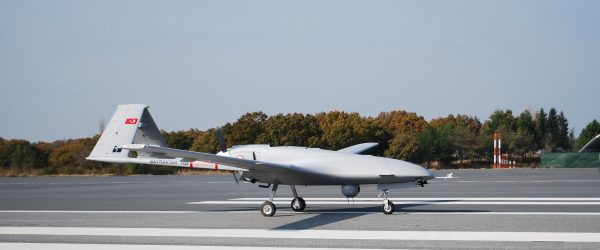
Central Asian states are grappling with the long-term implications of foreign dependency in their defense sectors, particularly concerning the adoption of Turkish drones. While Turkey's Baykar Bayraktar TB2 unmanned aerial vehicles (UAVs) demonstrated their effectiveness during the 2022 Kyrgyzstan-Tajikistan border conflict, Bishkek has since deepened its reliance on Turkish suppliers by ordering additional platforms. Although imported drones are generally cheaper than manned aircraft, their acquisition costs are compounded by ongoing expenses for operations, maintenance, spare parts, ammunition, and sensors. This commitment ties states to specific suppliers for extended periods. Given the recent volatility in Turkey's defense policy, concerns remain about the reliability of sustainment in the event of future conflicts. In the Russia-Ukraine War, both belligerents initially sought foreign support for their drone capabilities. Moscow, after receiving Iranian-made drones, began developing its own improved versions, such as the jet-powered Geran series. Kyiv, similarly, leveraged initial foreign inventories like DJI Mavics and Turkish TB2s, but soon shifted to domestic manufacturing and development, integrating battlefield lessons in real-time. The Iran-U.S. conflict has highlighted drone vulnerability to anti-air systems, with the U.S. reportedly losing 25% of its MQ-9 Reaper fleet. Tajikistan, in response to its conflict with Kyrgyzstan, explored a program to domestically produce Iranian Ababil-2 UAVs. However, the project faced significant hurdles, including the demise of key Iranian officials and potential U.S. sanctions, making its progress unclear and its security risks substantial. Recognizing the pitfalls of foreign dependency, Central Asian nations should consider developing their own drone systems or establishing licensed domestic production. Drone development costs are more manageable compared to armored vehicles or manned aircraft, and regional security needs can sufficiently support domestic production. Furthermore, joint research and manufacturing could bolster security cooperation along borders and against transnational threats. In May 2026, Kyrgyz company Nanospace announced plans to open a UAV institute near Bishkek. This initiative aims to train operators and develop technologies for networking small drones, a crucial step towards building indigenous air defense, research, and surveillance capabilities independent of foreign aid. Central Asia's existing role as an educational hub presents opportunities to leverage human capital for defense development. Meanwhile, an exhibition in Uzbekistan in late summer 2026 showcased the Shunqor-8 drone interceptor from the Center for Innovative Technologies, a potential cost-effective alternative to traditional missile defense systems. Historically, the region's air defense has relied heavily on Russian exports.
Original source
The Diplomat Indonesia