New Economic Corridors Boost Development for Waterpoint in Southern Vietnam
The "Waterpoint" urban development project in Ben Luc, Long An province, Southern Vietnam is significantly benefiting from new economic corridors and infrastructure development. Aligned with the region's overall development strategy, it's also seeing increased interest in its real estate market.
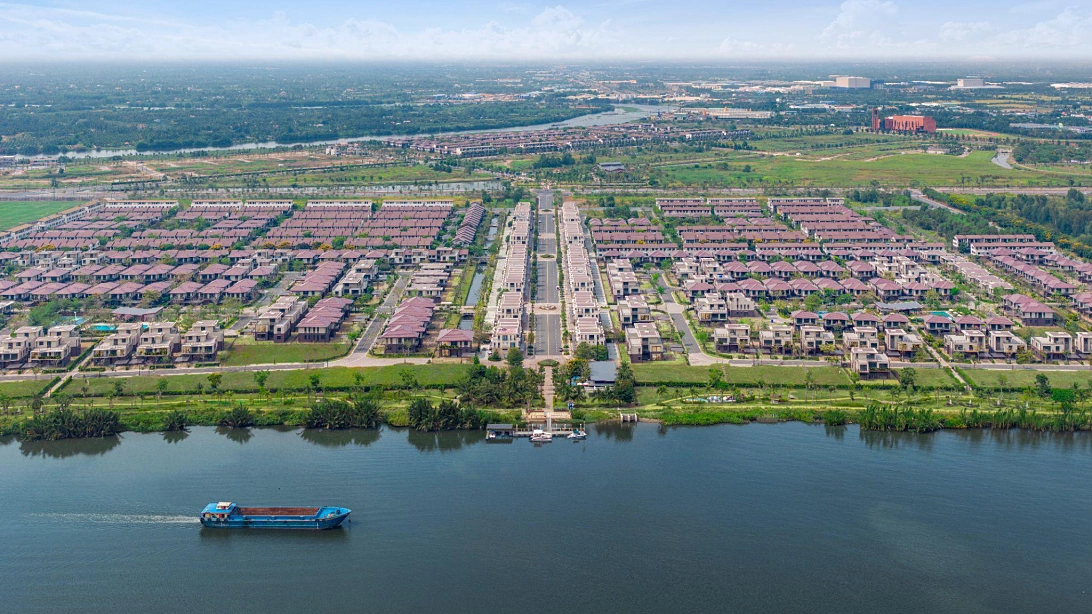
The "Waterpoint" urban development project, spanning 355 hectares in Ben Luc, Long An province, Southern Vietnam, is poised to benefit significantly from new economic corridors and ongoing infrastructure development. The province's recently approved regional development plan for 2021-2030, with a vision towards 2050, outlines a model with three central hubs, six economic corridors, and three driving axes. This strategy aims to expand development space and enhance the province's role within the southern urban-industrial structure. Waterpoint is considered one of the key projects set to gain from this new planning. Ben Luc is strategically positioned between Economic Corridor 1A, linked to Ring Road 3, and Economic Corridor 1B, connected to Ring Road 4. These corridors are designated to foster urban, industrial, and service sector growth, with a particular emphasis on high-tech, green, and low-emission industries, integrating production with innovation and logistics. Furthermore, the Ho Chi Minh City-Chon Thanh Expressway traverses the district, facilitating east-west and southern connectivity within the Mekong Delta region. Infrastructure improvements are underway, including the Ben Luc-Long Thanh Expressway, Ring Road 3, and Ring Road 4, along with plans to extend Vo Van Kiet Boulevard westward. Upon completion, these projects will drastically reduce travel times between Ben Luc, Ho Chi Minh City, Long Thanh International Airport, and other key economic centers in the region. Ben Luc is also targeted to become a central urban area within the province's development strategy by 2030. Experts believe that the new regional planning and continuous inter-regional infrastructure investments make Ben Luc highly attractive for economic, industrial, and urban development, anticipating increased capital and resident influx. Data from Batdongsan indicates a 40% rise in real estate interest in Ben Luc in 2025 compared to the previous year. Prices for low-rise housing have also increased year-on-year in Q1 2026, yet remain lower than Ho Chi Minh City's levels, presenting growth potential. Waterpoint, developed by Nam Long, spans 355 hectares and boasts nearly 6 km of frontage along the Vam Co Dong River. It is designed as an integrated urban model with low construction density, prioritizing green spaces, water bodies, and public areas. The project already features established amenities such as the Emasi Plus international bilingual school, the 25-hectare Central Park, and the 3.2-hectare Country Club. These operational facilities, coupled with regular cultural, sports, and community activities, are fostering a vibrant urban lifestyle, moving beyond mere planning. Nam Long states that Waterpoint aims to meet all living, learning, working, leisure, and shopping needs within a single urban environment. Its existing facilities, combined with strategic location benefits from regional planning and infrastructure, are expected to support the project's growth alongside the western region of Vietnam in the coming years.
多角的分析
ベトナム政府は、経済成長の持続と地域格差の是正のため、インフラ投資と地域開発計画を積極的に推進している。Waterpointが位置するベンルック地区は、ホーチミン市近郊という地理的優位性と、環状道路や高速道路網の整備による交通アクセスの向上が、工業・都市開発のポテンシャルを高めている。特に、ハイテク・グリーン産業への注力は、ベトナムが目指す産業構造の高度化と環境負荷低減の目標に合致しており、長期的な経済成長の基盤となる。この開発は、地域経済の活性化だけでなく、サプライチェーンの強化にも寄与すると考えられる。
Waterpointプロジェクトは、ベトナム政府のインフラ投資と地域開発計画という追い風を受けている。ベンルック地区の不動産への関心度の上昇と、ホーチミン市との価格差は、投資家にとって魅力的な参入機会を提供する。特に、開発が進むにつれて交通アクセスが向上し、生活利便施設が充実することは、物件価値の上昇に繋がる可能性が高い。ただし、ベトナムの不動産市場は、金利変動や政策変更のリスクも孕んでおり、投資判断には慎重な市場分析が求められる。
Waterpointプロジェクトは、単なる住宅開発にとどまらず、教育機関(Emasi Plus)、広大な公園(Central Park)、スポーツ施設(Country Club)などを備えた統合型都市モデルを目指している。これは、住民の生活の質向上と、地域コミュニティの形成を促進する。また、インフラ整備によるホーチミン市へのアクセス向上は、都市部での勤務を希望する地方住民にとって、新たな居住選択肢を提供する。一方で、急速な都市開発は、地域住民の生活様式や景観への影響、インフラ整備に伴う立ち退き問題など、社会的な課題も生じうるため、住民との丁寧な対話と配慮が重要となる。
Waterpointプロジェクトとその周辺地域へのインフラ投資は、ベンルック地区の住民にとって、生活の利便性向上と地域経済の活性化という二重の恩恵をもたらす。ホーチミン市へのアクセスが改善されることで、より多くの雇用機会へのアクセスが可能になり、地域住民の所得向上に繋がる可能性がある。また、公園や公共スペースの整備は、地域住民のレクリエーション機会を増やし、生活の質を高める。しかし、開発に伴う物価上昇や、大規模プロジェクトによる環境への影響は、地域住民の不安材料となりうるため、持続可能な開発が求められる。
背景・歴史的文脈
ベトナムは、1986年のドイモイ(刷新)政策以降、市場経済化を推進し、目覚ましい経済成長を遂げてきた。特に南部地域は、ホーチミン市を中心とした経済活動の集積地であり、インフラ開発は長年の課題であった。2010年代以降、政府はメコンデルタ地域やホーチミン市周辺のインフラ整備に注力し、環状道路や高速道路網の拡充を進めている。Waterpointが位置するベンルック地区は、こうした南部経済回廊の要衝として、ホーチミン市とメコンデルタ地域を結ぶ結節点としての役割が期待されている。今回の地域開発計画は、これらのインフラ投資と連携し、南部経済圏のさらなる発展を目指すベトナム政府の意思を反映している。
原文ソース
VnExpress