General articles are free for 24 hours after publish.
Thailand Accuses Cambodia of Stationing Troops at World Heritage Site During Border Fighting
Thailand claims to have evidence of Cambodian troops stationed around the Preah Vihear temple during border clashes last year, following a UNESCO report detailing severe damage to the World Heritage site. The accusation escalates tensions between the two nations.
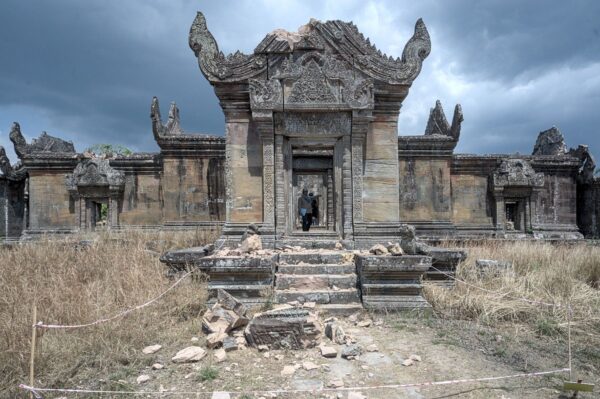
Thailand's government claims to possess evidence that Cambodian troops were stationed around the Preah Vihear temple during border fighting last year, shortly after UNESCO released a report detailing "profound" conflict-related damage to the World Heritage site. This accusation has escalated tensions between the two nations. Preah Vihear, a Cambodian temple perched on the country's border with Thailand, has been a long-standing subject of dispute between Bangkok and Phnom Penh. Clashes broke out along the land border in July and December last year, with the temple becoming a focal point. Last week, UNESCO published a report detailing extensive damage sustained by the temple. The 100-page report, assembled by specialists from the UNESCO World Heritage Centre and International Council on Monuments and Sites following visits in March, observed that "every part of the monument" was targeted, leaving many architectural elements either "completely destroyed" or damaged by "heavy shelling" and "shrapnel impacts." The mission analyzed that the strikes "wreaked havoc, leaving a profound and detrimental impact on the integrity of the property." It stated that "a number of architectural elements were completely destroyed by direct, heavily damaged, dislocated, and/or overturned by severe blasts." UNESCO also noted that "the surface of most walls is now disfigured by shrapnel impacts and the heavy shelling may also have weakened the cliffs, endangering their stability." The report identified a total of 562 damaged areas on the temple complex from both July and December clashes. It concluded that "urgent action" was needed to protect Preah Vihear from further incidents, arguing it was "threatened by serious and specific danger," due to the unresolved border dispute. It finished by calling for "multilateral negotiations to obtain guarantees that no further acts of hostilities will occur" and that other measures at the site can proceed. The UNESCO report was the subject of detailed coverage in the Cambodian press, with government officials accusing the Royal Thai Army of recklessly, or even deliberately, targeting the temple structure. Thailand has not denied the attacks but has accused Cambodia of stationing troops within the temple complex, violating international laws against the use of cultural heritage sites in conflict. Speaking to the press on Saturday, Air Chief Marshal Praphas Sonchaidee, director of the Joint Information Center on the Thailand-Cambodia conflict, said that the army possessed evidence of Cambodian troops using the area around Preah Vihear temple as a military position, which he said should be subject to an independent and impartial review. The alleged evidence includes "aerial images, coordinates and photographs of weapons allegedly located in the area, including anti-tank rocket-propelled grenades (RPGs), small arms, and positions for anti-aircraft weapons," The Nation newspaper reported. Praphas added that "all sides have a shared responsibility" not to use cultural heritage sites for military purposes. "Thailand asks only for the same standard to be applied to everyone: verify the facts, protect lives and protect the heritage of humanity," he said. While the UNESCO report detailed the extensive damage to the temple and clarified that Thailand could be liable under international law for attacks on cultural properties, it has done little to verify whether or not the Cambodian military used the temple and its surroundings. If the latter later proves true – and it seems unlikely that the Thai military would have launched an attack on a temple site that it claims as part of its own cultural heritage – it would presumably moderate Thailand's legal and moral responsibility. However, getting a straight answer to this question is unlikely to be easy. Like many elements of the border dispute, such as the frequent reports of injuries to Thai soldiers from landmines along the border, this issue seems destined to be lost in an exchange of accusations and counteraccusations that is very hard to separate from the highly emotive and self-exculpatory rhetoric from both sides. Without either side being willing to admit any degree of fault, and with relations at a decades-long low, it is hard to see how they can guarantee that the Preah Vihear temple won’t again be caught in the crossfire. Source: The Diplomat Cambodia
Original source
The Diplomat Cambodia