General articles are free for 24 hours after publish.
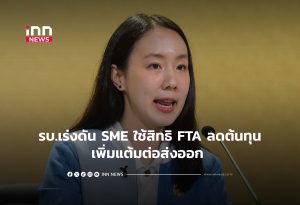
Thai Govt Urges SMEs to Leverage FTAs for Cost Reduction and Export Advantage
The Thai government is urging Small and Medium-sized Enterprises (SMEs) to leverage Free Trade Agreements (FTAs) to enhance their export competitiveness. In the first half of 2024, FTA utilization reached 1.57 trillion baht, a 7.33% increase year-on-year. The government plans to further promote utilization by improving information dissemination and simplifying procedures, while also preparing businesses for the upcoming Thailand-EFTA FTA, expected to take effect in early 2025.
The Thai government is actively promoting the utilization of Free Trade Agreements (FTAs) among Small and Medium-sized Enterprises (SMEs) to reduce tax costs and expand access to foreign markets, thereby enhancing the international competitiveness of Thai businesses. Preparations are also being expedited to ensure businesses are ready for the Thailand-EFTA FTA, which is expected to come into effect in early 2025. According to the latest report from the Department of Foreign Trade, Ministry of Commerce, during January-June 2024, Thai exporters utilized trade privileges under FTAs to the tune of USD 48,069.03 million (approximately 1.57 trillion baht). This represents a 7.33% increase year-on-year and accounts for 80.83% of the export value of goods eligible for FTA preferences. The government spokesperson noted that these figures demonstrate FTA's contribution to cost reduction and enhanced competitiveness for Thai products. However, the government recognizes that there is still room for increased utilization, particularly in certain markets where businesses are not fully leveraging tax benefits. To address this, efforts will focus on overcoming barriers such as information gaps, understanding of rules of origin, and complex utilization procedures, enabling more SMEs to access FTA benefits. Analyzing utilization by agreement, the ASEAN Trade in Goods Agreement (ATIGA) accounted for USD 15,937.55 million (67.50% utilization rate), while ASEAN-China reached USD 14,264.11 million (94.50% utilization rate). Other agreements, including ASEAN-India, Thailand-Japan, and Thailand-Australia, also show progress in utilization. The government is prioritizing efforts to help businesses understand which products, in which markets, can utilize FTAs and how. This includes providing support in verifying Harmonized System (HS) codes, rules of origin, preparing necessary documentation, and selecting the most beneficial agreement, thereby translating negotiated tax preferences into actual cost savings and increased trade opportunities. In terms of product structure, industrial goods represent USD 34,919.43 million (72.64% of total utilization), with significant utilization seen in categories such as motor vehicles for goods transport, synthetic rubber mixed with natural rubber, diamonds and precious stones, gold and silver articles, and copper scrap. The spokesperson further emphasized that preparing Thai businesses for the Thailand-EFTA FTA, slated for early 2025, is a crucial task. This will enable businesses, especially SMEs that may lack expertise in international trade law, to benefit immediately upon the agreement's entry into force. "The government measures the success of FTAs not merely by the number of agreements signed, but by whether the negotiated rights are actually utilized and contribute to cost reduction for businesses," the spokesperson stated. "Our goal moving forward is to make tax advantages more accessible to SMEs, ensure correct utilization, and prepare them to seize new market opportunities, thereby extending the benefits of free trade to a wider range of Thai businesses." Source: INN News
Original source
INN News