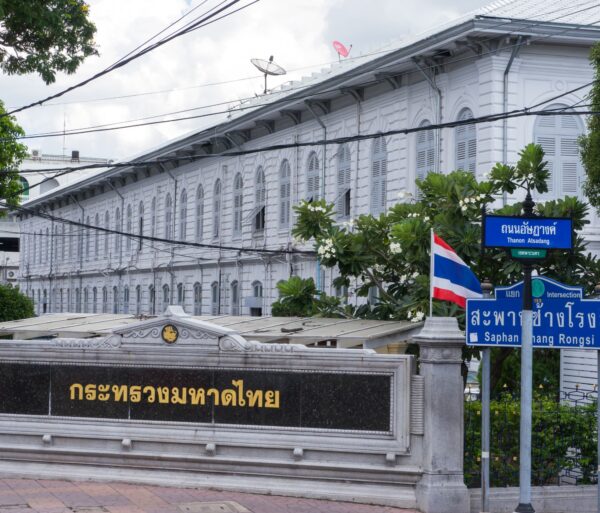
Corruption Scandals Plague Thailand's Interior Ministry, Raising Governance Concerns
A series of corruption allegations within Thailand's Ministry of Interior is shaking the foundations of local administration and potentially leading to internal conflicts within the ruling Bhumjaithai Party and a loss of public trust. Issues particularly highlighted include irregularities in local elections and opacity in personnel appointments.
A series of recent scandals within Thailand's Ministry of Interior likely reflect tensions within the leadership of the ruling Bhumjaithai Party. The Ministry, which oversees local administration and internal security, is a centralized body whose potential dysfunction raises concerns for Thailand's governance system as a whole. One problem arose in mid-June at the provincial leadership level appointed by the Ministry. Word spread online that the governor of Phuket, following his crackdown on illegal beach businesses operated under the protection of influential officials, was threatened with being booted out by one of his own deputies. This incident, set against the complex backdrop of Phuket's varied and competing interests, coupled with the publicized flaunting of powerful backing by a certain high-ranking member of the public service to bypass formal structures, prompted Prime Minister Anutin Charnvirakul to intervene directly in his concurrent capacity as Interior Minister. He swiftly approved the reshuffle of Phuket's two deputy governors, likely intended to improve governance efficiency. However, the reassignment of one deputy governor to a technically equivalent but perceived demotion role fueled the premise that whoever leverages stronger backing prevails in Thailand's bureaucratic system. A second problem centered around aspiring bureaucrats exploded in late June. Thailand's Central Investigation Bureau uncovered an illicit network helping applicants cheat their way through the entry-level local government examinations in an exceptionally sophisticated manner, employing a hybridized method to alter physical answer sheets and manipulate digital records. For the 2025 recruitment, out of over 400,000 competing candidates, 9,000 utilized the cheating service, paying between 150,000 baht ($4,503) and 900,000 baht ($27,019) individually. Corruption at this level is impossible without the complicity or direct orchestration of moles already embedded within the bureaucracy. Furthermore, issues concerning subnational electoral politics are brewing. At the end of June, the Thai Senate passed an amendment bill to lift the eight-year cap on term limits and lower the minimum age from 35 to 25 for candidates running for provincial administrative organizations (PAOs) presidents, mayors, and subdistrict administrative organization (SAO) chiefs. While arguments for these changes are grounded in continuity and democratic freedom, skeptics worry that powerful local political dynasties, literally dubbed "big houses" (baan yai), might leverage these changes to entrench their power further. These developments cast a shadow over the stability of the ruling Bhumjaithai Party, which has controlled the Interior Ministry since 2023 and increasingly holds sway over the Senate. Mixed signals from the Interior Ministry are easily taken as reflecting internal tensions within Bhumjaithai's leadership, and by extension, the longevity of the government it leads. A broader, longer-term implication is whether local-level authorities can reliably address fluid security concerns. The Interior Ministry's recruitment of questionable human capital directly subverts efforts to modernize intelligence gathering and evaluation and promote area-based security for greater resilience, as prioritized by the National Security Policy. However, the high-profile exposure of these issues could also be framed as a pretext to correct the flaws and rebuild public trust. It is hoped that those in positions of power will choose to act rightly. Source: The Diplomat Indonesia
多角的分析
タイの内務省における汚職疑惑は、地方行政の効率性を低下させ、公共サービスへの投資を阻害する可能性がある。特に、採用試験における不正は、本来能力のある人材が排除されることを意味し、行政の質を長期的に低下させる。また、地方政治における任期制限緩和は、既存の有力者による既得権益の維持を助長し、新たな経済的機会の創出を妨げる可能性がある。
内務省における汚職と不正は、タイの投資環境に対する不確実性を高める。特に、地方行政の透明性の欠如は、外国投資家にとってリスク要因となる。採用試験の不正は、公正な競争環境への信頼を損ない、ビジネスにおける公平な機会を求める投資家にとって懸念材料である。また、地方政治の世襲化が進む可能性は、新規参入やビジネス拡大の障壁となり得る。
内務省の汚職疑惑は、プーケット州知事の事例に見られるように、地方の権力構造における不正と癒着を示唆している。これは、一般市民が不当な扱いを受けたり、公正な機会を奪われたりする可能性を高める。採用試験の不正は、努力しても報われないという社会的な不満を生み出し、若年層の公務員への信頼を損なう。任期制限緩和は、地方政治における「大きな家」と呼ばれる世襲政治家が権力を温存し、一般市民の声が届きにくくなる懸念を生む。
プーケットの住民は、違法事業の取り締まりを行った知事が脅迫される状況を目にし、公権力の行使が妨げられる不安を感じているだろう。また、採用試験の不正を知った受験者たちは、公平な競争の機会が失われたことに怒りや無力感を抱いている可能性がある。地方選挙の任期制限緩和は、若者や新しい候補者が立候補しにくくなることで、市民の政治参加の機会が狭まることを危惧させている。
背景・歴史的文脈
タイの内務省は、地方行政、警察、地方自治体、土地管理などを管轄する、タイで最も強力な省の一つである。その歴史は古く、地方への中央政府の統制を維持する役割を担ってきた。過去にも、内務省を巡る汚職や不正は度々報じられてきたが、今回は特に地方選挙制度の改正や、全国規模の公務員採用試験における不正が同時に表面化したことで、その影響の大きさが指摘されている。これは、タイにおける長年の課題である、地方の有力者(バーン・ヤイ)による権力独占や、官僚機構内の非効率性・不正体質が、現政権下でも改善されていないことを示唆している。
原文ソース
The Diplomat Indonesia