General articles are free for 24 hours after publish.
Cambodia Introduces Giant Grass Cultivation for Community Income and Environmental Protection
Cambodia's Ministry of Environment is set to introduce giant king grass cultivation in protected area communities in Pursat province. The initiative aims to boost household income while strengthening environmental conservation, with an estimated annual revenue of $5,000 per hectare.
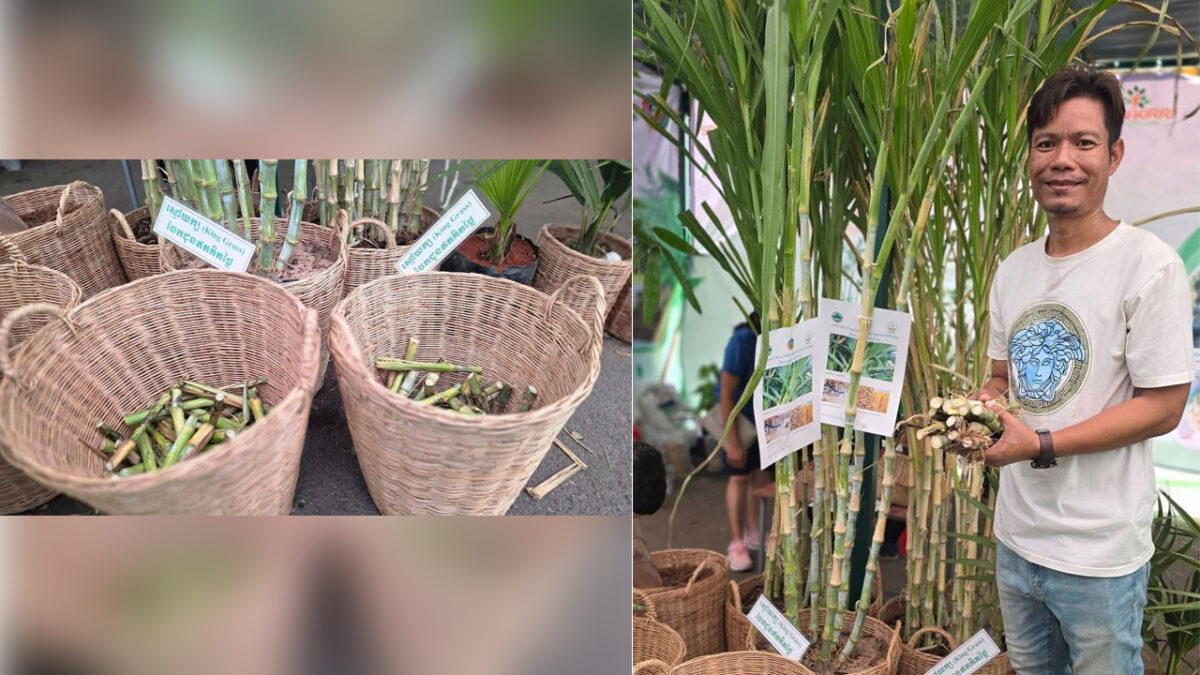
The Ministry of Environment is preparing to introduce the cultivation of giant king grass (Napier grass) into protected area communities in Pursat province. The ministry has encouraged public participation in the initiative, claiming it will generate household income, while also strengthening environmental conservation. Speaking at a July 17 event to promote greener communities in the Phnom Tompor Natural Protected Area Community in Pramoy commune, Veal Veng district, ministry spokesperson Khvay Atitya explained that the ministry has completed site assessments. With support from the Pursat provincial administration and local residents of the Cardamom Mountains National Park, it plans to begin planting giant king grass later this year. "This project reflects our shared commitment to implementing the Environmental Sector Circular Strategy by protecting Cambodia’s rich natural heritage, including forests and wildlife, responding to climate change and improving community livelihoods," said Atitya. He acknowledged the vital role played by protected area communities in conserving Cambodia’s natural resources and restoring forest cover. The ministry is promoting ecotourism development in several protected area communities, to attract visitors and create additional sources of income. Developing new livelihoods and supporting local economies will also reduce dependence on illegal logging and wildlife hunting, he added. According to the ministry, cultivating giant king grass provides communities with a renewable source of fuel for cooking, reducing the need to harvest firewood from natural forests. The crop also contributes to increasing green cover and is excellent at absorbing carbon dioxide (CO₂) from the atmosphere. It also serves as an excellent animal feed. Environmental experts cited by the ministry explained that the grass develops an extensive root system that helps prevent soil erosion, retain moisture and improve soil quality. Beyond community use, the crop can also serve as a biomass energy source for factories and industrial facilities, helping reduce greenhouse gas emissions. The ministry noted that the grass is increasingly being used worldwide as a feedstock for biochar production because of its multiple environmental and economic benefits. The fast-growing energy crop can exceed four metres in height and can be harvested after around 200 days. It is well suited to tropical climates such as Cambodia’s. Over a 12-month growing cycle, the ministry said yields can reach 375 to 400 tonnes per hectare, with approximately 100 tonnes of dry biomass per hectare. Studies cited by the ministry estimate that farmers cultivating one hectare of giant king grass could generate around 20 million riel (approximately $5,000) per year.
Original source
Phnom Penh Post