General articles are free for 24 hours after publish.
Deputy Prime Minister Sar Kheng Attends Temple Inauguration in Prey Veng, Emphasizing Buddhism's Societal Contributions
Cambodia's Deputy Prime Minister Sar Kheng attended the inauguration of a temple in Prey Veng province, highlighting Buddhism's long-standing contributions to societal development including education, healthcare, and culture. He also expressed gratitude to donors.
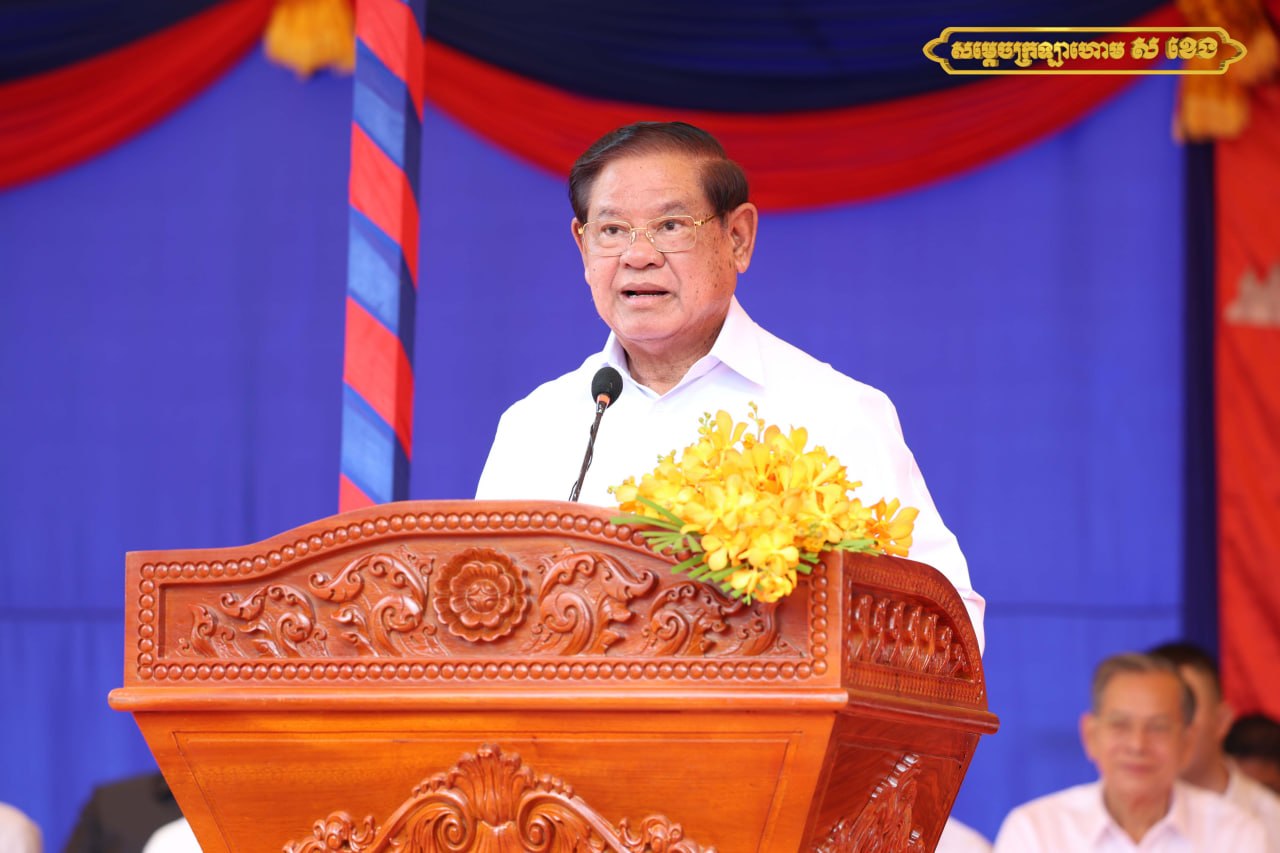
Deputy Prime Minister and Supreme Privy Advisor to His Majesty the King, Sar Kheng, presided over the inauguration and celebration ceremony of a Buddhist facility and related achievements at Wat Krang Pisey, located in Poem Ambil village, Reap commune, Pearang district, Prey Veng province, on Sunday, August 9, 2026. To begin, Mr. Chem Pra, the district governor of Pearang, delivered a welcoming speech and a brief report to the Deputy Prime Minister and the attendees. In his address, Deputy Prime Minister Sar Kheng expressed his sincere admiration for the efforts of the working group assisting the local area, as well as the competent authorities and all types of forces in Prey Veng province, for fulfilling their duties in ensuring security, public order, and social safety for the citizens and the nation with a high sense of responsibility, strong determination, and continuous success. During the occasion, the Deputy Prime Minister extended his profound gratitude to Mr. Seng Youan and his working group, as well as to the benevolent donors who have contributed significant financial and material resources, and dedicated their physical strength, intellect, and spirit to promoting Buddhism and various other sectors for the development of Prey Veng province. Deputy Prime Minister Sar Kheng stated that from ancient times to the present, Buddhist temples have contributed to the development of Cambodian society in almost every sector, including education, healthcare, economy, social welfare, and culture. He noted that many leaders, including Samdech Techo Hun Sen, President of the Senate of the Kingdom of Cambodia, have a history of being temple boys and received their education from monasteries where monks were their teachers. He added that nearly 90 percent of Cambodian citizens are followers of Buddhism, and temples play a crucial role in the development of Cambodian society. Furthermore, the Deputy Prime Minister added that besides being venues for religious ceremonies, temples are considered custodians of Khmer identity and culture. Temples serve as shelters for poor students from provinces who lack sufficient means to rent housing and continue their studies in the city. Temples are also a refuge for orphans, the elderly, students, and the children of impoverished citizens. Temples function as storehouses of knowledge, libraries, and museums of culture and civilization, without political bias. Throughout all eras, temples have provided education in literature, mathematics, and other essential knowledge for life. He mentioned that many talented Khmer writers and famous artists from ancient generations received their training in temples. Temples are places that teach and educate the body, speech, and mind, and cultivate compassion in the general public, helping them to transcend greed, hatred, and delusion, thereby escaping suffering. The teachings of monks, based on the Buddha's teachings, focus on social ethics and the roles between parents and children, teachers and students, husbands and wives, friends, employers and employees, leaders and the people, and monks and lay followers. Deputy Prime Minister Sar Kheng expressed his hope that the aforementioned achievements will meet the needs of the chief monk, the monks, the temple officials, and the temple committee, as well as the Buddhist followers. He also urged them to utilize these achievements for the common good and to participate in their long-term preservation.
Original source
CPP Cambodia