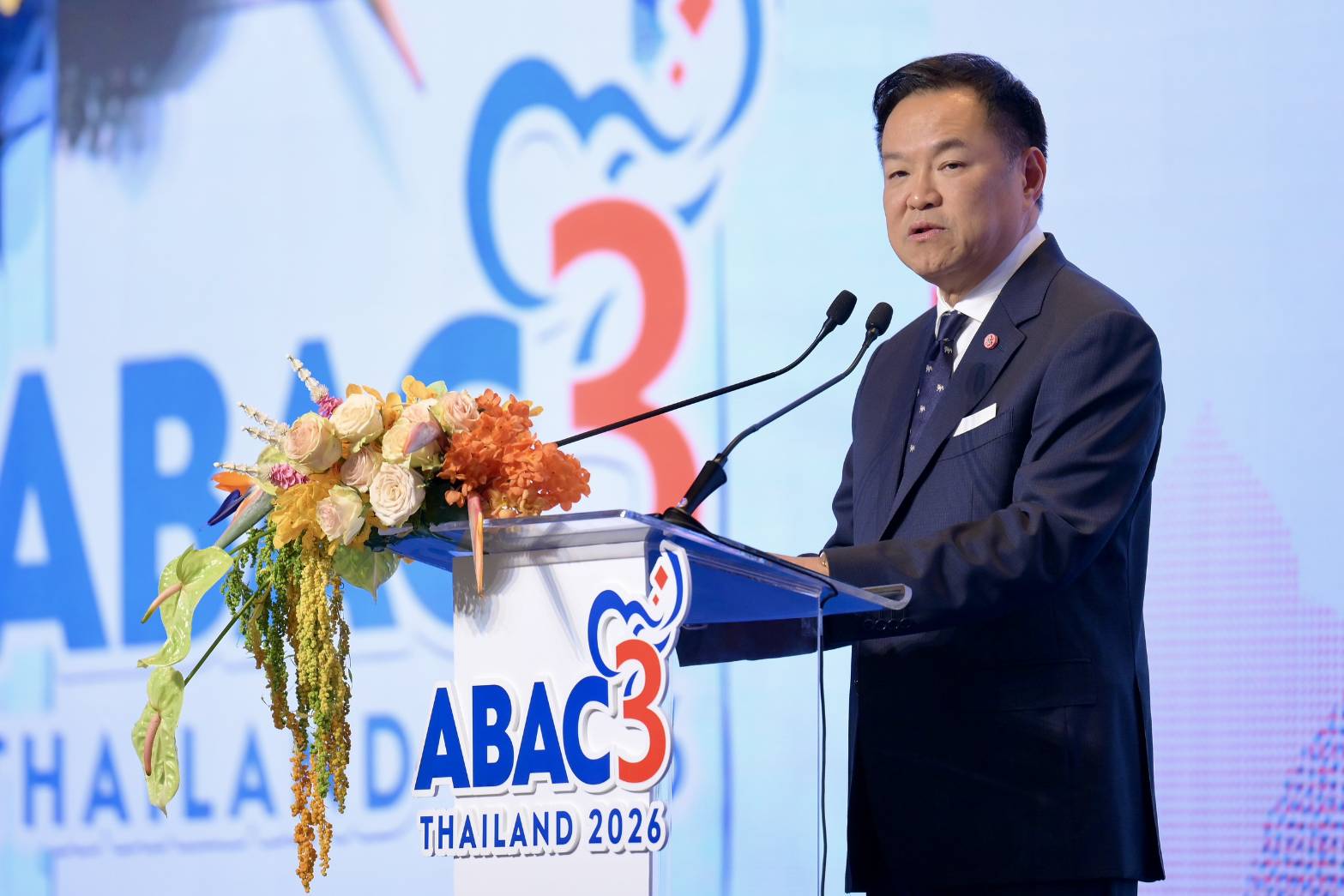
Thai PM Emphasizes Public-Private Partnership at ABAC Meeting to Boost Trade and Investment
Thai Prime Minister Srettha Thavisin stressed the necessity of public-private cooperation to boost trade and investment at the APEC Business Advisory Council (ABAC) meeting. He highlighted plans to promote the "Thailand FastPass" system to encourage investment in Thailand, strengthen regional supply chains, and support high-quality Free Trade Agreements (FTAs).
Thai Prime Minister Srettha Thavisin, in his opening remarks at the 3rd meeting of the APEC Business Advisory Council (ABAC) in 2024, emphasized the crucial role of public-private cooperation in driving trade, investment, and building robust supply chains. He highlighted the promotion of "Thailand FastPass" to reduce business obstacles and foster a connected and sustainably growing Asia-Pacific economy. Prime Minister Srettha welcomed participants to Bangkok, stating that ABAC's policy recommendations are consistently valuable and have been leveraged for regional policies, making it a vital mechanism for reflecting business realities into government policymaking. He stressed that the business sector understands what measures are practical, and the government prioritizes listening to private sector feedback. Over recent months, the government has continuously engaged with senior business executives, asking about the obstacles hindering investment, business expansion, and job creation. He noted that often, the answer is not about additional incentives but about reducing unnecessary procedures. The current business environment is increasingly complex, with geopolitical uncertainties impacting business decisions. The Prime Minister asserted that these challenges cannot be solved by the government alone, nor can the private sector operate at its full potential without an enabling investment environment. Therefore, public-private collaboration is a key factor in creating sustainable growth. A core policy of the Thai government is to position Thailand as a destination for quality investment. To this end, the "Thailand FastPass" initiative is being pushed forward to facilitate investors, streamline redundant procedures, enhance coordination among government agencies, and enable quality investment projects to proceed more swiftly, transparently, and predictably. Regionally, strengthening supply chains requires trust, clear and transparent regulations, efficient logistics, and cooperation among economies to keep markets open, even during challenging times. He called for collective efforts to build more interconnected, diversified, and resilient regional supply chains. The government supports the establishment of high-quality Free Trade Agreements (FTAs), as long-term investment relies on confidence derived from clear rules, fair competition, and easier market access. FTAs are not merely legal documents but mechanisms that build confidence for businesses when deciding where to invest, produce, or expand operations. In conclusion, Prime Minister Srettha reiterated that APEC's strength lies in connecting public policy with the real experiences of the business sector, which is more important than ever. He emphasized the value of feedback from the business community and the government's commitment to continuously listen and translate ABAC's recommendations into tangible actions, aiming to jointly create an environment conducive to investment, trade expansion, and improved quality of life for the people of the Asia-Pacific region. Source: INN News
多角的分析
タイ政府は、経済成長の鈍化という課題に直面しており、特に外国からの直接投資(FDI)の誘致が喫緊の課題となっている。今回のABAC会議での首相の発言は、投資環境の改善に向けた具体的な取り組みとして「Thailand FastPass」を前面に押し出すことで、投資家の信頼を得ようとする意図が伺える。過去のタイ経済は、インフラ整備やインセンティブ付与に重点を置いてきたが、近年は手続きの煩雑さや規制の多さが投資の障壁と指摘されており、今回の「障壁の低減」というアプローチは、より実効性のある政策転換を示唆している。しかし、その効果は制度の実行力と透明性にかかっており、国際的な競争環境の中で、タイがどのように差別化を図れるかが焦点となる。
投資家にとって、タイへの投資判断において、手続きの迅速性、透明性、予測可能性は極めて重要な要素である。首相が「Thailand FastPass」を推進し、不要な手続きの削減を約束したことは、投資リスクを低減するポジティブなシグナルと受け止められる。特に、地政学的な不確実性が高まる中で、サプライチェーンの安定性や市場へのアクセスは、投資決定に大きな影響を与える。FTAの推進も、長期的な投資判断を後押しする要因となり得る。しかし、過去には政府の政策発表と実際の実行との間に乖離が見られたケースもあり、投資家は制度の詳細な運用状況と、それが国際的なビジネス慣行とどの程度整合しているかを注視する必要があるだろう。
「Thailand FastPass」のような投資促進策は、直接的には企業活動の活性化を目的としているが、その恩恵は間接的にタイ国民の生活にも及ぶ。投資の増加は雇用機会の創出につながり、経済全体の活性化は国民の所得向上や生活水準の改善に寄与する可能性がある。しかし、一方で、投資誘致の過程で、環境への配慮や地域社会との共存が十分になされるかどうかが問われる。特に、大規模な投資プロジェクトにおいては、土地利用や資源の配分、地域住民の生活への影響などが社会的な課題となる場合がある。政府は、経済成長と国民生活の向上を両立させるため、透明性のある意思決定プロセスと、ステークホルダーとの丁寧な対話が求められる。
タイ国民、特にビジネスに携わる人々にとって、政府が投資の障壁を取り除くという姿勢は歓迎すべき兆候である。セター首相が「不要な手続きの削減」を具体的に挙げたことは、長年多くの企業が抱えてきたフラストレーションに応えるものと言える。タイへの新規投資や既存事業の拡大が容易になれば、新たな雇用が生まれ、賃金の上昇や経済全体の活性化につながる可能性がある。しかし、国民が実感できるような効果が現れるまでには時間がかかる場合も多い。また、投資が特定の地域や産業に集中し、格差が拡大する可能性も否定できない。国民は、政府の政策が、一部の利益だけでなく、より広範な国民生活の向上にどのように貢献するかを注視していく必要がある。
背景・歴史的文脈
タイのセター首相はAPECビジネス諮問評議会(ABAC)会議で、貿易・投資促進のためには官民の協力が不可欠であると強調した。特に、タイへの投資を促進する「Thailand FastPass」制度の推進や、地域サプライチェーンの強化、質の高い自由貿易協定(FTA)の締結を支持する方針を示した。。タイの背景整理として、原文の文脈を踏まえた補足が必要な場合は追加調査を前提にしてください。
原文ソース
INN News