Constitutional Debate Erupts Over Presiding Officer in VP Duterte's Impeachment Trial
Politics
2026年7月7日
5
Philstar Nation

Constitutional Debate Erupts Over Presiding Officer in VP Duterte's Impeachment Trial

AI サマリー

A constitutional debate arose on the opening day of Vice President Sara Duterte's impeachment trial as senators objected to the election of a presiding officer, with the Constitution silent on who should lead trials for impeachable officials other than the president.

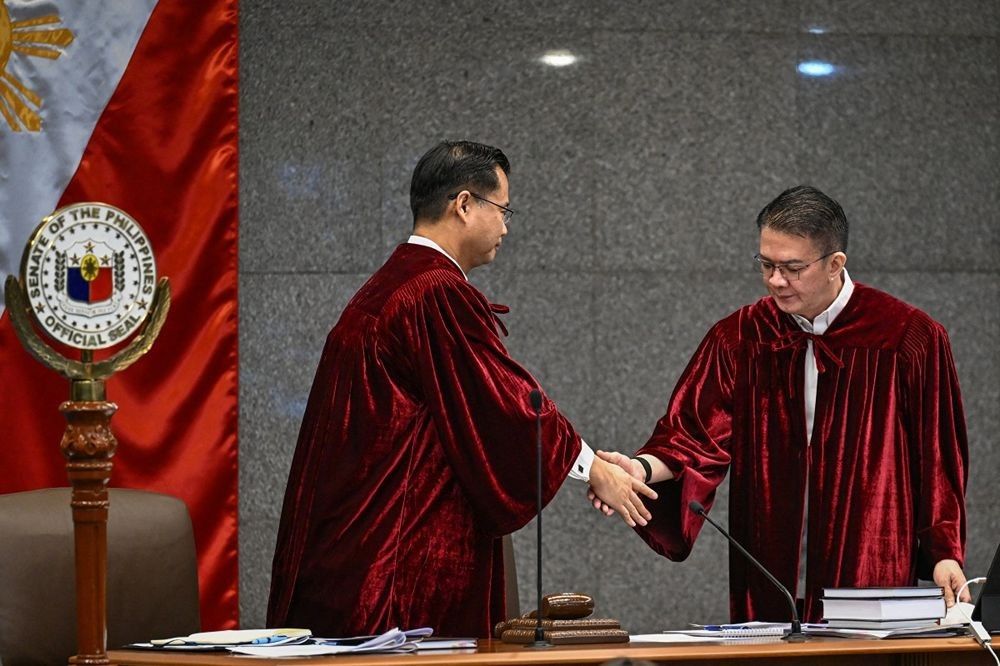
MANILA, Philippines — A constitutional debate took center stage on the opening day of Vice President Sara Duterte's impeachment trial on Monday, July 6, after senators objected to the election of Sen. Chiz Escudero as the trial's presiding officer. Sen. Alan Peter Cayetano, along with his sister, Sen. Pia Cayetano, raised concerns about the election of a presiding officer for the impeachment court, arguing that the Senate president should preside over the proceeding under the 1987 Constitution. The impeachment court, particularly members of the Sherwin Gatchalian-led majority, however, proceeded to elect Escudero to preside with 12 votes versus opposition's eight. The dispute has raised the question: What does the Constitution say about who should preside over an impeachment trial? Article 11, Section 3(6) of the 1987 Constitution states that when the president of the Philippines is on trial before an impeachment court, the chief justice of the Supreme Court shall preside. The chief justice, however, cannot vote, unlike senator-judges in an impeachment court. This was seen during the impeachment trial of former President Joseph Estrada, where former Chief Justice Hilario Davide Jr. presided. The Constitution, however, is silent on who should preside over the impeachment court when an impeachable official other than the president is on trial. The only time an impeachment trial proceeded without the chief justice presiding was during the impeachment of former Chief Justice Renato Corona. In an interview with Philstar.com, lawyer Evecar Cruz-Ferrer, a law professor from Ateneo de Manila University, said that if there is ambiguity in the provisions of the Constitution, one must refer to the discussions of the Constitutional Commission. "Since the Constitution is silent on the matter, checking the deliberations of the Constitutional Commission will help shed light as to the intent of the framers of the 1987 Philippine Constitution," Cruz-Ferrer said. When asked if the proceeding may be declared void if the election of a presiding officer is found unlawful, Cruz-Ferrer said: "Not necessarily, since it is just the issue of the impeachment officer." In a Facebook post, University of the Philippines College of Law professor Mike Tiu, citing jurisprudence, said the records of the Constitutional Commission should be consulted only when the primary guidelines for constitutional interpretation fail. "The intention is clear in the absence of an express provision. And because the power rests in the Senate, the Senate as a body can decide who the Presiding Officer could be," Tiu said. Article 11, Section 3(8) of the Constitution also states that "Congress shall promulgate its rules on impeachment to effectively carry out the purpose of this section." The impeachment proceeding against Duterte is expected to last for 92 days. The trial will allocate its timeline across the four articles of complaint, starting with Article IV, which will be tackled for 11 days and revolve around the alleged assassination plot, grave threats and inciting to sedition against the government. Article I will be designated for 31 days to address the alleged misuse and misappropriation of confidential funds. The trial will then move to Article III, with eight days allocated for charges of alleged bribery and corruption within the Department of Education. Finally, 12 trial days will be set aside for Article II, which covers allegations of unexplained wealth, false statements of assets, liabilities and net worth, and continued business interests.

多角的分析

経済的影響

副大統領の弾劾裁判は、フィリピン経済に直接的な影響を与えるものではないが、政治的不安定さが増す兆候として捉えられ、投資家の信頼感に間接的な影響を与える可能性がある。特に、司法制度の独立性や法の支配に関する懸念が高まれば、国内および海外からの投資が抑制されるリスクも考えられる。

投資家心理

今回の憲法論争は、フィリピンの法制度と政治的安定性に対する投資家の懸念を一時的に高める可能性がある。しかし、弾劾裁判のプロセス自体が進行し、結果が出るまでは、市場への影響は限定的と見られる。重要なのは、裁判の公正さと透明性が保たれるかどうかであり、それが今後の投資判断に影響を与えるだろう。

社会的影響

副大統領の弾劾裁判という重大な政治的出来事における議長選出を巡る憲法論争は、国民の間で法解釈の多様性や政治的駆け引きに対する関心を高める。特に、SNS上では様々な意見が飛び交い、議論が活発化する可能性がある。また、裁判の長期化は、国民の政治への関心を維持する一方で、政治的疲弊感を生む可能性も否定できない。

市民の声

今回の議長選出を巡る憲法論争は、一般市民にとっては、普段あまり意識しない法律や憲法について考えるきっかけとなる。特に、SNSなどで情報に触れる機会の多い若年層は、この議論をどのように受け止め、政治への関心を深めるかが注目される。また、裁判の長期化は、日常生活への直接的な影響はないものの、政治ニュースへの関心を維持させる要因となりうる。

背景・歴史的文脈

フィリピンの憲法は、大統領の弾劾裁判においては最高裁判所長官が主宰することを明記している。これは、大統領という国家元首に対する弾劾という極めて重大な手続きにおいて、司法の最高責任者による公正な司会を確保するためである。しかし、副大統領やその他の弾劾対象となる公務員の場合、憲法は議長について具体的な規定を置いていない。この規定の不在が、今回のエスクデロ上院議員の選出を巡る議論の根源となっている。過去の事例では、レナト・コロナ元最高裁判所長官の弾劾裁判で、最高裁判所長官以外の人物が主宰したケースがあるが、その際の議長選出プロセスに関する詳細な記録や、それが今回のケースに直接適用されるかについては、さらなる憲法委員会の審議の参照が必要となる。

原文ソース

Philstar Nation

原文を読む