SC Asked to Nullify Duterte’s ‘Drug War’ Memo
Politics
2026年7月4日
4
Inquirer NewsInfo

SC Asked to Nullify Duterte’s ‘Drug War’ Memo

AI サマリー

Human rights lawyers have petitioned the Supreme Court to nullify a 2016 police memorandum, "Project: Double Barrel," which outlined former President Rodrigo Duterte's drug war policy. They argue the memo remains in effect and seek judicial protection for families victimized by the campaign.

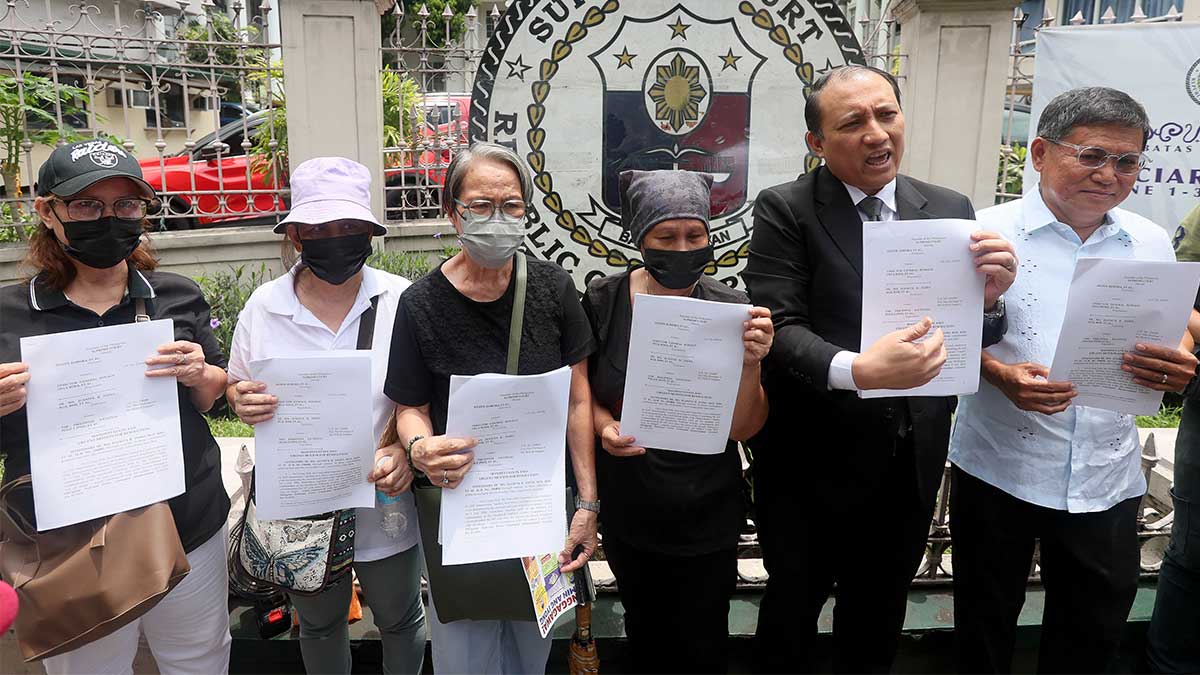
Human rights lawyers on Friday petitioned the Supreme Court to nullify a 2016 police memorandum that laid down former President Rodrigo Duterte’s drug war policy, saying it remained ”in effect” in their view. They also asked the high court to rule on their petitions seeking judicial protection for families victimized by the drug war. The memo titled “Project: Double Barrel,” signed on July 1 ten years ago by then Philippine National Police chief Gen. Ronald “Bato” Dela Rosa, marked both drug syndicates and smalltime peddlers and users as PNP targets. But the ensuing antinarcotic operations mostly focused on urban poor communities where, according to rights watchdogs, as many as 30,000 were killed. Dela Rosa, who is on his second term as senator, is fleeing an arrest warrant issued by the International Criminal Court (ICC) in connection with the drug war it will try in November. Duterte was brought to the ICC’s custody on March 12 last year. In their manifestation and urgent motion for resolution, lawyers Joel Butuyan and Gilbert Andres of CenterLaw Philippines said the 2016 memorandum and other “executive issuances being challenged are still in effect and are also capable of repetition yet evading review.” They also warned that these policies “may be altered, superseded or rendered inoperative before a judicial review is completed.” “If the mere end of term of a presidency can purportedly render constitutional challenges moot, then important constitutional questions concerning executive action could repeatedly evade judicial determination despite their continuing significance,” they said. Butuyan, who writes a column for the Inquirer, and Andres also asked the court to act on two consolidated petitions for writ of amparo which they filed in 2017. A writ of amparo is a protective legal remedy which serves to uphold a person’s constitutional rights to life, liberty and security.The petitions cover 26 communities in Metro Manila where, it said, residents were harassed at the height of crackdown. For security reasons, the lawyers declined to give media specific details about the areas. They further asked the court, “on this 10th year commemoration of the bloody ‘war on drugs,’ [to] judicially declare and place on historical record that the Philippine ‘war on drugs’ happened, that its policy was [the] extrajudicial/extralegal killings of mere suspects and [that it] was unconstitutional for violating the constitutional rights to life, liberty and security of Filipinos.” In a separate statement, Butuyan and Andres said the families of drug war victims “are left commemorating a decade of grief, loss and unaddressed systemic violence.” The PNP is “not doing anything to withdraw” the memorandum, Butuyan said in an interview with reporters. “If similar incidents happen again, [the police] may still use Double Barrel to justify their operations,” he said. “So we are asking the Supreme Court to decide on this and declare it invalid and unconstitutional.” A resolution by the high court on their petitions would “lend credence to the assertion that the Philippines has a working judicial system” ensuring the protection of its citizens, the lawyers said. The Supreme Court earlier issued resolutions on two petitions against the drug war, but without deciding yet on their substantive merits. One was filed by Catholic nun Ma. Juanito Daño in connection with the killing of 35 people and the arrest of eight suspects. Another was filed by lawyer Aileen Almora, whose brother died in an antidrug police operation. Daño’s petition was represented by CenterLaw and Almora’s, the Free Legal Assistance Group (Flag). In an April 3, 2018 resolution, the high court said “The government’s inclusion of these deaths among its other accomplishments may lead to the interference that these are state-sponsored killings.” It also ordered the Office of the Solicitor General to turn over police records of the antidrug campaign to Flag and CenterLaw. INQ

多角的分析

経済的影響

麻薬戦争は、その実施期間中に経済活動に影を落とした。特に、被害者の多くが都市部の貧困層であったことから、これらのコミュニティにおける生産性や消費能力の低下を招いた可能性がある。また、国際社会からの懸念は、フィリピンへの直接投資や観光客の減少につながり、経済成長の機会を逸したという側面も考えられる。今回の請願は、過去の政策を法的に清算しようとする動きであり、将来的な経済政策の透明性や人権配慮への期待を高める可能性がある。

投資家心理

過去の麻薬戦争における人権侵害の懸念は、フィリピンの投資環境に対する国際社会の評価に影響を与えてきた。特に、法の支配や人権保護への懸念は、一部の投資家にとってリスク要因となり得る。今回の最高裁への請願は、フィリピンの司法制度が過去の政策をどのように扱うかを示す重要な指標となる。もし最高裁が命令書の無効化を認めれば、投資家はフィリピンの法制度に対する信頼を回復する一助となる可能性があるが、一方で、過去の政策の責任追及が新たな法的・政治的リスクを生む可能性も否定できない。

社会的影響

麻薬戦争は、フィリピン社会に深い傷跡を残した。特に、都市部の貧困層コミュニティでは、多くの家族が暴力の犠牲となり、深い悲しみと不信感を抱えている。今回の請願は、被害者家族が長年求めてきた正義と説明責任を求める動きである。最高裁が請願を認めれば、被害者家族の苦しみが公に認識され、社会的な和解への一歩となる可能性がある。しかし、命令書が依然として有効であるという弁護士らの主張は、同様の政策が再発する可能性への懸念を示しており、社会の安全と人権保護のバランスが引き続き問われることになる。

市民の声

今回の最高裁への請願は、麻薬戦争の犠牲者となった家族や、その残虐な実態に苦しんできた多くの市民にとって、希望の光となる可能性がある。特に、都市部の貧困層コミュニティで生活する人々は、過去の警察の行動に対する恐怖や不信感を抱えており、今回の動きは、彼らの権利が守られることへの期待を高める。しかし、命令書が現在も有効であるという事実は、市民の間に不安を残す。彼らは、法制度が真に自分たちの生命、自由、安全を守ってくれるのか、そして過去の過ちが繰り返されないのか、強い関心を持っている。

背景・歴史的文脈

フィリピンにおける「麻薬戦争」は、2016年にロドリゴ・ドゥテルテ前大統領が就任して以来、公式に開始された。その主要な政策文書の一つが、同年7月1日に当時のフィリピン国家警察(PNP)長官ロナルド・デラローサ氏が署名した「Project: Double Barrel」と題された命令書である。この命令書は、麻薬シンジケートから末端の密売人・使用者までをPNPの標的とした。しかし、その後の作戦は、人権団体によると、主に都市部の貧困層コミュニティに集中し、数万人もの死者を出したとされている。この大規模な人権侵害は、国際刑事裁判所(ICC)による捜査の対象ともなっており、ドゥテルテ前大統領自身もICCの管轄下にある。今回の請願は、この「麻薬戦争」の法的根拠となった命令書が、10年を経てもなお実効性を持つと見なされていることに対し、その無効化と、被害者家族への司法保護を求めるものである。

原文ソース

Inquirer NewsInfo

原文を読む