Women of the Jungle: Batin Sembilan Preserve Forests and Traditional Medicine
Society
2026年8月9日
3
Mongabay Indonesia

General articles are free for 24 hours after publish.

Women of the Jungle: Batin Sembilan Preserve Forests and Traditional Medicine

Share
AI Summary

In Bungku Village, Batanghari Regency, Jambi, the Batin Sembilan indigenous community is managed by women who oversee 399 hectares of communal forest and preserve traditional herbal medicine knowledge, linking their lives, culture, and spirituality to the forest.

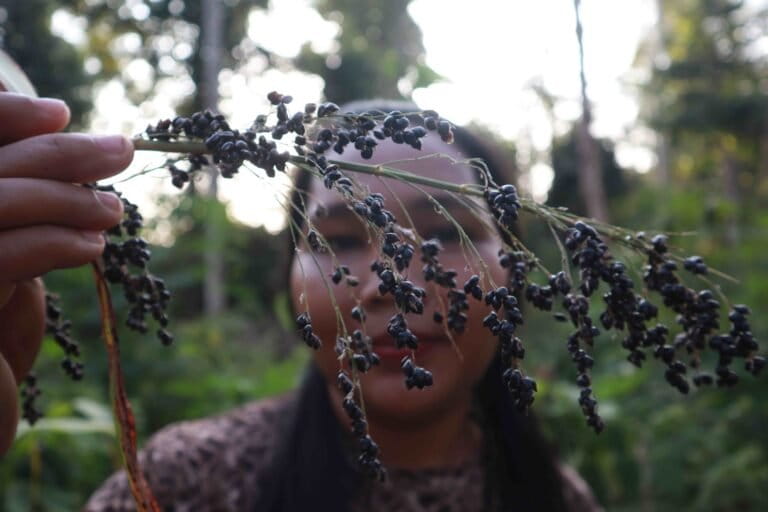
For the Batin Sembilan indigenous community in Bungku Village, Batanghari Regency, Jambi, the forest is more than just a source of livelihood. It is a reservoir of food, living space, and diverse medicinal plants. This knowledge is carefully preserved by the women of Batin Sembilan, including Yunani, 40. When her husband has a fever, Yunani ventures into the forest about 50 meters from her home to find "pasak bumi." The root of this plant is boiled as a fever reducer. When harvesting, Yunani does not uproot the entire plant but only strips a part of its root, ensuring the plant remains undamaged and can regrow. Yunani states that medicinal plants are still abundant in their forest. Knowledge of medicinal plants has been passed down from parents to children since childhood; "pasak bumi" is known to strengthen the body, "kandis" leaves reduce fever, and "berumbung" bark is used to treat malaria. Other plants serve different purposes: "sengkuang" bark is used for measles in children, and the sap and root fibers of "sekriput" are applied directly to wounds from knives or thorns. A decoction of "kait-kait" roots is consumed when feeling fatigued. Forest plants also feature in birth rituals. When a baby is born, "terap" bark is used, and its fibers are woven to tie the umbilical cord. Plants also play a role in spiritual life. The fruit of "gendum," a type of sorghum, is used in "Besale," a healing and cleansing ritual that connects the community with ancestral spirits. The women of Batin Sembilan play a central role in managing their 399 hectares of communal forest. Their activities not only protect the natural environment but also preserve the community's cultural heritage and traditional medicine. Source: Mongabay Indonesia

0

Original source

Mongabay Indonesia

原文を読む