General articles are free for 24 hours after publish.
Cambodian Rural Farmers Boost Income and Family Livelihoods Through Pig Rearing
Farmers in Angkor Borei district, Siem Reap province, Cambodia, are supplementing their incomes by raising pigs during the agricultural off-season. Hin Kau, a farmer, has established a stable income source through family-run pig farming, utilizing feed innovations and selling piglets to enhance her family's livelihood.
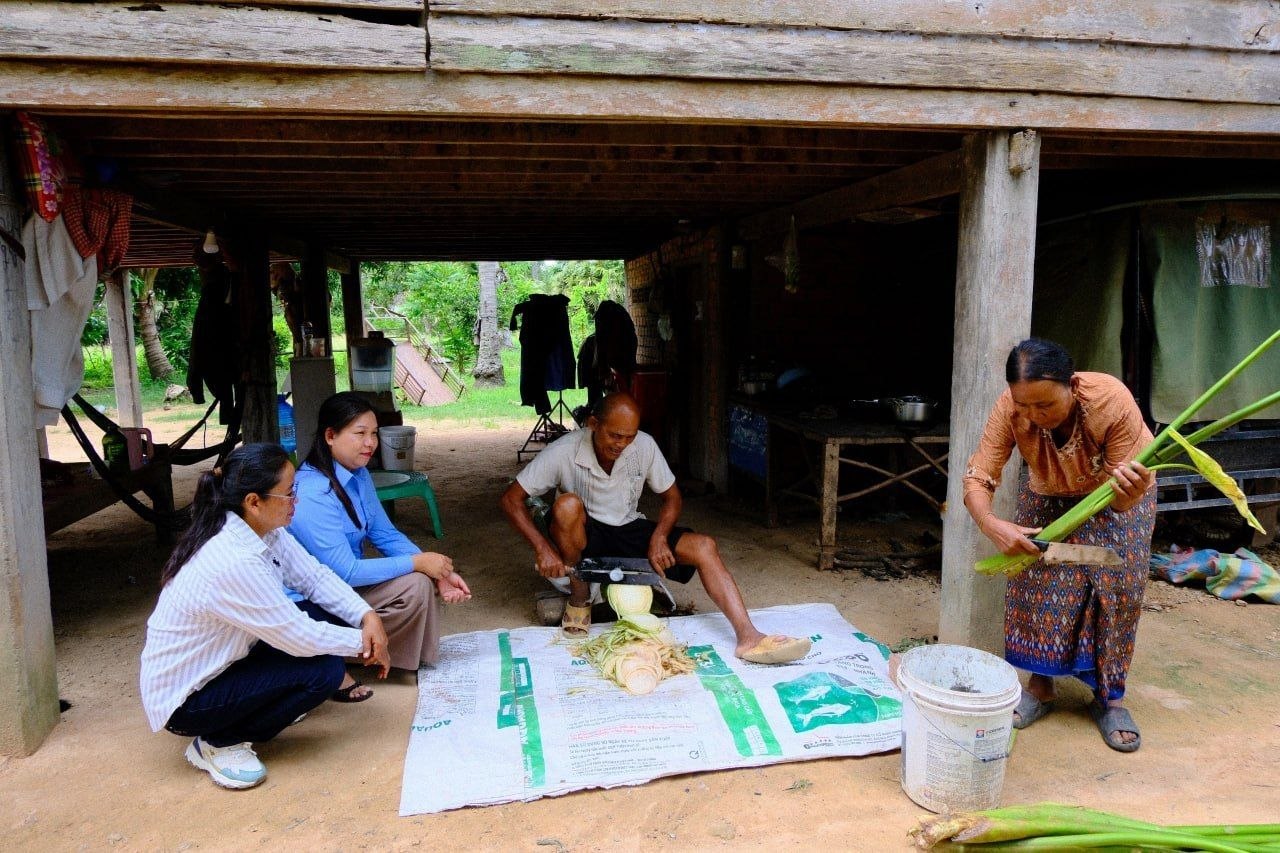
Farmers in Angkor Borei district, Siem Reap province, are increasingly turning to pig rearing as a supplementary income source during the agricultural off-season, after rice and crop cultivation concludes. This family-run livestock endeavor is proving vital for stabilizing household finances and improving livelihoods. Hin Kau, a farmer in the district, exemplifies this trend by raising seven pigs, including parent stock and piglets. For her, pig farming is not merely a side job but a significant revenue stream that supports her family's economy. Kau dedicates considerable time to preparing feed, cleaning pigsties, and monitoring the animals' health, in addition to her farming duties. "I strive to ensure the pigs grow well and can be sold at a reasonable price," she stated. Kau's experience suggests that pig farming can generate continuous income if managed well and if local resources are effectively utilized. She noted differences between raising pigs for meat and raising parent stock. While fattening pigs for market is relatively straightforward and yields quick returns, raising parent stock requires cost-saving measures. Kau has reduced her reliance on commercial feed by preparing her own pig feed using readily available local materials such as banana stalks, taro, and kitchen scraps. Although this method is labor-intensive and time-consuming, it significantly lowers expenses. "Raising pigs for meat is easier as it doesn't require as much effort, but you have to buy factory feed. For parent pigs, feed costs are lower, but preparing their food is more demanding. Chopping banana stalks and taro, and boiling kitchen scraps is hard work, but it can lead to substantial profits with careful planning," Kau explained. Beyond selling fattened pigs to the market, Kau also generates income by selling quality piglets to other farmers. The demand for piglets remains consistent, sometimes offering better profit margins than selling market-ready pigs. A sow typically takes about four months from mating to farrowing, and piglets are ready for sale or further rearing after approximately one month. The income from these sales helps cover her family's daily expenses and contributes to savings for the next agricultural season. While agriculture remains the cornerstone of livelihoods for many in Cambodia, diversifying into livestock farming is a strategic choice to mitigate risks associated with dependence on a single crop and to boost income. Hin Kau's case serves as a practical illustration of how leveraging local resources combined with diligence can transform a small-scale operation into a valuable income source for families. Her transition from seasonal farming income to the consistent revenue from pig rearing reflects her patience, innovation, and commitment to improving her living standards, thereby driving the development of family economies and rural communities.
Original source
AKP Khmer