General articles are free for 24 hours after publish.
Indonesia Faces Weakening Job Creation Capacity Amid Shrinking Middle Class
Indonesia's economy is grappling with declining job creation capacity and a shrinking middle class, exacerbated by post-COVID-19 pandemic layoffs and the decline of labor-intensive industries. The government aims to balance worker protection with job retention through the Employment Protection Bill.
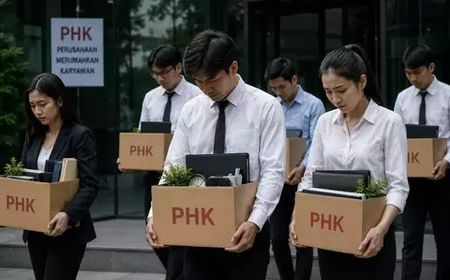
Indonesia's economic ability to create jobs continues to weaken. Post the COVID-19 pandemic, the elasticity of employment opportunities has fallen sharply compared to the previous period, while layoffs (PHK) remain above the pre-pandemic average and the number of middle-class individuals has shrunk. This condition presents a significant challenge in the drafting of the Draft Law on Employment Protection (RUU) by the House of Representatives (DPR). The new regulation is expected to maintain worker protection while providing certainty for the business world to continue creating jobs. C. Heru Widianto, Deputy Expert for Industrial Relations Mediator at the Ministry of Manpower, stated that Indonesia's employment opportunities have significantly decreased in recent years. In 2016, the elasticity of labor opportunities reached 0.4, meaning 1 percent economic growth could create around 300,000 new jobs. However, since the 2000s, this figure has dropped to between 0.16 and 0.27, resulting in only 170,000 to 190,000 new jobs created per 1 percent economic growth. "Since the 2000s, the elasticity of employment has dropped to 0.16-0.27 with employment opportunities created for every 1 percent of growth of only 170 thousand-190 thousand people," Heru said on Friday, September 25. Heru attributes the weakening job creation capacity to the shrinking of labor-intensive industries that previously absorbed a large workforce, such as the textile industry. This trend has become more apparent post-pandemic, with layoffs in the processing and manufacturing sectors not fully recovering to pre-pandemic levels. The average annual layoffs, around 20,000 workers before the pandemic, increased to over 50,000 annually, with nearly 40,000 layoffs recorded in 2026 alone. "This is what we must pay attention to in drafting the Employment Law. However, it is always related to the elasticity of employment opportunities," said Heru. The shrinking job opportunities have also impacted the socio-economic structure. The number of Indonesian middle-class individuals has decreased from approximately 57.33 million in 2019 to around 46.7 million. Many have fallen out of the middle class due to job losses or a shift to the informal sector, leading to reduced income and spending. Global economic pressures further complicate job creation. Businesses face the risk of rising energy costs as world oil prices have been said to have risen to more than US$100 per barrel. This condition has the potential to provide additional pressure on production costs and business activities. If not anticipated, global economic pressure can have an impact on the ability of companies to maintain or add labor. On the other hand, Indonesia has not been able to fully rely on entrepreneurial growth to absorb the growing working-age population. The growth in the number of entrepreneurs is considered not commensurate with the size of the productive age population. Heru also highlighted the distribution of the productive age population, which is now mostly in urban areas, while the rest are in rural areas. The imbalance between labor force growth, population distribution, and availability of employment also contributes to the high number of informal workers. The composition of informal workers is currently said to reach almost 56 percent, while formal workers are around 44 percent. This condition is different from the 2019-2020 period when the proportion of formal workers was still higher. Chairman of the Employment Sector of the Indonesian Employers Association (Apindo), Bob Azam, said that the existence of employment is basically a form of protection for workers. Without work, various rights inherent in formal employment relationships also have the potential to be lost. "The existence of employment is actually protection for the workers themselves. Without work, workers' rights such as holidays, holiday allowances, and other facilities will also disappear by themselves," said Bob. Therefore, Apindo encourages the concept of flexicurity, which is an approach that combines flexibility for the business world with protection for workers. Bob assessed that the overly strict labor regulations have the potential to encourage workers to enter the informal sector. According to him, work contracts, outsourcing schemes, and internship programs can be a gateway for workers to enter the formal sector. He also assessed that the minimum wage regulation should not be applied uniformly without considering the conditions of each sector. The determination of wages, according to him, needs to expand the bipartite dialogue space between companies and workers by considering productivity. "One rule is also not suitable for being applied simultaneously to all sectors. There is no such thing as regulation one for all," concluded Bob. This question is one of the challenges in drafting the Employment Protection Bill. In the midst of weakening labor creation elasticity, high layoffs and the large portion of informal workers, employment regulations are not only required to provide protection for workers, but also consider the ability of the business world to create and maintain jobs. Source: VOI English
Original source
VOI English