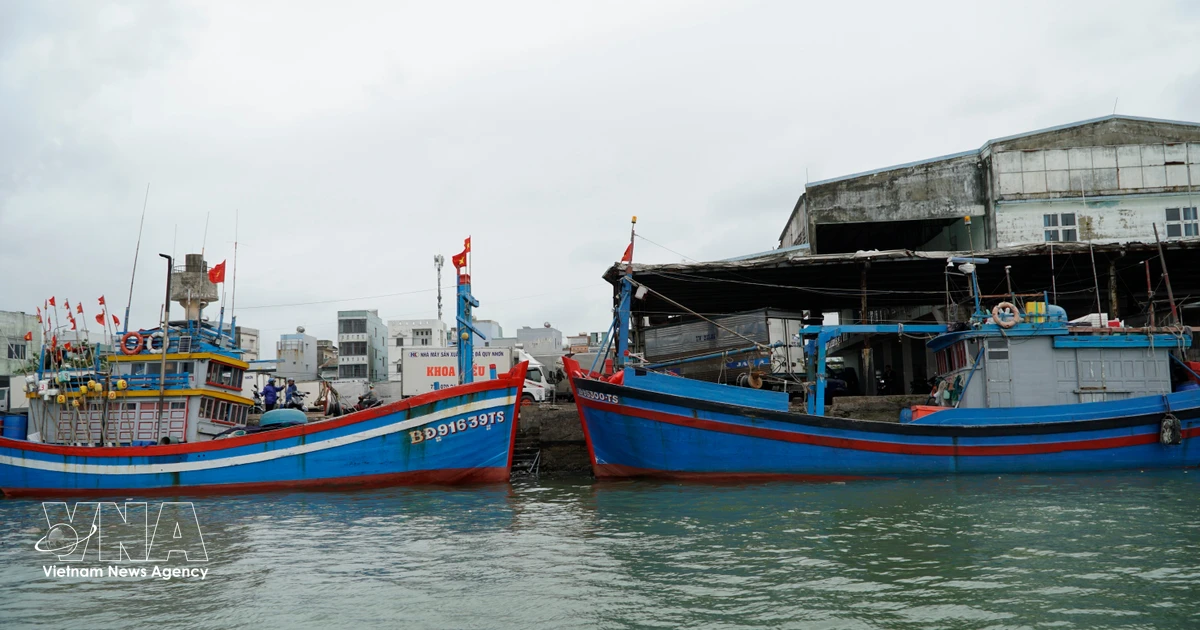
Lam Dong Strengthens Community-Led Models to Combat IUU Fishing
Lam Dong Province in Vietnam is directing the expansion of community-led models to enhance efforts against Illegal, Unreported, and Unregulated (IUU) fishing. The province aims to lift the European Union's "yellow card" warning by fully registering fishing vessels and updating the national database.
The provincial People’s Committee of Lam Dong, located in the central-southern region of Vietnam, has directed the expansion of community-led models to strengthen efforts against Illegal, Unreported, and Unregulated (IUU) fishing. The committee has urged relevant agencies and localities to conduct a comprehensive review of documentation and data, and to strictly handle violations, particularly during peak fishing periods. According to a report from the provincial Department of Agriculture and Environment, all 8,205 fishing vessels in the province have been fully registered and updated in the national fisheries database (VNFishbase). This enables authorities to track the legal status, operational status, and voyage histories of fishing vessels more effectively. These initiatives are intended to contribute to the sustainable development of the fisheries sector and support efforts to have the European Commission’s (EC) “yellow card” warning against Vietnamese seafood lifted. Vietnam, as a leading exporter of agricultural and aquatic products, faces increasingly stringent sustainability requirements in key markets such as the US, the EU, and Japan, making the transition to low-emission farming increasingly important. Under Vietnam's one-party system, the government aims to balance economic growth with compliance with international standards. Combating IUU fishing is crucial, especially to avoid import restrictions from markets like the EU. Previously, concerns over IUU fishing led the EU to issue a yellow card to Vietnamese seafood, significantly impacting exports. The current move by Lam Dong Province reflects lessons learned and an effort to implement more effective measures.
多角的分析
ベトナムの水産業は、EU市場からの「イエローカード」警告解除という喫緊の課題に直面しており、これは輸出収入に直接影響します。ラムドン省のIUU漁業対策強化は、単なる規制遵守を超え、持続可能な漁業モデルへの移行を促す経済的インセンティブとなり得ます。EUの持続可能性要件は年々厳格化しており、これに対応できない事業者は市場から排除されるリスクがあります。今回の地域主導モデルは、小規模漁業者を含むサプライチェーン全体の透明性と追跡可能性を高め、結果として国際市場での競争力を向上させる可能性があります。
IUU漁業対策の強化は、ベトナムの水産物輸出企業、特にEU市場をターゲットとする企業にとって、リスク低減と機会創出の両面で重要です。イエローカードが解除されれば、輸出の円滑化とブランドイメージの向上につながり、投資家にとって魅力的な投資環境が生まれます。逆に、対策が不十分な場合、EUからの輸入禁止措置が再導入されるリスクがあり、これは投資回収期間の長期化や収益性の低下を招く可能性があります。追跡可能性システムへの投資は、将来的な市場アクセスを確保するための必須条件となるでしょう。
IUU漁業対策は、漁業コミュニティの生活に直接的な影響を与えます。ラムドン省が地域主導モデルを推進することは、漁業従事者が対策の重要性を理解し、自主的に協力する土壌を育むことを目指しています。しかし、新しい規制や記録保持の義務は、特に伝統的な漁業慣行を持つ小規模漁業者にとっては負担となる可能性があります。彼らが新たなシステムに適応できるよう、十分な教育、技術支援、そして経済的な補償措置が不可欠です。また、地域社会の連帯が、環境保護と経済的利益の両立を可能にする鍵となります。
ベトナム国民、特に漁業に依存する地域社会にとって、IUU漁業対策は生活の安定に直結します。EUからのイエローカードは、水産物輸出の減少を通じて雇用機会の喪失や所得の低下を引き起こす可能性があります。ラムドン省が地域主導のモデルを強化することは、漁業従事者が持続可能な漁業慣行を実践し、国際市場の基準を満たすことで、より安定した収入源を確保できるようになることを目指しています。しかし、新たな規制への適応には、漁業従事者への十分な情報提供と支援が不可欠です。
背景・歴史的文脈
ベトナムは世界有数の水産物輸出国であり、欧州連合(EU)は重要な市場の一つです。しかし、2017年以降、EUはベトナムに対し、IUU漁業対策の不備を理由に「イエローカード」を提示し、水産物輸出に警告を発しました。この警告は、ベトナム水産物の輸入を制限する可能性を示唆しており、同国の水産業界に大きな影響を与えています。ベトナム政府は、この警告解除を目指し、水産資源の管理強化、漁船の登録・監視体制の整備、違法漁業への罰則強化など、様々な対策を講じてきました。ラムドン省のような地方レベルでの地域主導モデルの展開は、全国的な対策を補完し、現場レベルでの実効性を高めることを目的としています。
原文ソース
VietnamPlus English