General articles are free for 24 hours after publish.
Indonesia Holds Off on ASEAN Power Grid Signature Over Unfair Electricity Pricing
Indonesia has withheld its signature on the ASEAN Power Grid (APG) commitment due to perceived imbalances in electricity pricing benefits. The Minister of Energy and Mineral Resources stated negotiations are ongoing until a fair agreement is reached.
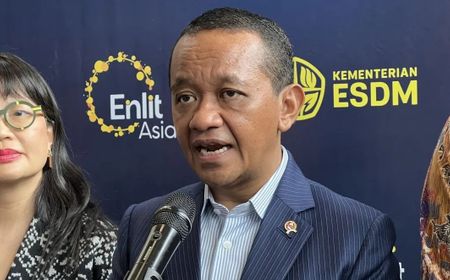
Tangerang - Indonesia has not signed the ASEAN Power Grid or APG commitment because the price of electricity discussed is considered not to provide balanced benefits. Minister of Energy and Mineral Resources Bahlil Lahadalia said negotiations are still ongoing. Indonesia, said Bahlil, will only sign after reaching an agreement that is considered fair for both parties. "The price is not win-win," said Bahlil on the sidelines of Electricity Connect 2026 in Tangerang, Banten, as quoted by Antara, Tuesday, September 22. Bahlil admitted that he had communicated with Malaysia regarding the ASEAN Power Grid commitment, which was one of the results of the 48th ASEAN Summit in Cebu, Philippines. However, based on his calculations, the scheme that has been discussed so far has not provided a commensurate benefit for Indonesia. "Win-win is good for you, it's good for us too. The good thing is that it must be fair, not you get 70, we get 30. That's not win-win, it's called abuleke," said Bahlil. Bahlil ensured that Indonesia would continue to support regional energy cooperation. However, he emphasized that collaboration must provide balanced benefits for the countries involved. "No country is great because of a single fighter, it's not the era anymore. Collaboration is also mutual need, mutual acceptance, and mutual giving," he said. ASEAN Power Grid is an effort to connect the electricity systems of ASEAN countries so that cross-border trade and electricity exchanges can be carried out more widely. Previously, President Prabowo Subianto encouraged ASEAN countries to accelerate the development of regional energy networks. Energy security is considered one of the urgent challenges amid global pressure and geopolitical instability in the Middle East. Prabowo also highlighted the potential for renewable energy in the Brunei Darussalam-Indonesia-Malaysia-Philippines East ASEAN Growth Area or BIMP-EAGA, ranging from hydropower, solar, to wind. The development of regional electricity interconnection is part of ASEAN's efforts to strengthen energy sharing mechanisms amid concerns about supply disruptions due to conflicts in the Middle East.
Original source
VOI English