Indonesia's Free Meals Program Faces Corruption Allegations and Waste
Politics
2026年7月9日
7
Al Jazeera Indonesia

Indonesia's Free Meals Program Faces Corruption Allegations and Waste

AI サマリー

Indonesia's flagship free meals program, a key presidential pledge, is embroiled in allegations of massive corruption and inefficient resource allocation. Concerns include the program's disproportionate focus on affluent regions and thousands of food poisoning incidents over the past 18 months.

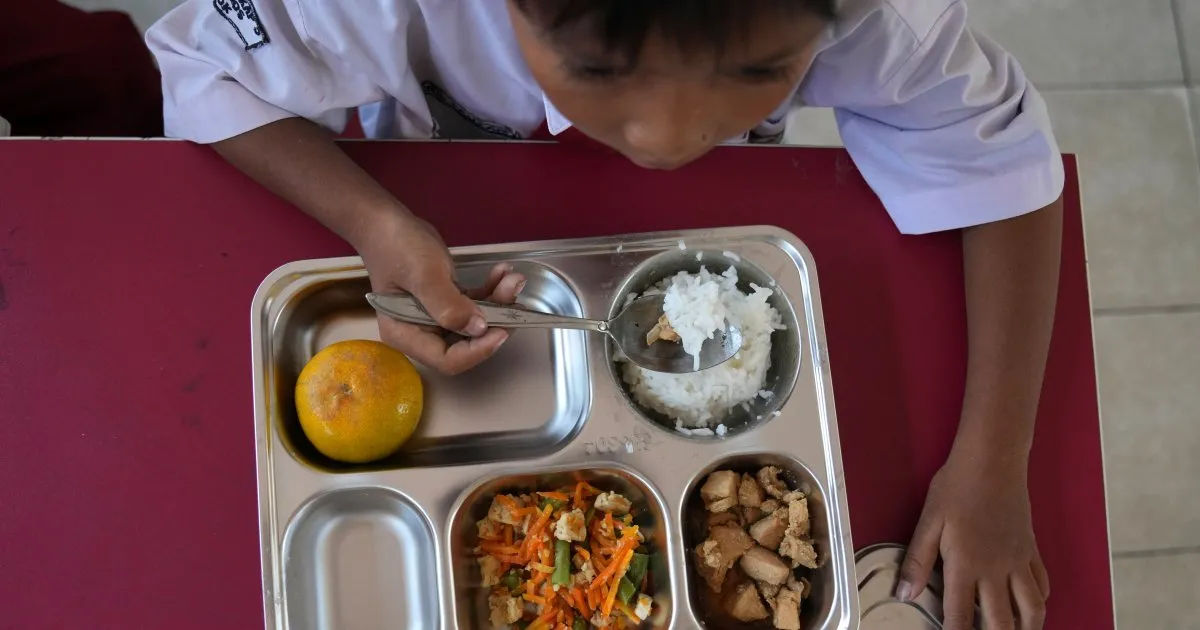
Indonesian President Prabowo Subianto’s initiative has been criticised for misdirecting resources to affluent regions. Save Share Indonesian President Prabowo Subianto’s signature free meals programme is escalating into one of Indonesia’s biggest corruption scandals in years as officials struggle to rein in the $15bn initiative amid allegations of graft and mismanagement. Launched in 2025, the “Free Nutritious Meals” programme aims to address the chronic issue of stunting among children, improve their focus in school, and stimulate the local economy. Indonesia nearly halved the prevalence of stunting over the past decade to around 20 percent of children nationwide, according to the World Bank, but it remains stubbornly high in many of the archipelago’s eastern provinces and outer islands. Over the past 18 months, the programme has rolled out nearly 28,000 kitchens, each supplying schools and communities with up to 3,000 meals a day. Critics say the programme is too large and unwieldy to be effective, while the initiative has also been plagued by thousands of cases of food poisoning. The initiative has also drawn global scrutiny since authorities arrested the head of Indonesia’s National Nutrition Agency and two of his deputies in early June for alleged procurement fraud amounting to $56m. Authorities have since expanded their investigations to seven people, including an active-duty police officer and a military officer. After spending $2.8bn getting the programme off the ground in 2025, the government in May cut this year’s budget from $18.4bn to $14.7bn following a directive from Prabowo to use funds “more effectively and efficiently”. But critics like Ronny Sasmita, a senior analyst at the Indonesia Strategic and Economic Action Institution, a Jakarta-based think tank, say that Indonesia cannot afford even a downsized version of the scheme, which is being partly funded by spending reallocated from the health and education budgets. Worse, Samsmita said, the government has created a massive opportunity for corruption. “From an economic governance perspective, the alleged corruption in the ‘Free Nutritious Meals’ programme stands out as one of the most significant cases Indonesia has seen in recent years, both in scale and systemic impact,” Sasmita told Al Jazeera. “What makes it particularly striking is not only the size of the budget involved, given that the programme is designed as a nationwide social intervention, but also the breadth of its implementation across regions, which creates multiple entry points for leakages,” he said. While kitchens established under the programme are funded by the government, they are operated franchise-style by a network of foundations rather than through school canteens. Some of these foundations have ties to the police and military, according to the Center of Economic and Law Studies (CELIOS), an Indonesian think tank that has conducted multiple studies on the programme. Kitchen operators also receive “daily incentive fees” of 6 million rupiah ($324), described by the since-arrested nutrition agency chief as tokens of “appreciation from the government to partners who have sacrificed to build the facilities.” At least 18,000 kitchens, more than half of the programme’s facilities, are located on Java, Indonesia’s wealthiest and most populous island, according to local media reports. Meanwhile, roughly 270 kitchens were established in both eastern Papua, home to six provinces with some of Indonesia’s highest stunting rates, and Bali, the province with the lowest stunting rate. “The most isolated, the poorest areas, the areas with the most stunting programmes are the lowest performing programmes,” said Annette Mau, a member of the Indonesian Mothers Alliance, which is among the civil society groups monitoring the free meals programme. “Why spend public money feeding children from affluent households when some children still face food insecurity? This is the biggest policy design issue,” Mau told Al Jazeera. Critics also take issue with the kitchens feeding children of all ages through high school, though interventions against stunting are most effective in pregnant and nursing women and in toddlers. According to government data, pregnant women and toddlers made up just 5 percent of the 25.78 million recipients reached between January and September 2025. The programme’s image has also been marred by thousands of cases of food poisoning, which reached 33,000 as of April 2026, according to the Indonesian Education Monitoring Network. Coordinating Minister for Food Zulkifli Hasan told a media briefing in June that the programme was operating nearly 7,000 surplus kitchens, with incentive fees for these extra facilities alone costing the state a trillion rupiah ($54m) per month. He also alleged that operating permits may have been bought and sold by operators, leading to the number of kitchens swelling beyond demand. Indonesia’s National Nutrition Agency and Prabowo’s office did not respond to Al Jazeera’s requests for comment. Vid Adrison, head of the economics department at the University of Indonesia, said civil society groups have suggested that the government could save money by using existing infrastructure, such as school canteens. “Every school has their canteen, and they already prepare meals according to the preferences of students,” Adrison told Al Jazeera. “Why not just optimise the existing schools instead of creating new kitchens?” Officials have flagged changes amid the criticism of the rollout. Last month, the National Nutrition Agency said it would prepare a special scheme targeting mothers and toddlers in the “underdeveloped, frontier, and outermost areas” of Indonesia. known as the “3T Regions.” Another $2.2bn could soon be on the chopping block as the government moves to further downsize the programme. Changes are also being made to the “incentives scheme,” according to local media, although details have yet to be released. Prabowo, meanwhile, has continued to defend his flagship programme as a success story. “Ask the farmers and fishermen. Ask the children. Is [the programme] necessary or not?” Prabowo said during a speech last month, according to Indonesia’s Antara news agency. “Some intelligent people say there are things more urgent than an empty stomach. I do not think there is anything more urgent than an empty stomach,” he said. “If a hungry person’s stomach is not filled immediately, then they will die.” Follow Al Jazeera English:

多角的分析

経済的影響

無料給食プログラムへの巨額の予算配分は、地域経済の活性化という名目とは裏腹に、その非効率性と不正の温床となっている点が問題視されている。特に、医療や教育予算からの資金再配分は、本来の目的を損なう可能性があり、持続可能性に疑問符がついている。また、インセンティブ手数料の支払いや余剰調理施設の稼働は、財政への大きな負担となっている。これは、大規模な社会福祉プログラムにおける財政規律の重要性を示唆している。

投資家心理

このプログラムを巡る汚職疑惑と予算削減の動きは、インドネシアの投資環境に対する懸念材料となる。特に、政府の財政運営の不透明性や、法執行の有効性に対する疑念は、外国投資家にとってリスク要因となり得る。一方で、食料安全保障や栄養改善といった分野への投資は、長期的な視点では魅力的であり、汚職問題が解決されれば、より健全な投資機会が生まれる可能性もある。

社会的影響

プログラムの設計上の問題、特に裕福な地域への偏った配分や、スタウンティング対策として最も効果的な幼児期を過ぎた子供たちへの食料提供は、本来支援を必要とする層への支援が手薄になるという社会的不平等を助長する可能性がある。また、数千件に及ぶ食中毒の発生は、子供たちの健康を直接的に脅かす深刻な問題であり、プログラムの安全性と衛生管理体制の抜本的な見直しが求められている。これは、社会福祉政策における公平性と効果性の両立の難しさを示している。

市民の声

ジャワ島のような人口密集地や富裕層が多く住む地域に調理施設が集中し、一方でスタウンティング率の高い辺境地域への配分が少ないという事実は、地方の市民、特に経済的に困難な状況にある家庭にとって、プログラムの恩恵を受けにくい状況を生み出している。また、食中毒の発生は、子供を持つ親たちの間で食の安全に対する不安を増大させ、日常生活に直接的な影響を与えている。政府の発表する数字と、現場で実感される恩恵やリスクとの乖離が、市民の不信感を招く可能性がある。

背景・歴史的文脈

インドネシアでは、子供の成長阻害(スタウンティング)は長年の課題であり、政府はこれを解決するための社会プログラムを重視してきた。プラボウォ大統領は選挙公約でこの無料給食プログラムを掲げ、国民の支持を得た。しかし、プログラムの急速な拡大と巨額の予算配分は、既存の行政システムや監視体制の能力を超え、不正の温床となった。特に、地方分権が進むインドネシアにおいて、全国規模のプログラムを中央集権的に管理することの難しさや、地域間の格差が問題として浮上している。

原文ソース

Al Jazeera Indonesia

原文を読む