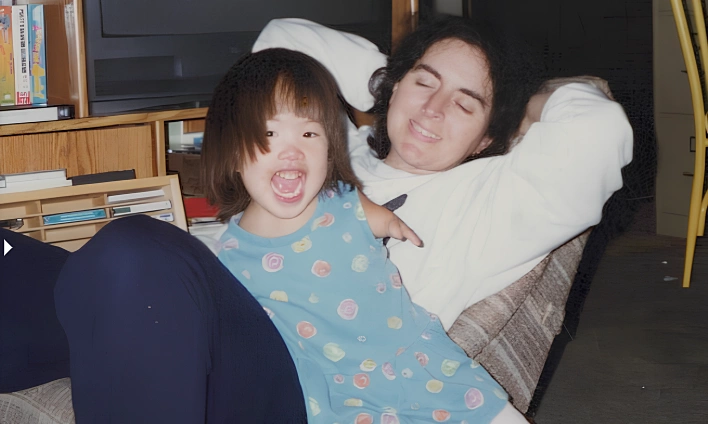
Vietnamese Woman Born Without Arms Builds Independent Life with Support of Adoptive Mother
Anna, a Vietnamese woman born without arms and adopted in the U.S., has overcome challenges with her adoptive mother Susan's emphasis on independence, earning a psychology degree and working in a tech company. She now inspires others with limb differences by sharing her life on social media.
Thirty-two years ago, Susan Buchholz arrived at an airport in the U.S. to welcome the seven-month-old Vietnamese baby she had adopted. An official placed the infant in her arms, handed over a bottle of milk and offered one piece of urgent advice: take the child straight to a doctor. The baby, Nguyen Le Anh, had been born without arms and was suffering from a severe ear infection and sinusitis. Susan later gave her the English name Anna. "It felt as though Anna was meant to be part of my life," recalls Susan, 74, a retired physical therapist in Washington state. Susan's dream of adoption began in childhood after reading "The Family Nobody Wanted", a memoir about a couple who adopted children from the foster care system. Inspired by the story, she became a physical therapist, remained single and eventually adopted five children, all with disabilities. In 1994, the family received a catalogue introducing children around the world who were waiting for adoptive families. Susan asked her children to place paper clips on the photo of the child they wanted most. "Whoever gets the most paper clips will be the one we adopt," she told them. The boy they chose had already been matched with another family. Knowing Susan's professional background, an adoption agency worker asked whether she would consider adopting a baby girl from Vietnam who had been born without arms. "Of course," Susan replied. At the time, Anna was living at the Tu Liem Malnourished and Orphaned Children Centre in Hanoi. Susan spent five months completing the adoption process, which required around 80 documents. "I was so happy because I could finally hold her in my arms," she said. Soon after arriving in the U.S., Anna was taken to a pediatrician. Despite several health problems, she rarely cried, instead quietly observing her unfamiliar surroundings and the siblings waiting to welcome her home. Knowing her daughter would face lifelong challenges, Susan made independence the cornerstone of her upbringing. Whenever Anna asked for help putting on a coat or carrying a backpack, her mother encouraged her to do it herself. "You can do it. Try first," Susan would say. "Even the smallest tasks were things I had to figure out on my own," Anna recalled. Over time, Anna learned to use her feet for almost everything. Susan also arranged occupational therapy to help her master skills that could not simply be learned through practice. As a child, Anna sometimes viewed her mother's strictness as unfair. Only later did she realize it had prepared her to live independently. Today, she carefully plans ahead before leaving home, choosing bags she can manage with her feet, keeping essential items within easy reach and identifying buildings that may not be accessible. Still, independence did not shield her from self-doubt. At the age of eight, Anna attended a summer camp wearing long sleeves to hide her disability. When another child asked if she had broken her arms, she simply nodded. Throughout the camp, she let others help her instead of using her feet. "I wished I could be someone else," she said. Seeing her daughter's struggle, Susan searched for support groups until she discovered the International Child Amputee Network, where Anna met adults living successfully without arms. "That changed my life," Anna said. Her mentor drove a car, built a successful career, got married and lived independently despite having no arms. Watching her confidently walk down the aisle convinced Anna that she could build a similar future. At 16, Anna surprised her mother by announcing she wanted to compete in the Miss Clark County Washington pageant, a preliminary competition in the Miss America system. "That was when I knew she had truly embraced who she was," Susan recalled. Although Anna grew up in the U.S., Susan made a point of preserving her daughter's Vietnamese roots. She bought her an ao dai, introduced her to books about Vietnam and brought her to a Vietnamese Catholic church. When Anna was seven, the family returned to Vietnam so Susan could adopt another little girl. During the trip, Anna also visited the orphanage where she had once lived. Raising six children with disabilities as a single mother was often exhausting, Susan admits. Even with adoption assistance, her salary as a physical therapist could not cover all of the family's expenses. "I always reminded my children that if we have food, a roof over our heads and clothes to wear, we're already fortunate," she said. "Many people don't even have one of those." She believes that lesson taught her children gratitude, while support from family, friends and her faith helped her through the most difficult years. Susan later lost three of her adopted children to health complications, the greatest heartbreak of her life. But seeing her surviving children build fulfilling lives has brought her comfort. Anna graduated with a psychology degree from the University of Washington and later completed part of a master's program overseas before joining the accounting department of a U.S. technology company. Outside work, she volunteers at camps for children with limb differences and runs the social media channel "AnnaByTheFoot", where she shares how she manages daily life using only her feet in hopes of inspiring others. "She's now a completely independent adult, and I couldn't be prouder," Susan said. If she ever meets her birth mother, Anna says she would ask only one question: why she was left behind. Then she would simply thank her. "Because of that decision, I met Susan and have the life I have today."
多角的分析
本件は直接的な経済活動を扱っているわけではないが、ベトナムにおける障害を持つ子供たちの養子縁組や、その後の社会復帰、経済的自立といった側面は、長期的な視点で見れば、人的資本の活用や社会保障コストの削減に繋がる可能性がある。特に、アンナさんのように社会復帰し、経済活動に参加できる人材を育成することは、ベトナム経済の持続的な成長において重要な要素となりうる。障害者雇用やリハビリテーションへの投資は、短期的なコストに見えても、長期的な経済的リターンを生む可能性がある。
このニュースは直接的な投資機会を示すものではないが、ベトナムにおける社会的な包摂性や、障害を持つ人々への支援体制の発展は、長期的に見て同国の投資環境の魅力を高める要因となりうる。企業がESG(環境・社会・ガバナンス)を重視する傾向にある中で、障害者支援に積極的な社会は、国際的な投資家からの評価を得やすい。また、アンナさんのような成功事例は、ベトナムにおける人的資本の多様性と可能性を示すものであり、将来的な労働力市場の活性化に寄与する可能性がある。
アンナさんの物語は、ベトナム社会における障害者への認識と支援のあり方について示唆を与える。彼女がベトナムで生まれ、障害のために養子縁組を必要とした背景には、当時のベトナムにおける医療や福祉、障害者支援体制の限界が示唆される。しかし、アメリカでの養母の献身的な教育と支援により、アンナさんが自立し、社会に貢献できる存在へと成長したことは、個人の可能性と、適切な環境がもたらす影響の大きさを物語っている。彼女がSNSで自身の経験を発信することで、ベトナム国内の障害者やその家族に希望を与え、社会全体の意識改革を促す一助となることが期待される。
アンナさんのような、障害を抱えながらも自立し、社会に貢献する姿は、多くのベトナム市民、特に障害を持つ人々やその家族にとって、大きな希望となるだろう。彼女がSNSで発信する日々の生活や工夫は、身近な問題として共感を呼び、障害者への理解を深めるきっかけとなる。また、養母スーザンさんのように、子供の自立を最優先に考え、困難に立ち向かう姿勢は、子育て世代の市民にとって参考になる。ベトナムでは、まだ障害者への支援や社会参加の機会が限られている側面もあり、アンナさんのような成功事例は、社会全体の意識改革を促す象徴となりうる。
背景・歴史的文脈
ベトナム戦争終結後、多くの孤児や障害を持つ子供たちが国内の施設に収容された。当時は、障害を持つ子供たちへの社会的な理解や支援体制が十分ではなく、養子縁組は、こうした子供たちがより良い環境で成長するための重要な選択肢の一つであった。特に、アメリカなど先進国からの養子縁組は、高度な医療や教育、福祉へのアクセスを子供たちに提供する機会となった。アンナさんのケースは、ベトナムの社会状況と、国際的な養子縁組がもたらした恩恵の両面を示している。彼女の養母スーザンさんのように、障害を持つ子供たちを積極的に受け入れ、自立を促す教育を行う姿勢は、ベトナム国内でも徐々に広がりつつある障害者支援の動きと共鳴する。
原文ソース
VnExpress International