Ho Chi Minh City: 100-Year-Old Pagoda Linked to Legend of Buffalo Boy's Prayer
Society
2026年6月29日
5
VnExpress
Relations
🇻🇳Vietnam🇹🇭Thailand

Ho Chi Minh City: 100-Year-Old Pagoda Linked to Legend of Buffalo Boy's Prayer

AI サマリー

Phuoc Thanh Pagoda in Long Truong Ward, Ho Chi Minh City, built around the 19th century, is known for a legend where a buffalo boy molded Buddha statues from clay and floated them in a pond, with the statues miraculously surfacing. Rebuilt in 1998 after wartime destruction, it remains a peaceful place of worship for local residents.

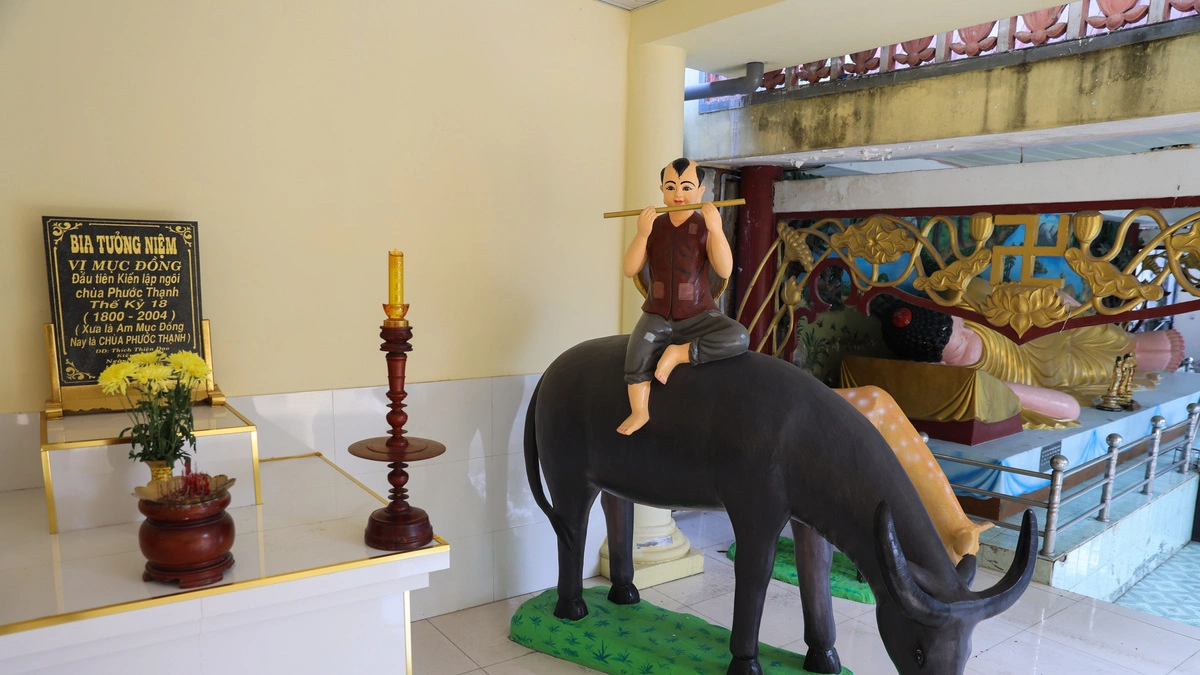
Phuoc Thanh Pagoda in Long Truong Ward, Ho Chi Minh City, built around the 19th century, is also known as "Mục Đồng" (Buffalo Boy) due to a legend associated with it. The legend tells of buffalo boys who molded Buddha statues from clay and floated them in a pond, with the statues miraculously surfacing. Spanning approximately 1,000 square meters, Phuoc Thanh Pagoda features a main sanctuary at its center, with a spacious courtyard and a decorative screen in front. After being destroyed twice during wartime, the pagoda's space and architecture were rebuilt in 1998. According to inscriptions at the pagoda, this area was once a barren field. Buffalo boys, when playing, would often take clay to mold Buddha statues and release them into puddles. Records state that these statues would all float on the water's surface. From this phenomenon, the village elders established the "Mục Đồng" hermitage to worship and considered it a good omen. Before 1900, it was called "Mục Đồng Hermitage." Later, villagers in the area repaired the hermitage and named it Long Thanh Pagoda. In 1943, the resident monk who participated in the resistance was killed by the French colonialists, and the pagoda was burned down. In 1955, the ancient temple was rebuilt and renamed Phuoc Thanh. During the resistance war against America, the pagoda was again destroyed. In 1998, thanks to the devotion of Mr. Hoang Van Soi and local Buddhists, the pagoda was rebuilt to its current state. Beside the main sanctuary, there is a small hermitage housing a memorial stele and a statue of a buffalo boy playing a flute while riding a buffalo. The spacious courtyard partially recreates the Lumbini Garden, considered the birthplace of Siddhartha Gautama Buddha over 2,500 years ago. The miniature Lumbini Garden at Phuoc Thanh Pagoda depicts the Buddha's birth event. The infant Buddha statue stands on a lotus flower, with the right hand pointing to the sky and the left hand to the earth, evoking the phrase "Above and below heaven, I alone am honored." Surrounding it are statues of Queen Maya and attendants, representing a sacred moment that initiated Buddhism. Many other statues nearby depict Buddhist parables. Pictured is the scene of Prince Siddhartha cutting his hair to renounce worldly life, deciding to abandon a royal life to seek liberation for all beings. The pagoda entrance is wide with rows of green trees. On both sides of the path are 18 statues of Arhats – the highest saints among the Buddha's disciples. Each statue has a different form and expression, symbolizing various states of spiritual practice and qualities. Opposite the Lumbini Garden are altars for Buddhas, Bodhisattvas, and stupas containing ashes. This area also houses altars for Emperor Tran Nhan Tong, Ba Chua Xu Nương Nương, and Quan Thanh De Quan. The architecture of the altars carries traditional features with red tiled roofs, dragon motifs, and Buddhist symbols. The main sanctuary is the primary space for monks and devotees to perform rituals. At the center is a statue of Shakyamuni Buddha, flanked by Bodhisattva statues and smaller figures symbolizing various manifestations of Buddhas. The interior and exterior of the pagoda are decorated with numerous statues and bas-reliefs of Buddhas. Notably, a 4-meter-long reclining Buddha statue, the largest in the pagoda, depicts Buddha's entry into Nirvana. Currently, the pagoda has no resident abbot; the rituals and upkeep are managed by three monks. It is not a highly frequented spiritual destination, maintaining a tranquil atmosphere, primarily receiving local residents for worship daily. The pagoda is located about 20 km from the center of Ho Chi Minh City, situated on Vo Van Hat street, making it easily accessible for residents and tourists. By Quynh Tran

多角的分析

経済的影響

この記事は寺院の歴史と伝説に焦点を当てており、直接的な経済的影響は限定的である。しかし、ベトナムの多くの寺院と同様に、フックタイン寺も地域経済において、観光客の誘致や地元住民の消費活動を通じて間接的な貢献をしている可能性がある。特に、ホーチミン市近郊という立地は、日帰り観光の候補となり得る。ただし、現状では「静かな祈りの場」として地域住民が中心であるため、その経済効果はまだ小さいと考えられる。

投資家心理

このニュースは投資の観点からは直接的な関連性が低い。寺院の再建や維持には寄付が主な資金源であり、営利目的の事業ではない。しかし、ベトナムにおける宗教施設や文化遺産の保護・保存への関心は、社会的な側面や長期的な文化観光資源としての価値を示唆する。投資家がベトナムの文化や社会インフラに関心を持つ場合、このような歴史的建造物の存在は、国の文化的多様性や地域社会との繋がりを示す一例となりうる。

社会的影響

フックタイン寺は、単なる宗教施設に留まらず、地域住民の精神的な支えやコミュニティの核としての役割を果たしている。牛追い少年の伝説は、子供たちの純粋な祈りが奇跡を起こすという教訓として、世代を超えて語り継がれている。戦争による破壊と再建の歴史は、困難を乗り越えてきた地域社会の resilience(回復力)を象徴している。現在、住職がいない状況は、伝統的な寺院運営における課題を示唆する可能性もあるが、地域住民の信仰心によって寺院が維持されている現状は、ベトナムの地方におけるコミュニティの強さを示している。

市民の声

ホーチミン市近郊に住む人々にとって、フックタイン寺は日常の喧騒から離れて心を落ち着かせる場所である。特に、幼い頃に聞いた伝説や、家族と共に訪れた思い出が、この寺院への愛着を深めているだろう。戦災からの復興の歴史は、困難な時代を生き抜いた世代にとっては、希望や不屈の精神を思い起こさせる。静かで落ち着いた雰囲気は、都会の生活に疲れた人々にとって、安らぎと癒やしを提供する場となっている。

背景・歴史的文脈

ベトナムにおける仏教は、古くから人々の生活に深く根ざしており、特に地方では地域コミュニティの精神的な中心としての役割を担ってきた。フックタイン寺の起源は19世紀に遡り、当時のベトナムはフランス植民地支配下にあり、社会は不安定な状況にあった。牛追い少年の伝説は、そのような時代背景の中で、人々の間に希望や信仰をもたらす物語として語り継がれたと考えられる。寺院が戦争によって破壊と再建を繰り返した歴史は、ベトナム近代史の激動を反映しており、その度に地域住民の力で復興されてきた事実は、コミュニティの結束力の強さを示している。1998年の再建は、戦後復興が進む中での地域文化の再生を象徴している。

原文ソース

VnExpress

原文を読む