Taal Volcano's Sulfur Dioxide Emissions Surge After Reaching Year's Low
Society
2026年7月17日
3
Inquirer NewsInfo

Taal Volcano's Sulfur Dioxide Emissions Surge After Reaching Year's Low

AI サマリー

Sulfur dioxide (SO2) emissions from Taal Volcano in the Philippines have surged sharply, a day after hitting their lowest daily level this year. The Philippine Institute of Volcanology and Seismology (Phivolcs) maintains Alert Level 1 but warns that the volcano remains in an abnormal condition.

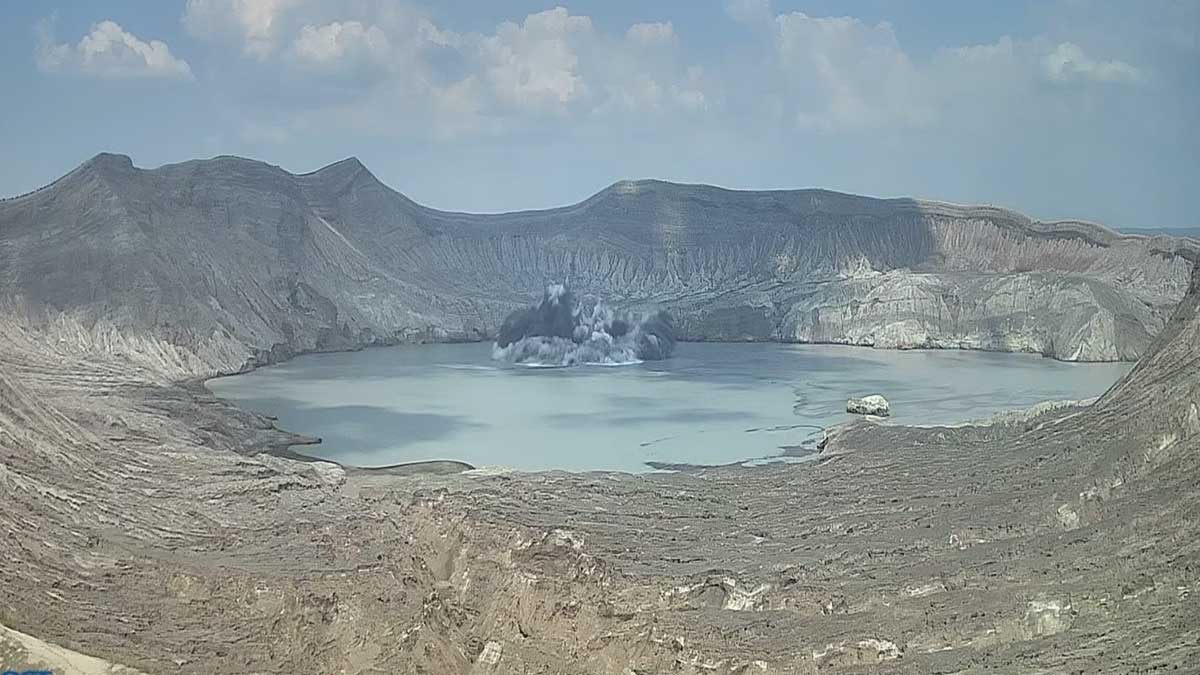
Sulfur dioxide (SO2) emissions from Taal Volcano in Batangas province have surged sharply, a day after recording their lowest daily level this year, according to the Philippine Institute of Volcanology and Seismology (Phivolcs). Phivolcs reported that during its 24-hour monitoring on Wednesday, July 15, Taal Volcano released 289 metric tons of SO2 from its Main Crater. This marks a significant increase from the 59 metric tons recorded on Tuesday, July 14, which was the volcano's lowest daily SO2 output so far this year. For comparison, Taal's highest SO2 emission this year reached 5,287 metric tons on June 4. Phivolcs also observed moderate emission of volcanic plumes that rose about 600 meters above the Main Crater. However, no upwelling of hot volcanic fluids was observed in the Main Crater Lake, and no volcanic smog, or "vog," was detected during the monitoring period. One volcanic tremor lasting nine minutes was also recorded on Wednesday. Despite the increase in SO2 emissions, Taal Volcano remains under Alert Level 1, indicating a low level of volcanic unrest. Phivolcs, however, reminded the public that Alert Level 1 should not be interpreted as an indication that volcanic unrest has ceased or that the threat of eruptive activity has completely disappeared, emphasizing that the volcano remains in an abnormal condition. Taal Volcano, located approximately 90 kilometers south of Manila, is known for its frequent activity, which can impact local communities and the tourism sector. Its history of significant eruptions underscores the importance of continuous monitoring by Phivolcs.

多角的分析

経済的影響

タール火山のSO2放出量の急増は、直接的な経済的影響は限定的であるものの、警戒レベルの変動は地域経済、特に観光業に不確実性をもたらす。過去の噴火では、観光客の減少やインフラへの被害が発生しており、今回のSO2増加が更なる警戒レベル引き上げに繋がれば、地域経済への打撃は避けられない。また、火山灰の拡散による農作物への影響も懸念される。

投資家心理

タール火山の活動活発化は、短期的な投資リスクとして認識される。特に、バタンガス州周辺の不動産や観光関連事業への投資は、警戒レベルの変動に敏感に反応する可能性がある。Phivolcsの継続的な監視と情報発信が、投資家がリスクを評価する上で重要な指標となる。長期的には、フィリピンの地熱エネルギー開発の可能性も示唆されるが、現時点では火山活動の安定性が最優先事項である。

社会的影響

タール火山のSO2放出量増加は、火口周辺の住民の健康への懸念を再燃させる。火山性スモッグ(ボッグ)は、呼吸器系疾患を引き起こす可能性があり、特に高齢者や子供への影響が懸念される。Phivolcsが警戒レベル1を維持しているとはいえ、異常な状態が続いているという認識は、住民の不安を増大させる。避難計画の確認や、健康被害への対策が引き続き重要となる。

市民の声

タール火山のSO2放出量が急増したというニュースは、マニラ首都圏に住む私たちにとっても他人事ではありません。タール火山は比較的近くにあり、風向きによっては火山灰や有毒ガスが首都圏にも影響を及ぼす可能性があります。以前の噴火で経験したように、空港の閉鎖や交通網の混乱、そして大気汚染による健康被害は、私たちの日常生活に直接的な影響を与えます。Phivolcsが警戒レベル1を維持しているとはいえ、この「異常な状態」という言葉が、いつ状況が悪化するかわからないという不安を抱かせます。日頃から最新の情報を確認し、万が一の事態に備える必要性を改めて感じています。

背景・歴史的文脈

タール火山は、フィリピンのルソン島にある活火山であり、その活動は古くから記録されている。特に、1965年、1977年、2020年以降の噴火は、周辺地域に大きな影響を与えた。2020年1月の噴火では、数万人が避難し、首都マニラにも火山灰が飛来した。Phivolcsは、タール火山の活動を常時監視しており、警戒レベルシステムを用いて、噴火の危険度を市民に伝達している。今回のSO2放出量の急増は、過去の噴火の兆候との関連性が注視されるが、現時点では警戒レベル1が維持されている。

原文ソース

Inquirer NewsInfo

原文を読む