General articles are free for 24 hours after publish.
Vietnam's Top Leader Outlines Foreign Policy and Development Goals
Vietnamese President and General Secretary To Lam outlined a foreign policy guided by national interests and contributions to regional and global peace. He affirmed the goal of achieving over 10% average annual GDP growth from 2026-2030, aiming for developed, high-income status by 2045.
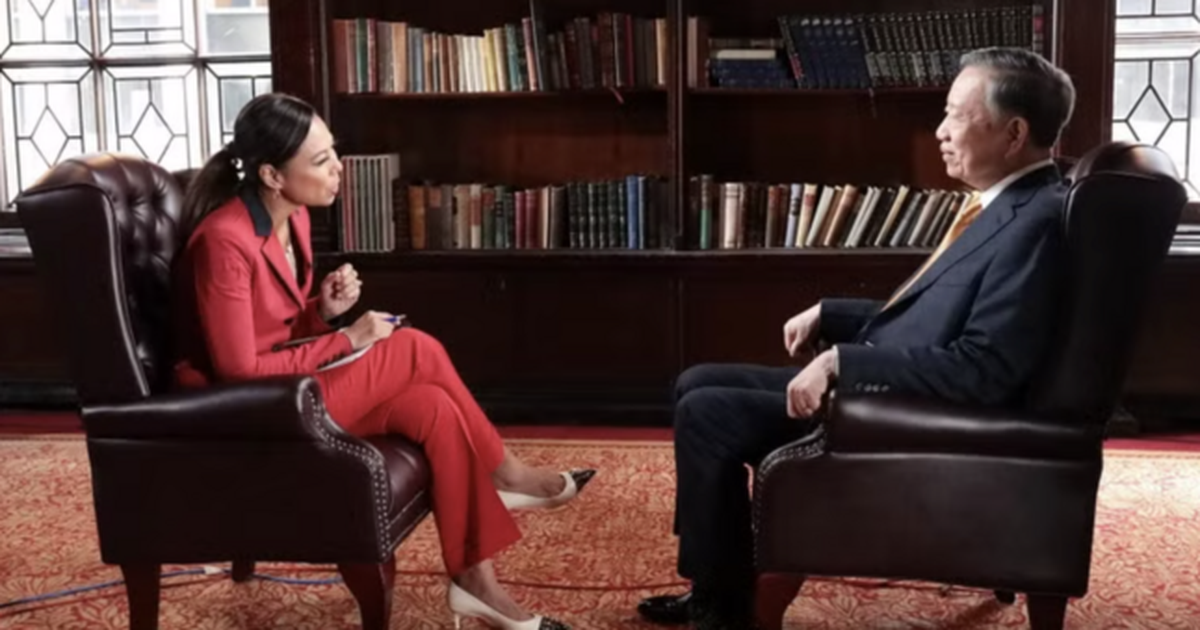
In an interview with Bloomberg TV in New York on September 21, 2026, General Secretary and President To Lam outlined Vietnam's foreign policy priorities and development ambitions. He emphasized that Vietnam's foreign policy will be guided by national interests and development requirements, while contributing to peace, stability, and development in the region and the world. Vietnam will cement and deepen existing partnerships, expand cooperation with new partners, and translate diplomatic agreements into concrete programs, projects, and outcomes. Regarding Vietnam-U.S. relations, he described the ties as increasingly based on political trust, mutual respect, and shared interests. He underscored the importance of expanding cooperation in trade, investment, science and technology, semiconductors, AI, and education and training, and said Vietnam is working with the U.S. to conclude the Agreement on Reciprocal Trade (ART) at an early date. On development, the top Vietnamese leader reaffirmed Vietnam's target of average annual GDP growth rate of more than 10 percent during 2026–2030, saying it reflects the country's ambition to become a developed, high-income country by 2045. He stressed the need to address institutional bottlenecks, improve labor productivity, and ensure the efficient use of resources, while pursuing a development model driven by science and technology, innovation, digital transformation and high-quality human resources, alongside macroeconomic stability and a people-centered approach. He also called for stronger multilateral cooperation to rebuild trust and address global challenges, while ensuring that emerging technologies, particularly AI, are governed in an inclusive, safe and transparent manner. Regarding ongoing negotiations on the ART, To Lam acknowledged that differences, particularly in economic and trade relations, are unavoidable in a relationship of such scale and growing interdependence. He stressed the need for the two sides to address them through frank and constructive dialogue, taking into account their broader strategic interests and the increasingly complementary nature of their economies. Vietnam is actively working with the U.S. to conclude negotiations and sign the ART at an early date, with the aim of creating a stable and long-term framework for economic and trade cooperation and making such cooperation a driving force for the Comprehensive Strategic Partnership, he stated./.
Original source
Bao Chinh Phu