General articles are free for 24 hours after publish.
Indonesia's 'Fortress Conservation' Still Echoes Colonial Era
Critics argue that Indonesia's conservation practices are still heavily influenced by a colonial-era "fortress conservation" approach, which marginalizes the symbiotic relationship between local communities and nature. The current system prioritizes government and academic knowledge over indigenous traditional wisdom, leading to calls for the decolonization of conservation efforts.
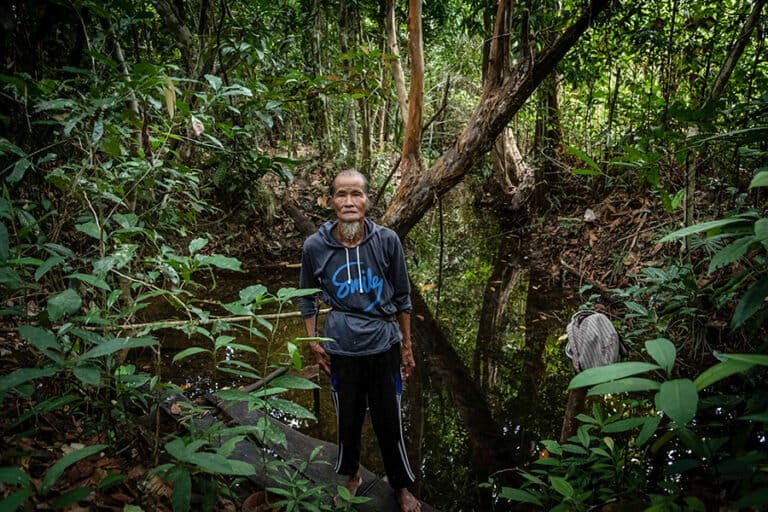
Critics are increasingly pointing out that Indonesia's approach to nature conservation remains heavily influenced by the colonial-era "fortress conservation" model. This approach often views humans as a threat to conservation efforts, leading to restricted access for local communities to protected areas. However, in reality, many indigenous communities have for centuries cherished and protected forests, rivers, and seas as integral parts of their lives. For them, conservation is not a concept separate from daily existence. For instance, the Iban Dayak people in West Kalimantan share a life philosophy: "The forest is our father, the land is our mother, and the water is our blood." Ironically, many indigenous and local communities who have long safeguarded their living spaces often face displacement from their lands. Yance Arizona, Chair of the Center for Constitutional Democracy and Human Rights Studies (Pandheka), stated at the Peoples’ Conservation Summit held from September 1-3, 2026, at Gadjah Mada University in Yogyakarta, "We still cannot break free from the form of conservation colonialism that separates nature from humans. Humans are considered a threat in conservation activities." According to Arizona, the issue of fortress conservation is linked to the assumption that the knowledge held by the government and academic institutions is considered more scientific than the knowledge that develops within communities, and is used in formulating conservation policies in Indonesia. Therefore, he emphasized, "efforts towards the decolonization of conservation are crucial to transform the relationship between the state, society, and nature."
Original source
Mongabay Indonesia