Strait of Malacca: Asia's Lifeline Faces Geopolitical Risks
Economy
2026年7月28日
5
The Diplomat Indonesia
Relations
🇮🇩Indonesia🇮🇳India🇲🇾Malaysia🇸🇬Singapore

General articles are free for 24 hours after publish.

Strait of Malacca: Asia's Lifeline Faces Geopolitical Risks

Share
AI Summary

The Strait of Malacca, a critical chokepoint linking the Indian and Pacific Oceans, is vital for energy and industrial goods transport. Its narrow geography, heavy traffic, and shared jurisdiction by neighboring countries create risks of accidents, piracy, and geopolitical disruption. While alternatives exist, they incur higher costs, making the strait's stability crucial for Asian economic prosperity.

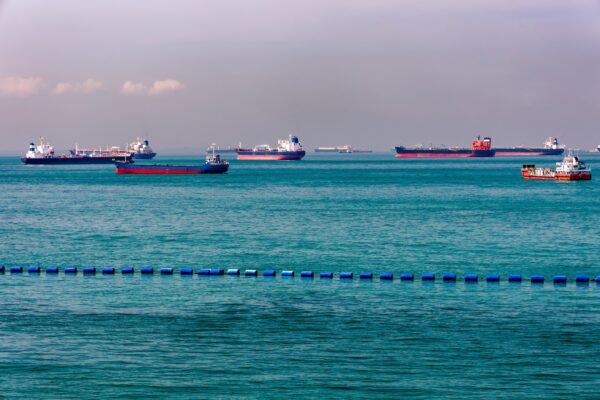
The Strait of Malacca stands as one of the most critical maritime chokepoints globally, linking the Indian and Pacific Oceans, and its stability is paramount to the prosperity of Asian economies. This waterway handles over one-fifth of global maritime traffic, playing an indispensable role in the transport of energy supplies, industrial components, and manufactured goods. Geographically, the strait stretches approximately 900 kilometers between Indonesia's Sumatra island and the Malaysian Peninsula. However, it narrows dramatically to less than 3 kilometers at the Phillip Channel near Singapore, creating a significant bottleneck. This narrow geography increases the likelihood of collisions and continues to pose a security concern regarding piracy, although significantly reduced from previous decades. From an energy perspective, Malacca's importance is even greater: more than one-quarter of global seaborne oil shipments transit here, a larger share than passes through the Strait of Hormuz. Much of the crude oil originating from the Persian Gulf, after transiting Hormuz, continues towards major East Asian economies like China, Japan, and South Korea via Malacca. Unlike artificial waterways such as the Suez or Panama Canals, the Strait of Malacca is not administered by a single authority. It falls under the joint jurisdiction of Indonesia, Malaysia, and Singapore, which share responsibility for its security and navigation management. Governed by the 1982 UN Convention on the Law of the Sea (UNCLOS), all nations are guaranteed the right of transit passage, making it difficult for littoral states to unilaterally suspend navigation or arbitrarily restrict access. However, this does not render disruption impossible. Alternative passages exist, including the Sunda, Lombok, and Makassar Straits through the Indonesian archipelago. None, however, offers a fully comparable substitute. The Sunda Strait presents significant navigational constraints, while Lombok and Makassar can accommodate larger vessels but require considerably longer voyages, increasing fuel consumption and shipping costs. Thus, while alternative routes may reduce the risk of complete maritime paralysis, they would do little to limit the substantial economic costs of a prolonged disruption in Malacca. The stability of the Strait of Malacca ultimately rests on a delicate balance between regional cooperation and great power competition. Decades of institutionalized cooperation between Indonesia, Malaysia, and Singapore have been built around the common objective of keeping this vital trade route open. This cooperative framework helps explain why, despite its immense strategic importance, Malacca has maintained its stability. Nevertheless, it increasingly serves as a space where commercial interests, national security concerns, and geopolitical competition intersect.

0

Original source

The Diplomat Indonesia

原文を読む