General articles are free for 24 hours after publish.
Vietnam's Traditional Martial Arts Poised for Internationalization with First Overseas Club Participation in 2026 National Championship
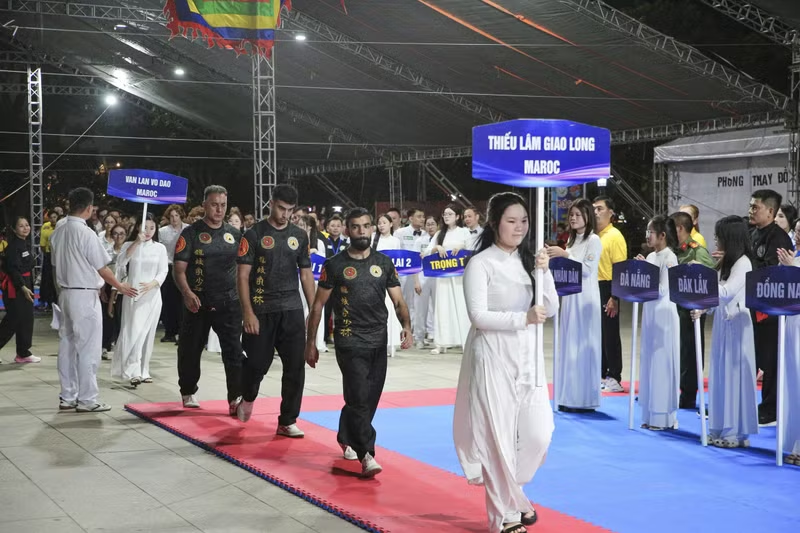
For the first time in history, traditional Vietnamese martial arts clubs from various countries will officially participate in the 15th National Traditional Martial Arts Championship in 2026. This milestone is expected to usher in a new era for the internationalization of Vietnamese martial arts.
Vietnam's traditional martial art, Võ cổ truyền, is set to take a significant step towards internationalization. For the first time in history, clubs from various countries will officially participate and compete in the 15th National Võ cổ truyền Championship scheduled for 2026. This historic decision is viewed as a culmination of years of efforts to promote Võ cổ truyền both within Vietnam and internationally. While international events like the 'Vietnam Traditional Martial Arts International Festival' have been held previously, this marks the first instance of overseas clubs participating as official athletes in a major national competition. Võ cổ truyền in Vietnam is considered more than just a martial art; it is a valued part of the nation's cultural heritage. Its spiritual aspects and physical training methods are seen as integral to Vietnamese identity, with the government supporting its preservation and development. The participation of international clubs is expected to provide a new platform for Vietnamese martial arts to spread globally and foster international exchange. Past events such as the 'Bình Định Martial Arts Tournament - Emperor Quang Trung Cup' and the 'Quảng Ninh Province Traditional Martial Arts Tournament' have been held domestically, primarily featuring Vietnamese athletes. This international engagement is anticipated to not only elevate the competition's standard but also serve as a valuable opportunity for martial artists from different cultural backgrounds to learn from each other's techniques and philosophies. This development can also be seen as part of cultural promotion initiatives within Vietnam's one-party system. By recognizing the value of traditional martial arts as cultural heritage, the state aims to enhance its soft power and international outreach. It reflects Vietnam's ambition to increase its presence on the global stage not only economically but also culturally.
Original source
Nhan Dan