General articles are free for 24 hours after publish.
Tropical Depression Forms in South China Sea, Direct Impact on Vietnam Mainland Limited
A tropical depression has formed and intensified in the South China Sea. The National Center for Hydro-Meteorological Forecasting has issued warnings for rain and strong winds along coastal areas and rough seas. Currently, direct impact on the Vietnamese mainland is deemed limited.
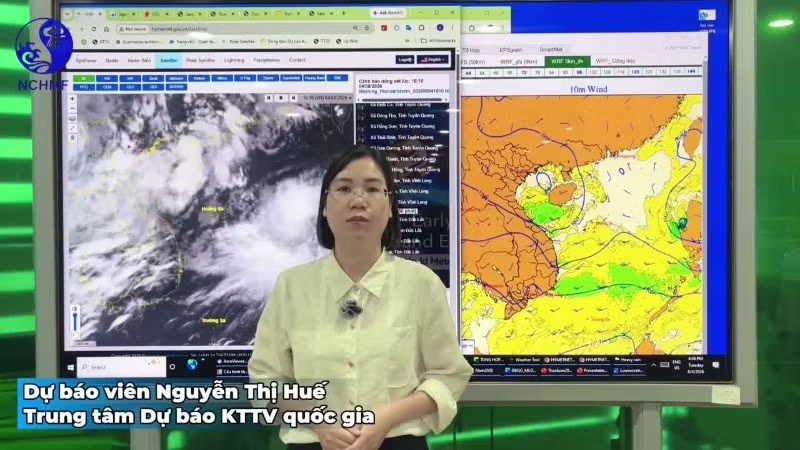
A tropical depression that formed in the sea east-southeast of the North South China Sea has strengthened into a tropical depression as of the afternoon of August 4. Ms. Nguyen Thi Hue, a forecaster from the Weather Forecast Department at the National Center for Hydro-Meteorological Forecasting, provided an update on the tropical depression's latest developments and issued warnings for thunderstorms, strong winds, and rough seas across multiple maritime areas. Proactive Response to Tropical Depressions and Strong Winds at Sea [Video] One to two storms or tropical depressions may emerge in the South China Sea in August. Tropical Depression Forms in the South China Sea, No Direct Impact on Vietnam's Mainland. This tropical depression's formation is part of the annual meteorological phenomena experienced by Vietnam. August, in particular, is a period known for frequent typhoon and tropical depression formations that affect Vietnam's coastal regions. Forecasts indicate a possibility of one to two storms or tropical depressions appearing in the South China Sea during August. However, current projections suggest a low likelihood of this tropical depression directly impacting the Vietnamese mainland. This assessment is contingent upon the depression's trajectory and intensity, necessitating ongoing observation. The Vietnamese government and its affiliated agencies maintain preparedness for natural disaster responses, with particular advisories issued for fishing operations and maritime traffic in coastal zones. Within Vietnam's one-party governance structure, responses to natural disasters are typically executed with speed and coordination under central government directives. For Vietnam, a nation experiencing continuous economic growth, meteorological disasters represent potential risks that can affect infrastructure, agriculture, and overall economic activities. Coastal and island regions are especially vulnerable, where adverse weather conditions can directly disrupt logistics and the tourism sector. For Vietnam, which navigates a complex relationship with China, weather shifts in the South China Sea, coupled with security considerations, can also influence the stability of its economic endeavors.
Original source
Nhan Dan