General articles are free for 24 hours after publish.
Cambodian Senate Rejects Thai Counterpart's 'Baseless Accusations,' Reaffirms Sovereignty
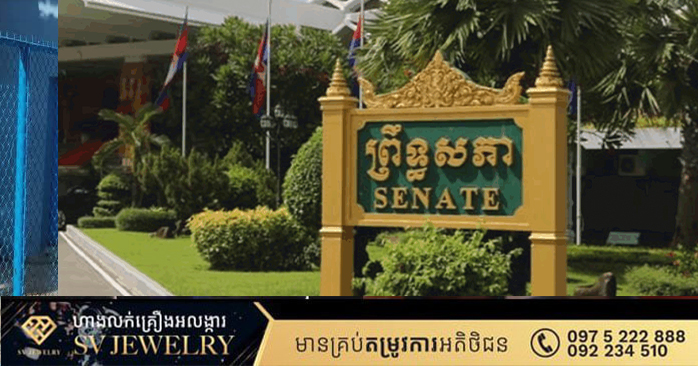
The Cambodian Senate's Foreign Affairs Committee has categorically rejected 'baseless accusations' from the Thai Senate's consultative committee, reaffirming Cambodia's territorial sovereignty based on international law and historical treaties. The committee denounced Thai military incursions and airspace violations as breaches of international law.
The Foreign Affairs, International Cooperation, and Information Committee of the Cambodian Senate has categorically rejected 'baseless accusations' from the Thai Senate's consultative committee and reaffirmed Cambodia's inviolable sovereignty over its territory, which is firmly established by historical international treaties. In a statement issued on September 5, 2026, Dr. Cheav Yisang, Chairman of the committee, stated that the committee completely dismisses the statement made by Mr. Nophadol In-na, Chairman of the consultative committee of the Thai Senate, on September 2, 2026. The statement asserts that the repeated forward deployment of troops and subsequent aerial incursions by Thailand constitute a direct violation of international law, the United Nations Charter, and existing bilateral protocols. The Cambodian Senate Committee rejects the claims made by the Thai Senate's consultative committee, providing clear legal and historical perspectives as follows: 1. Rejection of the legality of territorial occupation through a "ceasefire": The Cambodian committee refutes the Thai consultative committee's inappropriate citation of the Joint Statement of the 3rd Special Session of the General Border Committee (GBC) dated December 27, 2025, to justify the current presence of Thai troops. It emphasizes that a temporary ceasefire framework cannot be selectively exploited to legitimize unlawful military occupation, create new territorial rights, or unilaterally reinforce a fait accompli. Borderlines in disputed or un-demarcated areas must be resolved exclusively through established bilateral treaties and peaceful diplomatic mechanisms, not through the continuation of military incursions. 2. Exposing the fabricated narrative of "firing first" and attacks on civilian targets: Thailand continues to make unsubstantiated claims that Cambodia initiated the border conflict in 2025 to cover its continuous aggressions and its own provocations. Furthermore, Thailand has used cross-border crimes and "online scams" as geopolitical pretexts to deploy military forces, violate Cambodian airspace, and encroach upon Cambodia's sovereign territory. Cambodia adheres to its firm commitment to international humanitarian law and, instead of accepting Thailand's unilateral and unsubstantiated claims where it acts as both party and judge, calls for an independent and internationally verified assessment to clearly reveal who fired first and targeted civilian communities. 3. Distorting historical narratives concerning displaced citizens and legal status versus vile rhetoric: The attempt by the Thai Senate's consultative committee to label over 20,000 Cambodian civilians who have relocated as "intruders," by inaccurately using data from the 1979 UNBRO refugee wave, is a grave distortion of historical reality. These civilians are individuals displaced due to recent border instability in the region, a direct result of Thailand's provocative military actions. Under international law, these civilians retain their inalienable right to return safely and with dignity to their lands and homes, many of which have been destroyed by Thai military attacks. Cambodia urges Thailand to immediately cease its "salami-slicing strategy" of gradually encroaching on Cambodian territory through unauthorized patrols and forcing civilian displacement, and to withdraw its troops. 4. Defending the right to sovereignty over bilateral diplomacy instead of being silenced: Thailand insists that Cambodia remain silent and avoid "internationalizing" this bilateral dispute. However, the use of parliamentary, regional, and international forums is a peaceful, transparent, and legitimate diplomatic mechanism. It is Cambodia's duty to inform the international community about the actual situation on the ground. Actions must match words: Genuine bilateral trust cannot be built on words alone while one party selectively interprets frameworks, obstructs impartial procedures, and escalates tensions on the ground. Lasting peace can only be achieved if the Thai side balances its calls for dialogue with absolute respect for international law and the historical borders inherited from the Franco-Siamese Conventions of 1904 and 1907. Cambodia remains deeply committed to peaceful conflict resolution and regional stability. However, diplomacy must be based on mutual trust, transparency, and absolute respect for existing treaties. It is Cambodia's obligation to ensure that various international parliamentary organizations receive legally sound and clear reports on these developments, preventing misinformation from obscuring the path toward a just and lasting bilateral solution and peace. Source: CEN Cambodia
Original source
CEN Cambodia