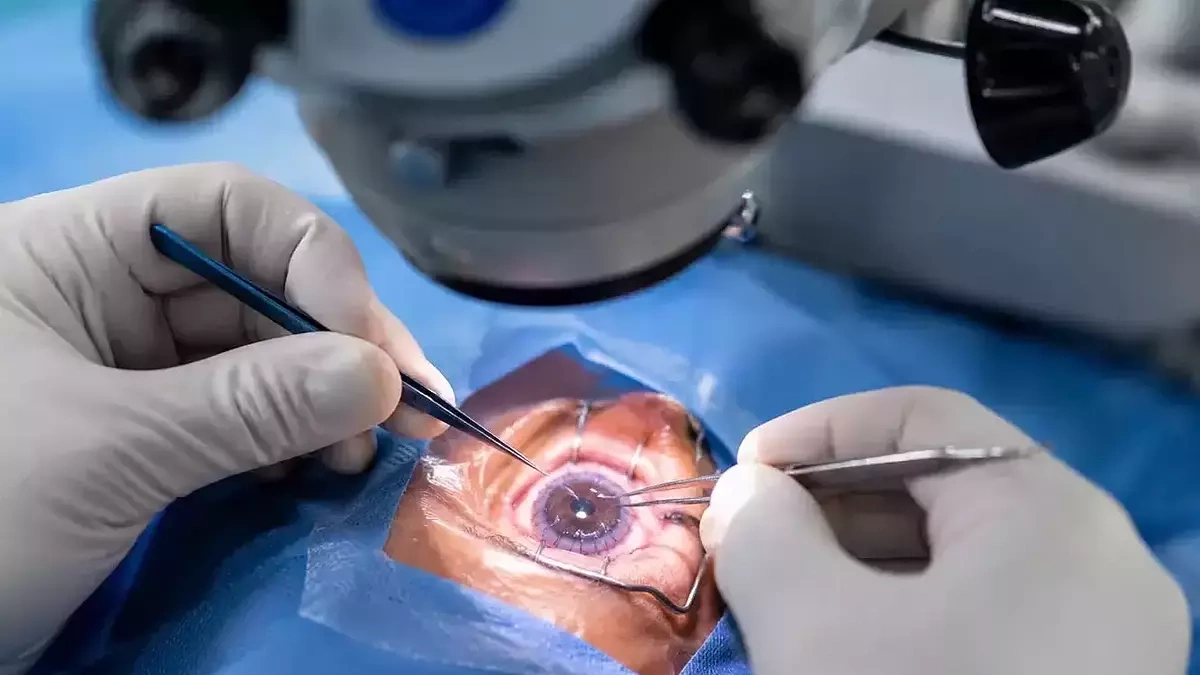
Vietnam Advances Corneal Transplantation with Bio-Cornea Technology
Technology
2026年7月12日
4
VnExpress
Relations
🇻🇳Vietnam🌐United Nations / ASEAN

Vietnam Advances Corneal Transplantation with Bio-Cornea Technology

AI サマリー

Vietnam is moving towards the practical application of bio-cornea transplantation technology. The Central Eye Hospital and VGCT have partnered to address the long-standing issue of donor cornea shortages and contribute to the ASEAN region, where over 6 million people are at risk of blindness.

Research and technology transfer are underway in Vietnam to practically apply bio-cornea transplantation technology. Vietnam's Gen & Cell Technology Company (VGCT, under CT Group) has signed a cooperation agreement with the Central Eye Hospital under a public-private partnership model in the biomedical field. This marks the first step in collaborative research, technology transfer, and preparation of necessary conditions for the introduction of bio-cornea technology in Vietnam. Earlier, in April, VGCT announced the successful transplantation of bio-cornea in humans, attracting the attention of many domestic and international experts. Associate Professor Dr. Pham Ngoc Dong, Director of the Central Eye Hospital, stated that while the hospital has performed corneal transplants for many years, the waiting list for patients is consistently long due to insufficient supply of donor corneas. "With an additional source of alternative corneas, this will be a significant advancement for the ophthalmology sector. Vietnam will be able to access one of the important achievements of medicine: the creation of bio-corneas for human application," he said. It is estimated that approximately 500,000 people in Vietnam and over 6 million people in the ASEAN region require corneal transplants. However, between 2023 and 2025, the Eye Bank is expected to receive only about 300 donor corneas for transplantation. In 2025 alone, the number of received corneas was 188, far below the treatment needs. The scarcity of donor corneas forces many patients to wait for decades for a transplant. Dr. Dang Thi Tuoi, Vice General Director of VGCT, said that the company plans to commercialize the product within the next few months through a collaborative model involving research institutes and universities, including the Central Eye Hospital. "The greatest value of this cooperation is to jointly build research capacity, master technology, and form an effective public-private partnership model between hospitals and businesses," said Dr. Tuoi, hoping that this model will be replicated in many other biomedical fields in Vietnam. Established in 2018, VGCT has chosen to develop biotechnology applications in biomedicine, with many key technologies such as animal organ transplantation for humans, CAR-T cell therapy, stem cells, and cancer research and treatment. Advanced biotechnology and biomedicine are among the 10 strategic technology groups promulgated by the Prime Minister in May. The government's list of 30 strategic technological products also includes many products in this field, such as new-generation vaccines for humans; cell therapies for humans; personalized medical product manufacturing systems applying 3D printing technology; smart biosensor systems; and new-generation vaccines and biological products for animal husbandry, veterinary medicine, aquaculture, crop cultivation, and plant protection.

多角的分析

経済的影響

ベトナムのバイオテクノロジー分野への投資は、政府の戦略的重点分野として位置づけられており、今回のバイオ角膜技術の実用化は、国内の医療産業の高度化と、関連する研究開発・製造分野の経済成長を促進する可能性を秘めています。特に、ASEAN地域全体での需要を考慮すると、将来的な輸出産業としての成長も期待できます。官民連携モデルは、初期投資リスクを分散し、技術開発と市場投入を加速させる経済合理性を持っています。

投資家心理

バイオ角膜技術は、失明予防と視力回復という明確なニーズに応える革新的な医療技術であり、投資家にとって魅力的な分野です。ベトナム国内のドナー不足という課題を克服するソリューションとなり得るため、市場参入の障壁は低いと考えられます。VGCTのような先進企業への投資は、将来的な高いリターンをもたらす可能性がありますが、技術開発の進捗や規制当局の承認プロセスなど、リスク要因も存在します。

社会的影響

この技術の実用化は、ベトナム国内およびASEAN地域で角膜移植を待つ数百万人の人々に希望をもたらします。特に、ドナー不足に起因する長年の待ち時間が解消されることで、多くの人々の生活の質が劇的に向上することが期待されます。中央眼科病院のような公的機関とVGCTのような民間企業が連携することで、医療アクセスが改善され、より多くの患者が最新の治療を受けられるようになるでしょう。

市民の声

角膜移植を待つ多くのベトナム国民にとって、このニュースは非常に朗報です。これまでドナー不足で長年待たなければならなかった人々が、新しい希望を見出すことができます。中央眼科病院のドン医師が指摘するように、これは眼科分野における大きな進歩であり、多くの失明の危機にある人々の生活を改善する可能性があります。VGCTのTSトゥイ氏が述べるように、官民連携が成功すれば、この革新的な技術がより多くの人々に届くことが期待されます。

背景・歴史的文脈

ベトナムにおける角膜移植は、長年にわたりドナー角膜の不足という深刻な課題に直面してきました。国内の眼球銀行への寄贈は、文化的な背景や社会的な啓発の遅れなどから、必要とされる移植件数を大幅に下回っています。この状況は、中央眼科病院のドン副教授が指摘するように、多くの患者を長期間の待機リストに留め、視力回復の機会を奪ってきました。今回のVGCT社によるバイオ角膜技術の導入は、この長年の課題に対する革新的な解決策として期待されています。同社は2018年の設立以来、バイオテクノロジー分野、特に医薬品や医療技術の開発に注力しており、今回の提携は、ベトナム政府が推進するバイオテクノロジーおよびバイオメディカル分野の戦略的発展計画とも合致しています。

原文ソース

VnExpress

原文を読む