BCDA Open to Senate Inquiry on Tarlac AI Hub Under Pax Silica Initiative
Technology
2026年8月3日
5
BusinessWorld Economy

General articles are free for 24 hours after publish.

BCDA Open to Senate Inquiry on Tarlac AI Hub Under Pax Silica Initiative

Share
AI Summary

The Bases Conversion and Development Authority (BCDA) of the Philippines has stated its openness to a Senate inquiry into the planned AI-native hub under the US-led Pax Silica initiative in Tarlac. While the project aims to boost AI and semiconductor investments, concerns about its impact on residents and the environment persist.

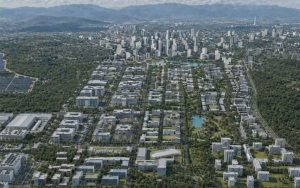
THE Bases Conversion and Development Authority (BCDA) said it is open to answering questions in a Senate inquiry into the artificial intelligence (AI)-native hub to be built in Tarlac under the US-led Pax Silica initiative. “The BCDA welcomes the Senate’s oversight and stands ready to provide the facts needed for a fair and transparent discussion,” it said in a statement on Monday. The BCDA issued the statement after Senator Maria Imelda Josefa Remedios R. Marcos called for an investigation into the upcoming AI hub in New Clark City in Tarlac. The Philippines and US are building a 1,619-hectare AI-native hub in New Clark City, which is expected to bring in investment in AI and semiconductor manufacturing. The US established the Pax Silica last year to secure the global AI and semiconductor value chain, as a counter to China’s burgeoning tech manufacturing industry. Participation in Pax Silica has raised concerns that it could displace farmers, deplete natural resources in the area, and breach national sovereignty. The BCDA said it will hold another meeting with Capas Mayor Roseller B. Rodriguez, local government units, and other stakeholders to discuss Pax Silica-related initiatives in their area. The BCDA also assured that nearby farmers and indigenous Ayta communities will be supported as the New Clark City expands. The BCDA said New Clark City has a 50-hectare (ha) agricultural zone to support farmers through modern agriculture activities. The economic zone also has a 10-hectare Ayta Ethnobotanical Center to support 300 Ayta farmers from Capas and Bamban. It is designed to expand to a total of 150 ha for future agricultural development. “These efforts will expand employment and strengthen sustainable livelihoods for farmers and Ayta communities in New Clark City,” the BCDA said. It has set aside relocation areas within New Clark City for affected households. Meanwhile, the Department of Trade and Industry (DTI) said it is prioritizing the upskilling of tech talent to support high-value investments under Pax Silica and the Luzon Economic Corridor (LEC). “We need to level up in these areas where we feel there’s still so much potential for growth in the Philippines… with talent that’s really needed for the industry,” Trade Secretary Maria Cristina A. Roque said in an interview on Monday on the Money Talks with Cathy Yang program on One News. “What’s important is we provide all of these opportunities for them to learn… for Pax Silica, but the Luzon Economic Corridor, for PEZA (Philippine Economic Zone Authority) ecozones,” she added. The DTI has been seeking to attract investors to key growth areas and economic zones (ecozones) to generate jobs. The LEC is a multi-country initiative that seeks to link the Subic Bay-Clark-Manila-Batangas corridor through investments in supply chain resilience, infrastructure, manufacturing, and logistics. Ms. Roque said investors in these growth hubs are in need of skilled talent in frontier industries like semiconductors, digital economy, information technology-business process management, and other digital-driven industries. — Beatriz Marie D. Cruz

0

Original source

BusinessWorld Economy

原文を読む