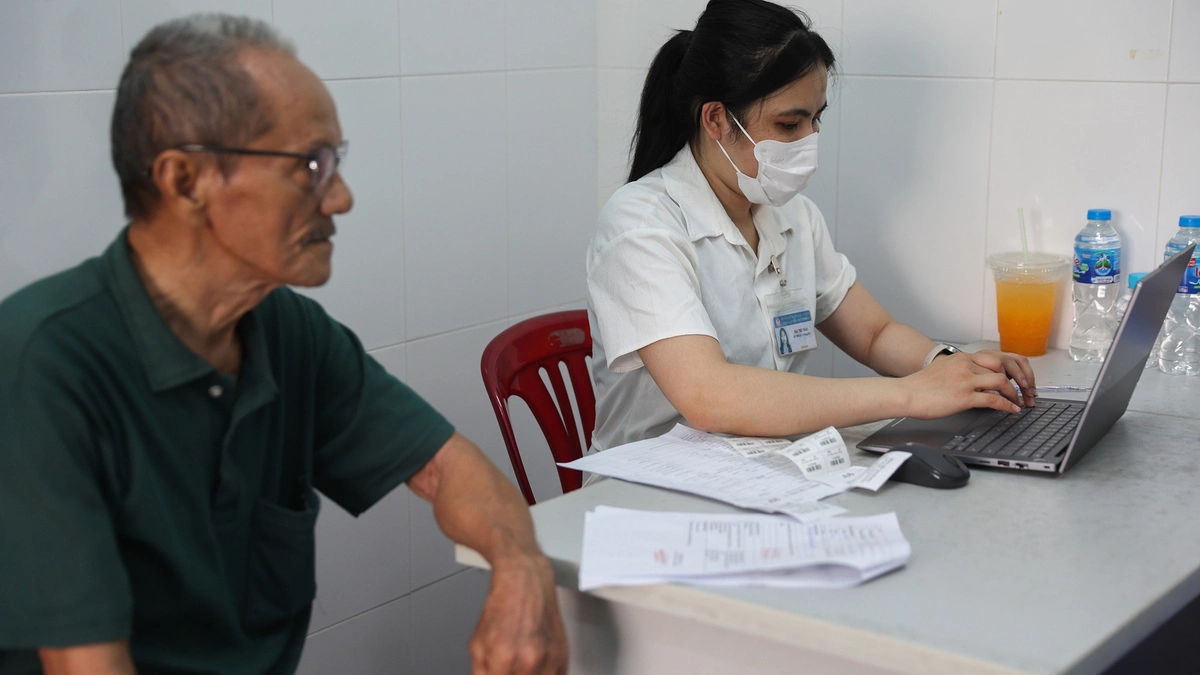
Ho Chi Minh City to Establish Lifelong Electronic Health Records for All Citizens
Ho Chi Minh City is progressively building a lifelong electronic health record system for its nearly 15 million residents. This initiative aims to centrally manage individual health changes and disease histories, promoting preventive and personalized healthcare.
Ho Chi Minh City is progressively building a lifelong electronic health record system for its nearly 15 million residents, aiming to transition towards a proactive and continuous healthcare model rather than just treating illnesses after they occur. Previously, patients had to carry their medical books and test results or remember their treatment history. With the electronic health record, crucial medical data such as blood pressure, blood sugar, cholesterol levels, allergy history, vaccination records, hospitalization, surgery, and chronic disease treatment will be centrally stored and continuously updated. This allows doctors to quickly grasp a patient's health history. Director of the Ho Chi Minh City Department of Health, Tang Chi Thuong, explained that the core value of the electronic health record lies in accumulating two key data groups throughout a person's life. The first group is lifelong health data from the universal health check-up program, where health indicators are standardized and automatically updated after each annual examination. The second group is lifelong disease data, formed from the entire process of medical examination and treatment at healthcare facilities. Combining these datasets creates a comprehensive "health picture" of each individual. Doctors can not only base their diagnosis on current symptoms but also track health developments over many years, leading to increased diagnostic accuracy, personalized treatment, reduced duplicate tests, and lower patient costs. Concurrently, Ho Chi Minh City is building a healthcare data repository, expected to be completed by the end of 2026. Once operational, medical examination and treatment data from hospitals and facilities across the city will be interconnected and integrated into the electronic health records. This repository will help track disease trends, forecast healthcare needs, and allocate resources more effectively. In the long term, as data is standardized and sufficiently accumulated, it will serve as a foundation for applying artificial intelligence in healthcare, developing preventive medicine, precision medicine, and personalized treatment. The ultimate goal is to digitize medical records and shift the healthcare system from a "treatment" model to a "health management" model, focusing on early risk detection and intervention before diseases progress. Ho Chi Minh City is a national leader in community health programs, planning to provide at least one free health examination and screening for 100% of its residents by 2026. Since 2023, the city has pioneered free periodic health check-ups for individuals aged 60 and above. Furthermore, a pilot "Continuous Healthcare Team linked to residential areas" model has been implemented, with doctors visiting homes to examine thousands of residents, primarily the elderly and those with chronic illnesses. Following mergers, Ho Chi Minh City's population now exceeds 14 million people. Information source: VnExpress
多角的分析
この電子健康記録システムは、医療費の削減と医療リソースの最適化に貢献する可能性があります。重複検査の削減や、早期発見・早期治療による重症化予防は、長期的に見て医療費全体の抑制につながります。また、蓄積されたビッグデータは、公衆衛生政策の立案や、製薬・医療機器産業における新たなビジネス機会の創出にも寄与すると考えられます。ベトナム経済の成長に伴い、医療サービスへの需要が増加する中で、効率的かつ質の高い医療提供体制の構築は、国民の生産性向上にも間接的に貢献するでしょう。
このプロジェクトは、ヘルスケア分野におけるデジタルトランスフォーメーション(DX)の先進事例として、国内外の投資家にとって注目に値します。電子カルテシステム、データ分析プラットフォーム、AI医療ソリューションなどの開発・提供に関わる企業は、新たなビジネスチャンスを見出す可能性があります。特に、ベトナム政府が推進するデジタル化政策と連携したヘルスケア関連のスタートアップや、既存の医療サービスプロバイダーのDX支援企業は、将来的な成長が見込まれます。ただし、データプライバシーやセキュリティに関する規制、システム導入・運用コストなどが投資リスクとして考慮されるべきです。
この電子健康記録システムは、市民の健康管理に対する意識を高め、より主体的な健康維持行動を促す可能性があります。特に、高齢者や慢性疾患を持つ人々にとっては、自宅にいながら継続的な医療サポートを受けられる機会が増え、生活の質の向上が期待できます。一方で、デジタルデバイド(情報格差)への対応が課題となります。高齢者やテクノロジーに不慣れな層が、システムから取り残されないような配慮が必要です。また、個人の医療情報という機微なデータの取り扱いには、厳格なプライバシー保護措置と透明性の確保が不可欠であり、市民の信頼を得ることがシステムの成功の鍵となります。
ホーチミン市市民、特に高齢者や慢性疾患を持つ人々にとって、この電子健康記録システムは大きな恩恵をもたらす可能性があります。以前は煩雑だった医療記録の管理が簡便になり、医師はより正確な診断と治療を提供できるようになります。医師が自宅を訪問するケアチームの導入は、通院が困難な人々にとって大きな安心材料となります。しかし、デジタル機器の操作に不慣れな市民が、この新しいシステムをどのように利用していくのか、また、個人の医療情報がどのように管理・保護されるのかといった点について、市民の不安を解消するための丁寧な情報提供とサポートが求められます。
背景・歴史的文脈
ベトナムは、経済発展とともに国民の健康意識も高まっており、医療サービスの質向上と効率化が喫緊の課題となっています。特に、都市部では人口集中による医療インフラへの負荷が増大しており、デジタル技術を活用した医療システムの近代化が求められてきました。過去には、診療記録の管理が紙ベースで煩雑であり、患者の病歴把握や医療機関間の情報共有に遅延が生じる問題がありました。こうした背景から、ベトナム政府はかねてより医療分野のDXを推進しており、本件は、その集大成とも言える国民規模の電子健康記録システム構築に向けた重要な一歩となります。これは、ベトナム共産党による一党体制下で、国家主導による大規模な社会インフラ整備の一環とも位置づけられます。
原文ソース
VnExpress