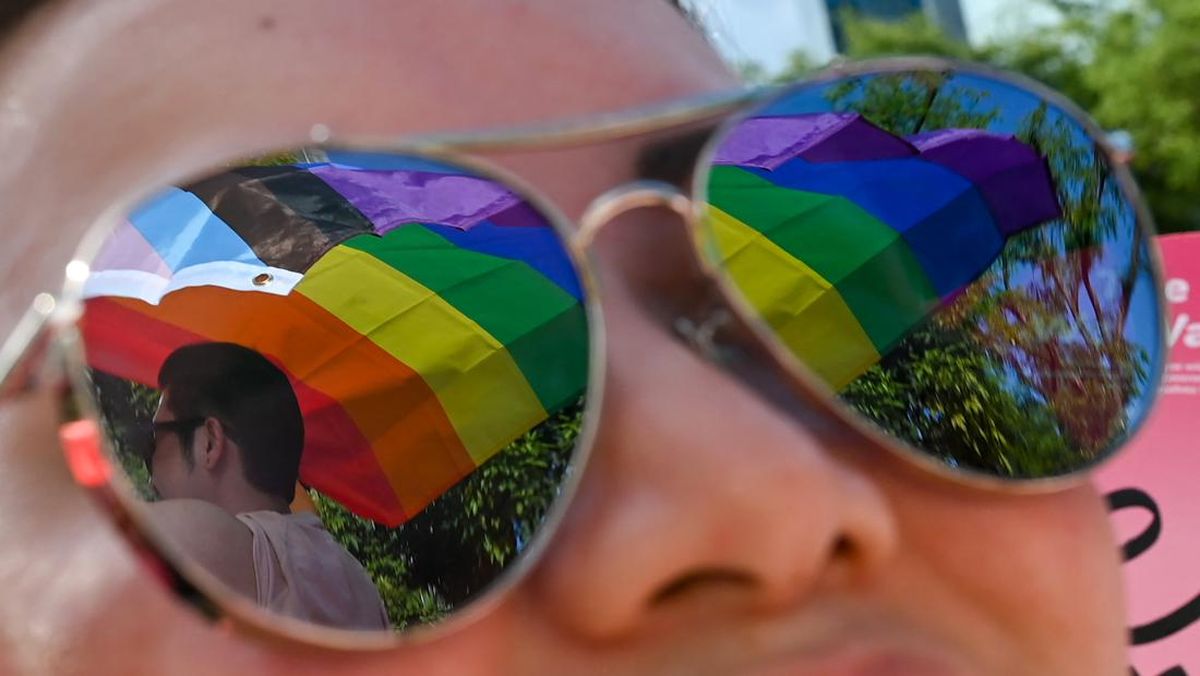
Indonesia Designates LGBTQ Culture as 'Non-Military Threat' in Presidential Decree on National Defense
Politics
2026年7月6日
5
CNN Indonesia

Indonesia Designates LGBTQ Culture as 'Non-Military Threat' in Presidential Decree on National Defense

AI サマリー

Indonesian President Prabowo has designated the spread of LGBTQ culture as a 'non-military threat' in a presidential decree on national defense policy for 2025-2029. The move has garnered support from some lawmakers.

President Prabowo Subianto of Indonesia has issued Presidential Regulation (Perpres) Number 111 of 2025 concerning the General Policy on National Defense for 2025-2029, classifying the spread of Lesbian, Gay, Bisexual, Transgender, and Queer (LGBTQ) culture as a form of "non-military threat." The regulation was enacted on October 24, 2025. The Perpres defines non-military threats as efforts or activities that endanger or threaten national sovereignty, territorial integrity, and the safety of the nation without the use of weapons. These threats encompass various dimensions, including ideology, politics, economy, social and cultural aspects, technology, public safety, and legislation. Specifically, the document lists the spread of prohibited ideologies, separatism, terrorism, radicalism, online gambling, illegal online loans, illegal trade, drug abuse, and the spread of LGBTQ culture as non-military threats. Other threats mentioned in the document include natural disasters, risks of nuclear, biological, chemical, and radioactive installation leaks, cyber attacks, attacks on national vital objects, the impacts of global warming, and disease outbreaks. The regulation refers to Law Number 23 of 2019, which divides predictions of threats to the state into three categories: military threats, non-military threats, and hybrid threats. Oleh Soleh, a member of Commission I of the House of Representatives (DPR), expressed full support for the presidential decree. He stated that the spread of LGBTQ culture is becoming increasingly widespread and has the potential to negatively impact the future generations of the nation. "The spread of LGBTQ culture has become a non-military threat that needs serious attention. This phenomenon is becoming more massive and poses a challenge to the future of the Indonesian nation," he said. He also highlighted various behaviors that he believes are not in line with the norms, culture, and values upheld by Indonesian society. Soleh argued that the state has an obligation to take preventive measures to protect society from influences deemed contrary to national values. "Through Perpres Number 111 of 2025, the state demonstrates its commitment to protecting the Indonesian people from various cultural influences that are considered deviant from the values that live and develop within society," said the politician from the National Awakening Party (PKB) faction. Therefore, Oleh Soleh urged parents to increase supervision and guidance for their children to prevent them from being easily influenced by content and information related to LGBT. Similarly, Marwan Dasopang, Chairman of Commission VIII of the DPR, commented that the rise in lesbian, gay, bisexual, and transgender (LGBT) behavior can threaten the nation's continuity by affecting the regeneration of offspring. Dasopang explained that Indonesia has several regulations governing family life, including the Marriage Law, which stipulates marriage between a man and a woman. "The marriage law states there is a couple, a man, and a woman. Of course, if LGBT allows for same-sex marriage, it would violate the marriage law," said Marwan at the parliamentary complex in Jakarta on Monday (6/7). He also touched upon the Law on Maternal and Child Welfare, stating that if LGBT becomes widespread, the continuity of offspring would be threatened. "So, where will we get the birth of children if marriages are same-sex? If so, there is a great threat if LGBT becomes widespread in Indonesia, then the continuity of descendants is threatened. What else determines the continuity of the nation if there are no descendants?" he said. Marwan considered LGBT behavior as a deviation that should not be displayed in public. "Because this is a disease and deviant behavior, it must, one, not be allowed. Not allowed by what? Perhaps through laws and supervision? If this is considered dangerous, then perhaps," he said. He added that handling such behavior can also be done through medical or psychological approaches. "Because it is considered deviant due to illness, healing must be done. What approach to healing? Yes, it can be medical, psychological, and various other methods, I think so," he said. According to him, it is natural for some parties to propose the creation of laws regulating LGBT, as LGBT behavior is increasingly being displayed. One of the recent proponents of an LGBT law is the Indonesian Ulema Council. "So, if it's a threat to the state, I think that's the side of it. This nation cannot continue if its people disappear because there are no descendants," he concluded. Source: CNN Indonesia

多角的分析

経済的影響

この大統領令は、LGBTQ文化を「非軍事的脅威」と位置づけることで、関連するビジネスやサービス、特にLGBTQコミュニティを対象としたものに間接的な影響を与える可能性がある。例えば、性的指向や性自認に関する情報発信や、それらを支援する活動が萎縮する恐れがある。また、国際的な企業や投資家にとって、インドネシアにおける社会的な受容性や人権問題への懸念を高める要因となり得る。これは、インドネシアの多様な経済セクター、特に観光やサービス業への潜在的な影響も示唆している。

投資家心理

この大統領令は、インドネシアへの投資を検討している投資家にとって、社会的なリスク要因として認識される可能性がある。特に、ESG(環境・社会・ガバナンス)投資を重視する投資家は、LGBTQに対する政府の公式な見解を、国内の法制度や人権保護の状況を評価する上で重要な指標と見なすだろう。これにより、一部の国際的なファンドや企業が、インドネシアへの投資を躊躇する、あるいはより慎重な評価を行う可能性が考えられる。過去の事例では、人権問題が注目された国への投資が敬遠される傾向が見られる。

社会的影響

この大統領令は、インドネシア社会におけるLGBTQコミュニティの権利と受容を巡る議論に新たな火種を投じる可能性がある。国会議員の一部が支持を表明する一方で、この指定は、LGBTQの人々に対する社会的な偏見や差別を助長するのではないかという懸念も生じている。特に、地方都市や伝統的な価値観が根強い地域では、この大統領令が既存の社会規範と結びつき、LGBTQ当事者への圧力を強める可能性がある。また、若年層の間ではSNSなどを通じて多様な価値観が広がる中で、このような政府の姿勢が世代間の意識の乖離を深めることも考えられる。

市民の声

この大統領令は、インドネシア国民、特にLGBTQコミュニティに属する人々やその支援者にとって、直接的な影響を及ぼす可能性がある。非軍事的脅威とみなされることで、LGBTQ関連の情報へのアクセスが制限されたり、公の場での活動がより厳しく監視されたりする状況が生まれるかもしれない。また、一般市民の間でも、LGBTQに対する認識や態度が政府の姿勢に影響され、社会的な分断が生じる恐れがある。特に、親世代は子供への影響を懸念し、より保守的な姿勢をとるようになるかもしれない。 例えば、ジャカルタのような大都市では、多様な人々が共存する中で、この大統領令が社会的な摩擦を生む可能性も指摘されている。また、地方では、伝統的な宗教的・文化的価値観と、政府の新たな政策との間で、市民の行動や意識がどのように変化するかが注目される。

背景・歴史的文脈

インドネシアでは、人口の大多数がイスラム教徒であり、伝統的な価値観や宗教的規範が社会に深く根付いている。LGBTQに対する見解は、社会や宗教団体によって大きく異なり、一部では公然と反対する動きがある一方、都市部を中心に多様な価値観を受け入れようとする動きも存在する。過去にも、LGBTQに関する法整備や公的な議論は、社会的な論争を巻き起こしてきた。今回のプラボウォ大統領令は、こうした社会的な文脈の中で、国家安全保障という枠組みを用いて、特定の文化や価値観に対する政府の立場を明確にしたものと言える。これは、インドネシアにおける保守的な価値観と、グローバル化に伴う多様な価値観との間の緊張関係を反映している。

原文ソース

CNN Indonesia

原文を読む