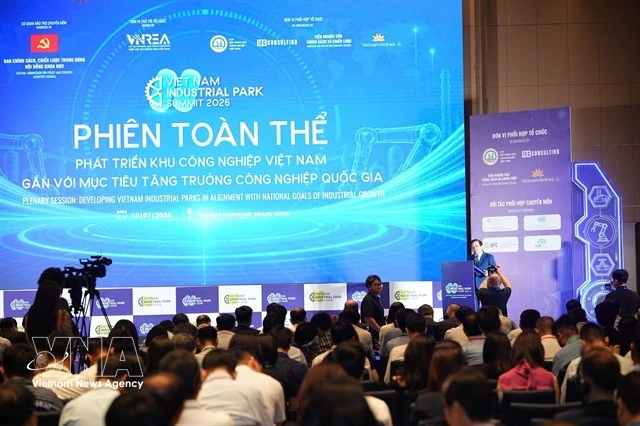
Vietnam Focuses on High-Quality Investors for New-Generation Industrial Parks
Vietnam is promoting the development of new-generation industrial parks, including eco-friendly ones, to attract high-value investment. The country is focusing on infrastructure development and workforce training to sustain economic growth and enhance international competitiveness.
Developed under a strategic cooperation agreement between the Vietnamese and Japanese governments, the nearly 1,000-hectare industrial park is expected to become the city's first eco-industrial park under the country's new regulatory framework. The southern province of Tay Ninh has approved a list of 49 priority industrial park projects for investment attraction during the 2026–2030 period, covering a total planned area of approximately 16,000 hectares. Can Tho spans more than 6,360 square kilometres with a population exceeding 4.2 million, and serves as the economic, cultural, and science-and-technology hub of the Mekong Delta, enjoying strategic advantages in transport, logistics and regional connectivity. Vietnamese Ambassador to Brazil Bui Van Nghi informed that two-way trade reached 4.22 billion USD in the first six months of 2026, up 16.8% year-on-year. Brazil's exports to Vietnam exceeded 2 billion USD, rising 16.6%, while its imports from Vietnam totalled about 2.11 billion USD, an increase of 17%. The restored Kunming–Nha Trang route is expected to cater to growing travel demand and facilitate tourism, trade and cultural exchanges between Vietnam and China. Among the 218 economies assessed this year, Vietnam was one of only six to be upgraded to a higher income category by the WB Group. The move marks a notable milestone after 17 years in the lower-middle-income group, where Vietnam had remained since 2009. For Vietnam, the challenge is not simply adopting new technologies but ensuring that supply chains are sustainable and capable of generating long-term value. The company sold 172,299 motorcycles in June, up 4.7% from the same month last year, highlighting steady consumer demand even as the market gradually shifts towards greener transport options. For the first six months of 2026, motorcycle sales reached 515,743 units, up 0.6% year-on-year. A key target is that by 2030, all concentrated agricultural, forestry and fisheries production areas will have access to essential services, including product traceability, quarantine, testing, quality certification, processing and market development. The move reflects growing international demand for stricter food safety, quality and traceability standards, which have become increasingly important for agricultural exports. The magazine said the VF 2 retails at 188 million VND (7,200 USD) with the battery included, making it one of the most affordable electric cars in the Vietnamese market. Vietnam's young population, dynamic market, and big growth potential are a perfect fit for the strengths that Korean micro-businesses bring in K-brands, technology, and service expertise, said KFME President Song Chi Young. It marked the first time an automotive brand in Vietnam has exceeded 100,000 vehicle deliveries in the first half. With auto loan interest rates remaining competitive, stable vehicle supply, and an increasingly diverse product range, Vietnam's automotive market is expected to maintain its growth momentum through the remainder of 2026. SUVs, MPVs, and hybrid vehicles are likely to remain the main drivers of overall market sales. To convert these opportunities into growth, it is a must for Vietnam to continue improving its investment climate, upgrading logistics and energy infrastructure, accelerating digital transformation and developing a highly skilled workforce that meets requirement of emerging technology sectors, an expert has said. Vice Chairman of the provincial People's Committee Nguyen Huu Que said ESG is no longer a communications message or a cost burden, but an essential requirement for accessing global capital. Gia Lai has chosen ESG as a pillar for building new competitive advantages and achieving sustainable development. Vietnam Airlines said weather-related schedule changes are unavoidable and are made to ensure the safety of passengers and crew. Built on nearly 20 hectares at Huu Thanh Industrial Park, the facility is the company's largest and most advanced plant in Vietnam and the biggest production site in Suntory PepsiCo's Asian manufacturing network. The factory has a designed annual production capacity of over 1.24 billion litres and is equipped with highly automated production, filling and warehousing systems. With its enlarged development space, Ho Chi Minh City now combines strengths in urban development, industry and services with high-tech agriculture, the marine economy, logistics and diverse ecological areas. These conditions provide an ideal testing ground for UAV applications in urban management, land administration, environmental monitoring, disaster prevention and response, agriculture, logistics and public services. The projects, which have a combined investment of around 12 trillion VND (approximately 460 million USD), comprise the expansion and upgrading of Provincial Roads DT769 and DT773, along with the construction of DT770B, all of which are expected to play a strategic role in the region's transport network. The city's tourism sector has continued to benefit from expanding air connectivity. In the first six months of this year, Da Nang welcomed nearly 9.77 million overnight visitors, up 22% year-on-year. International tourist arrivals exceeded 5.16 million, an increase of 28%. The Vietnam Association of Motorcycle Manufacturers (VAMM) announced on July 10 that its five member companies sold 638,431 motorcycles in the second quarter, up 4.4% from the same period last year. Despite headwinds from Middle East tensions that have pushed up freight and logistics costs, exports of wood and wood products were estimated at 1.53 billion USD in June, lifting first-half export turnover to 8.54 billion USD, up 4.4% from a year earlier, according to the Ministry of Agriculture and Environment (MAE). Despite the encouraging performance, Vietnam's exports remain heavily dependent on a limited number of major markets and product groups, while the domestic value added of many export products remains relatively low because of their reliance on imported raw materials and components. Copyright, VietnamPlus, Vietnam News Agency (VNA) Editor-in-chief, Mr. Tran Tien Duan.
多角的分析
ベトナムは、高付加価値投資を誘致するための新世代工業団地の開発を加速させている。これは、従来の労働集約型産業から、より技術集約型で環境負荷の低い産業への転換を目指す経済構造改革の一環と見られる。世界銀行による高所得国への引き上げは、これまでの経済成長の成果を示すものであるが、国内付加価値の低さや特定市場への依存といった構造的課題も依然として存在する。これらの課題を克服し、持続的な成長を遂げるためには、インフラ整備、人材育成、そしてESGのような国際標準への対応が不可欠である。特に、環境配慮型工業団地の推進は、グローバルサプライチェーンにおけるベトナムの競争力を高める上で重要な戦略となるだろう。
ベトナムの新世代工業団地は、高付加価値投資を求める投資家にとって魅力的な機会を提供する。日本との協力による環境配慮型工業団地の開発や、テイニン省における大規模な投資誘致計画は、インフラの整備と規制の明確化が進んでいることを示唆する。自動車市場の堅調な成長や、韓国中小企業との連携強化は、多様なセクターでの投資機会を示唆している。しかし、輸入原材料への依存や、特定市場への輸出集中といったリスクも考慮する必要がある。ESGへの関心の高まりは、環境・社会・ガバナンスに配慮した企業への投資が、長期的なリターンに繋がる可能性を示唆している。投資家は、ベトナムの成長ポテンシャルと、それに伴う構造的課題の両方を慎重に評価する必要がある。
ベトナムの社会は、経済成長とともに変化しつつある。高所得国への移行は、国民生活水準の向上に繋がる可能性がある一方で、都市部と地方、あるいは所得層間の格差拡大も懸念される。環境配慮型工業団地の開発は、将来世代のための持続可能な環境保全に繋がるが、その恩恵が社会全体に公平に行き渡るかが問われる。農業分野におけるトレーサビリティ強化は、食の安全に対する国民の関心の高まりを反映しており、消費者の安心に繋がるだろう。また、若い人口構成とダイナミックな市場は、新たな技術やサービスへの受容性を高め、社会全体の活力を維持する源泉となる。しかし、高度なスキルを持つ労働力の育成が追いつかない場合、雇用機会のミスマッチが生じる可能性もある。
ベトナム市民にとって、新世代工業団地の開発は、より良い雇用機会と生活水準の向上をもたらす可能性がある。特に、環境配慮型工業団地は、将来世代の健康と環境保護への期待を高めるだろう。自動車市場の成長は、個人の移動手段の多様化と生活の利便性向上に繋がる。しかし、経済成長の恩恵が一部に偏る場合、地域間や所得層間の格差が広がる懸念もある。農業分野でのトレーサビリティ強化は、食の安全に対する消費者の安心感を高める一方で、生産者には新たなコスト負担となる可能性もある。高度なスキルを持つ労働力の育成は、若年層にとってキャリアアップの機会を広げるが、教育システムが追いつかない場合、就職難に直面する可能性も否定できない。
背景・歴史的文脈
ベトナムは、1986年のドイモイ(刷新)政策以降、計画経済から市場経済への移行を進め、急速な経済成長を遂げてきた。特に、製造業と輸出に牽引された成長は、2009年に世界銀行から低中所得国に分類されるまでに至った。近年、ベトナム政府は、単なる製造拠点としての地位から脱却し、高付加価値産業の誘致と持続可能な開発を目指す「新世代工業団地」の整備を推進している。これは、国際的なサプライチェーンの再編や、環境規制の強化といった世界的な潮流に対応し、ベトナムの国際競争力をさらに高めるための戦略である。日本との協力は、こうした工業団地の開発において重要な役割を果たしており、技術移転や人材育成の面でも貢献が期待されている。
原文ソース
VietnamPlus English