One Year On: Unfinished Recovery for Cambodian Border Families After Conflict
Society
2026年7月25日
5
Phnom Penh Post
Relations
🇰🇭Cambodia🇹🇭Thailand

General articles are free for 24 hours after publish.

One Year On: Unfinished Recovery for Cambodian Border Families After Conflict

Share
AI Summary

A year after the Cambodia-Thailand border conflict, many displaced families are still in temporary housing, grappling with physical, economic, and emotional scars. Humanitarian agencies highlight the shift from emergency response to livelihood restoration as the primary challenge.

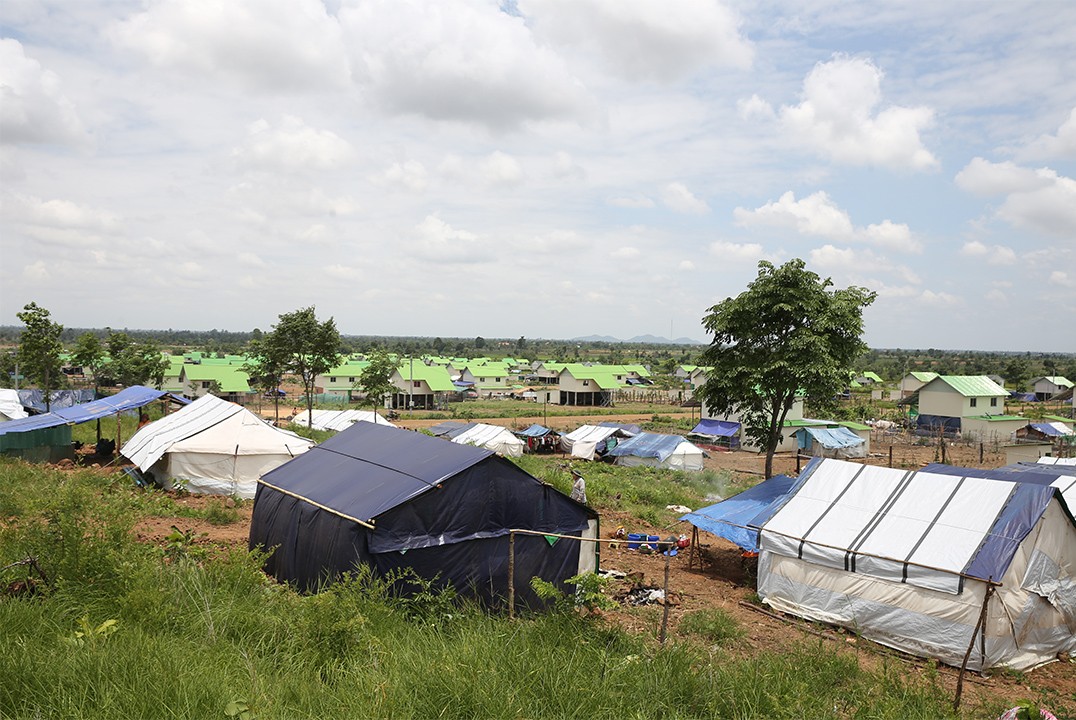
One year after the conflict erupted along the Cambodia-Thailand border, many families displaced by the fighting remain in a state of unfinished recovery. While those who once sheltered in tents have moved into temporary settlements, they continue to grapple with the physical, economic, and emotional scars of the violence. The memories of shelling still linger, and economic hardship and separation from family members are persistent challenges. Puth Sovoeun, a mother of three now living in a temporary settlement in Srah Kaev village, Pumgor commune, Oddar Meanchey province, no longer sleeps under canvas. However, she admits that every rumble of thunder across the sky brings back the terrifying sound of artillery. "The fear is still there," she said. "When I hear loud sounds, I remember the shelling." During the height of the conflict last year, tens of thousands of Cambodians fled their homes and sought refuge in evacuation camps. Ny Sopharan, operations director of World Vision International in Cambodia, noted that the initial humanitarian priorities were straightforward: providing food, clean water, shelter, and protection. The focus has now shifted to a longer, more complex task of rebuilding communities. World Vision has supported over 40,000 families across five provinces, focusing on health, nutrition, education, child protection, psychosocial support, and cash assistance. Government recovery efforts have also seen the construction of over 4,000 temporary houses in provinces like Oddar Meanchey, Banteay Meanchey, and Preah Vihear, providing safer accommodation for displaced families. However, humanitarian workers warn that leaving the camps does not signify complete recovery. Twenty schools and eight health facilities remain only partially operational, hindering children's education and access to healthcare. Many families are struggling to earn stable incomes after abandoning farms, businesses, and daily-wage jobs during the fighting. For Sovoeun, the greatest hardship is no longer escaping shellfire but living apart from her soldier husband, who remains stationed on the frontline. She fled with little more than a suitcase and her three children, leaving everything else behind. She used to work as a dishwasher but is now jobless. Her children also lost months of schooling due to the displacement. World Vision is working to help children return to education through temporary learning classes, distributing school supplies, and providing bicycles. They also offer psychosocial support and conduct mine risk education. Livelihood recovery programs, including cash assistance, kitchen gardening, and livestock initiatives, are in place to help households regain financial independence. Sopharan emphasizes that humanitarian recovery cannot end when people move out of camps. "Cash assistance helped families meet their immediate needs, but rebuilding livelihoods is what enables long-term recovery," he said. "When families have stable incomes, children's nutrition, education, and wellbeing improve." He also highlighted the critical need for psychosocial support to address the long-term emotional impacts of displacement. Local authorities acknowledge that psychological recovery remains a significant challenge. Vannadet, deputy governor of Samraong city, stated that many residents are still reluctant to return to relatively safe areas due to fresh memories of the conflict. "Some people can already go back, but many are still traumatized. Sometimes even hearing thunder makes them think shelling has started again," he explained. Authorities are collaborating with humanitarian organizations to improve housing, food security, and public services, while also encouraging communities to rebuild their confidence. 63-year-old In Sokha, who lost most of her belongings and property, now relies on government support, humanitarian aid, and a small vegetable garden. "I only want peace," she said. "I want to return." Source: Phnom Penh Post

0

Original source

Phnom Penh Post

原文を読む