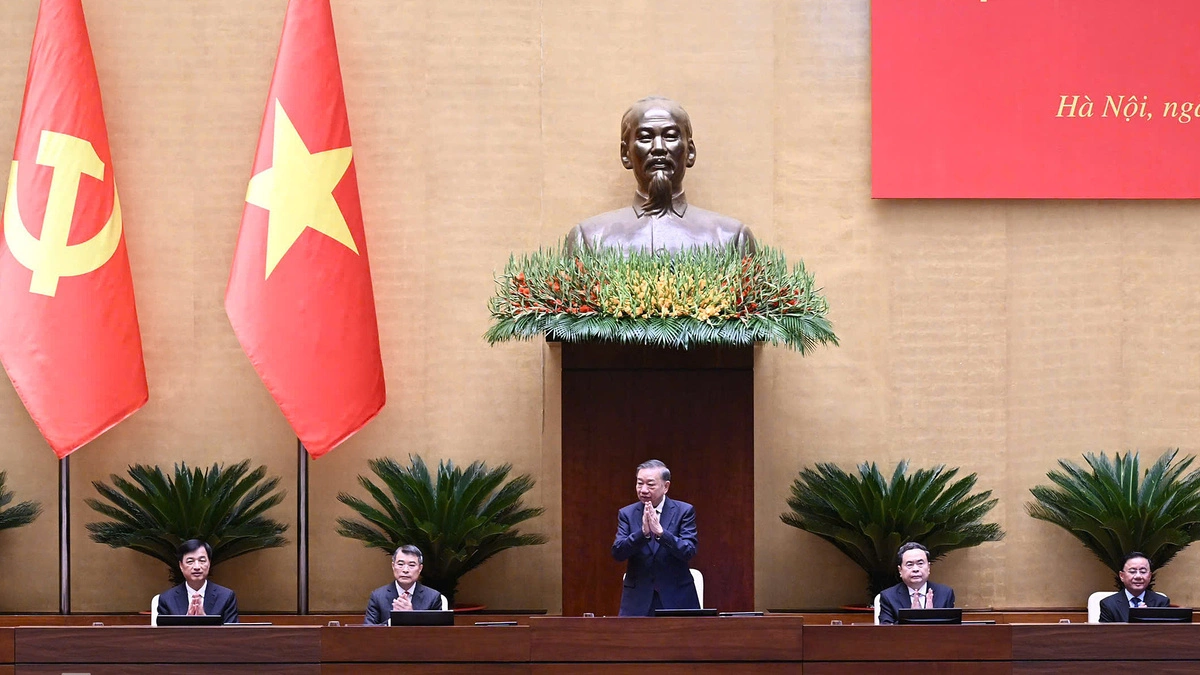
Vietnam Directs Early Completion of Public Servant Salary Reform Proposal
Politics
2026年7月1日
5
VnExpress

Vietnam Directs Early Completion of Public Servant Salary Reform Proposal

AI サマリー

Vietnam's Politburo and Secretariat have ordered the early completion of a salary reform proposal, aiming to provide adequate compensation for grassroots officials and attract highly specialized civil servants. This follows salary increases implemented from July 2024 and seeks to enhance incentives for professional roles.

Hanoi: The Politburo and the Secretariat have urged the early finalization of the salary reform proposal, with a particular focus on ensuring adequate compensation for grassroots officials and establishing mechanisms to attract highly specialized civil servants. According to conclusions presented by Mr. Nguyen Duy Ngoc, head of the Central Organization Commission, at a national conference on July 1, the Politburo and Secretariat tasked the Government Party Committee, in coordination with the Central Organization Commission and the Central Policy and Strategy Commission, with developing the proposal. The reform aims to create motivation for the cadre and civil servant team to develop professionally and contribute to the public sector long-term. It also seeks to provide adequate preferential policies for grassroots officials and establish preferential mechanisms and honor for experts and civil servants with deep professional expertise, ensuring consistency with regulations on positions, titles, and job roles. Resolution 27 of the Central Committee in 2018 set a goal to implement a unified new salary regime for officials, civil servants, and armed forces personnel from July 1, 2021. However, due to various impacts, notably the COVID-19 pandemic, the salary reform roadmap had to be postponed. The National Assembly later decided to implement a job-based salary payment system, replacing the salary coefficient, from July 1, 2024. However, numerous issues arose during implementation, making the abolition of the base salary and salary coefficient impossible at that time. The Government proposed, and the National Assembly approved, an increase in the base salary from VND 1.8 million to VND 2.34 million from July 1, 2024, with a further increase to VND 2.53 million from July 1, 2026. Under the new base salary, the lowest monthly salary for civil servants will be around VND 3.4 million, and the highest around VND 25.3 million. For public employees, salaries will range from approximately VND 3.8 million to VND 20.2 million per month. Furthermore, the Politburo and Secretariat instructed relevant agencies to develop guidelines for two aggregate economic indicators at the commune level: total product value on the spot and per capita income. Currently, the statistical compilation of these indicators is only performed at the provincial and national levels. Agencies are also tasked with researching mechanisms for rotating officials between communes and between provincial and commune levels to overcome human resource imbalances and inappropriate cadre deployment after mergers. The directive emphasizes resolutely correcting the phenomenon of selectivity in choosing working locations and positions. Additionally, the Politburo and Secretariat requested continued streamlining of internal organizational units, issuance of staffing norms, promotion of decentralization and delegation of power, and research into replicating the two-tier local government model in line with Hanoi's standards. Source: VnExpress

多角的分析

経済的影響

ベトナム政府は、公務員の士気向上と専門人材の確保を目的とした給与改革を急いでいる。これは、2024年7月から実施された給与基本額の引き上げに続く措置であり、専門職へのインセンティブ強化を通じて、公共部門の質的向上を目指すものと考えられる。改革の遅延は、COVID-19パンデミックの影響に加え、職務別給与体系への移行に伴う複雑な調整や、地方レベルでの経済指標の統一的な算出方法の確立といった課題に起因している。これらの課題を克服し、改革を成功させることは、ベトナム経済の持続的な成長、特に人的資本の高度化にとって不可欠である。

投資家心理

今回の給与改革は、直接的な外国直接投資(FDI)への影響は限定的である可能性が高いが、間接的にはベトナムのビジネス環境全体に影響を与えうる。公務員の待遇改善は、公共サービスや行政手続きの効率化につながる可能性があり、これは投資家にとってポジティブな要素となりうる。特に、高度専門人材の誘致メカニズムの構築は、公共部門におけるイノベーションや規制緩和の推進に寄与するかもしれない。しかし、改革の遅延や実施上の課題は、行政の不確実性を高め、投資判断に影響を与えるリスクも否定できない。ベトナム政府が、改革を通じて官僚機構の専門性と効率性を高められるかどうかが、長期的な投資環境の評価において重要となる。

社会的影響

給与改革は、地方公務員や専門職の待遇改善を通じて、公務員全体の士気向上と定着率の向上を目指すものである。これにより、地域社会における行政サービスの質の向上や、人材の不均衡是正が期待される。特に、合併後の行政組織再編や、特定の地域・職務を選り好みする傾向の是正は、公平な行政サービスの提供と、地域間の格差是正に繋がる可能性がある。しかし、改革の遅延は、公務員の不満を高め、行政への信頼に影響を与えるリスクも孕んでいる。また、地方レベルでの経済指標の統一的な算出方法の確立は、地域開発計画の策定や、住民の所得向上に向けた施策の効果測定において重要な意味を持つ。

市民の声

今回の給与改革は、公務員として働く人々の生活に直接的な影響を与える。特に、地方で働く公務員や、高度な専門知識を持つ人材は、より良い待遇を受けられる可能性がある。これにより、専門職としてのキャリアパスが明確になり、公共部門での長期的な勤務を希望する人が増えることが期待される。しかし、改革の実施が遅れることで、期待していた待遇改善が得られない公務員からは、不満の声も上がる可能性がある。また、地方レベルでの経済指標の統一的な把握は、地域住民の生活水準向上に向けた政策立案に役立つことが期待される。

背景・歴史的文脈

ベトナムの一党体制下では、公務員組織の効率性と忠誠心の維持が、国家運営の根幹をなす。給与制度改革は、1986年のドイモイ(刷新)政策以降、経済成長と並行して進められてきたが、特に2018年の決議27号以降、より包括的な改革が目指されてきた。しかし、COVID-19パンデミックや、職務別給与体系への移行に伴う複雑な調整、地方レベルでの経済指標の統一といった課題により、改革の実施は度々延期されてきた。今回の指示は、こうした遅延に対する党中央の強い意向を示すものであり、特に地方公務員や専門人材への待遇改善を通じて、公共部門の機能強化と社会全体の安定を図る狙いがある。

原文ソース

VnExpress

原文を読む