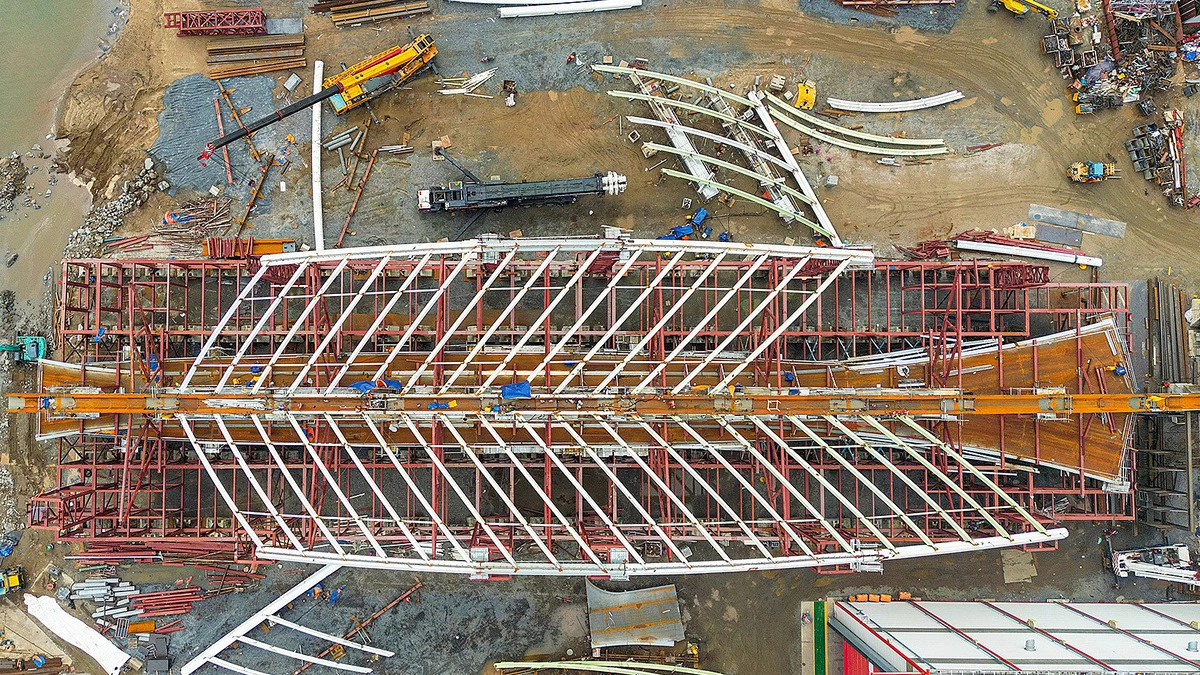
Coconut Leaf-Shaped Pedestrian Bridge Over Saigon River Nears Completion in HCMC
Ho Chi Minh City's new pedestrian bridge spanning the Saigon River, designed to resemble a distinctive coconut leaf, is nearing completion. The 720m-long bridge, with a total investment of nearly VND 1,000 billion (approx. $40 million USD), aims for installation by late August and opening on September 2nd.
The pedestrian bridge under construction across the Saigon River in Ho Chi Minh City features a unique design inspired by the coconut leaf, a symbol of Southern Vietnam. The main arch structure, measuring over 187 meters long and weighing 3,400 tons, is being assembled from dozens of steel segments and is slated for installation on the Saigon River by the end of August. Located between Ba Son Bridge and the Saigon River Tunnel, the project spans 720 meters in length, with a width ranging from 6 to 11 meters and a clearance of 10 meters above the water. The total investment for the project is nearly VND 1,000 billion (approximately $40 million USD), funded by Nutifood Nutrition Food Joint Stock Corporation. The architectural design, developed by a joint venture of Chodai, Takashi Niwa Architects, and Chodai Kisojiban Vietnam, won first prize in a design competition. The steel arch frame, designed to mimic the shape of a coconut leaf, is gradually taking shape when viewed from above. At the factory, the most challenging aspect has been the fabrication of the three-dimensional curves that form the coconut leaf shape, requiring precise alignment of each component before assembly. The plant utilizes CNC laser steel cutting systems and automatic welding machines to fabricate the bridge deck, minimizing warping during manufacturing. In confined spaces inaccessible to machinery, workers must enter narrow areas to weld hidden joints, adhering strictly to safety protocols. To ensure the progress of the 3,400-ton steel arch fabrication, the factory at one point mobilized around 500 engineers and workers to operate continuously for over two months. Upon completion, the 3,400-ton structure will be transported by specialized vehicles onto a 14,000-ton barge and moved to the central Ho Chi Minh City area for installation. The project is expected to be completed in time for National Day on September 2nd, connecting the two banks of the Saigon River and serving as a new public space and architectural highlight for the city center. Infrastructure development in Vietnam is a crucial pillar supporting its economic growth. Particularly in urban areas, projects aimed at alleviating traffic congestion and enhancing cityscapes are being prioritized. Such large-scale infrastructure projects also serve to attract foreign investment.
多角的分析
この歩道橋プロジェクトは、約1000億ドン(約6億円)という比較的大規模な投資であり、ベトナムの都市インフラ開発への積極的な姿勢を示している。特にホーチミン市のような経済の中心地では、交通渋滞の緩和、都市景観の向上、そして観光客誘致を目的としたプロジェクトが継続的に推進されている。Nutifoodという民間企業による資金提供は、PPP(官民連携)モデルの可能性や、企業の社会的責任(CSR)活動の一環としてのインフラ投資への関心の高まりを示唆している。このようなプロジェクトは、建設業だけでなく、関連する資材調達、物流、設計など、多岐にわたる経済活動を活性化させる効果も期待できる。
このプロジェクトへの民間資金の投入は、ベトナムのインフラ分野における投資機会の広がりを示唆している。特に、観光客誘致や都市の魅力向上に繋がる象徴的な建築物への投資は、長期的な資産価値向上に繋がる可能性がある。投資家は、同様の公共空間整備プロジェクトや、都市開発に関連する不動産開発への波及効果を注視する必要がある。ただし、ベトナムのインフラプロジェクトは、しばしば予期せぬ遅延やコスト超過のリスクを伴うため、慎重なデューデリジェンスが求められる。
ココナッツの葉を模したデザインは、南部の文化や自然を象徴するものであり、地域住民のアイデンティティや誇りを高める要素となり得る。完成すれば、市民の憩いの場や新たな観光スポットとして、人々の生活に彩りをもたらすだろう。一方で、建設中の騒音や交通への影響、そして完成後の維持管理費など、地域住民への直接的な影響も考慮されるべき点である。また、このような公共空間の整備は、都市部における格差問題や、開発による地域住民の生活様式の変化といった側面も内包している。
ホーチミン市民にとって、サイゴン川を渡るこの新しい歩道橋は、移動の利便性向上だけでなく、都市の景観を美しくする新たなランドマークとなることが期待されている。特に、完成予定が9月2日の独立記念日であることは、市民の愛国心や祝祭ムードを高める象徴的な意味合いを持つ。しかし、建設期間中の交通規制や騒音、そして完成後の混雑などが、市民生活に一時的な影響を与える可能性も考えられる。また、この橋が、市民が気軽に集まり、憩えるような公共空間として機能することが望まれている。
背景・歴史的文脈
ベトナムは、1986年のドイモイ政策以降、市場経済化を進め、目覚ましい経済成長を遂げてきた。この成長を支えるため、政府はインフラ整備を最重要課題の一つと位置づけ、道路、港湾、空港、そして都市部の交通網の拡充に力を入れている。特にホーチミン市のような大都市では、人口増加と経済活動の活発化に伴う交通渋滞が深刻な問題となっており、歩道橋や地下鉄などの整備が急務となっている。本件の歩道橋プロジェクトは、こうした背景のもと、都市の機能性向上と象徴的な景観創出を両立させる試みとして実施されている。民間企業の資金提供は、ベトナム政府が推進するPPPモデルの一例とも言える。
原文ソース
VnExpress