General articles are free for 24 hours after publish.
Cambodia's Higher Education Focuses on Tech and Language Skills Through Industry-Academia Partnerships
Cambodia's Ministry of Education emphasized the importance of students acquiring skills in technology, foreign languages, and problem-solving during a ceremony marking a partnership between Phnom Penh International University and Westline Education Group. This aligns with the government's strategy to develop human capital for future high-income nation status.
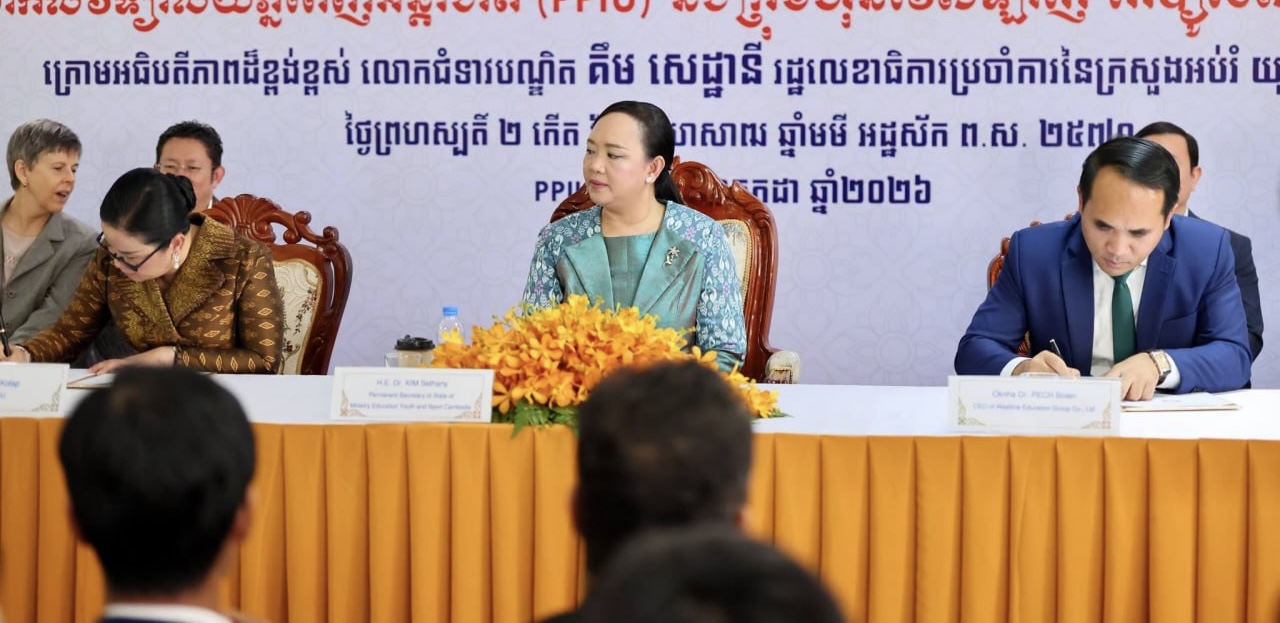
Acting Minister of Education, Youth and Sports, Dr. Kim Setany, urged students to continue striving in their studies and to foster a spirit of lifelong learning, particularly in enhancing their skills in technology, foreign languages, and problem-solving. She emphasized these as crucial elements for students to become strong pillars in the nation's future development towards becoming a high-income country. This guidance was given during a memorandum of understanding (MOU) signing ceremony between Phnom Penh International University (PPIU) and Westline Education Group (WEG) held on the afternoon of July 16, 2026. The agreement was signed by Dr. Tep Kolap, President of PPIU, and Oknha Dr. Pich Bolen, Chairman and CEO of WEG, officially confirming their strategic partnership. The collaboration will focus on areas such as academic credit recognition, curriculum development, organizing workshops for students, and providing scholarships. Dr. Setany praised the efforts of both institutions, noting that the event reflects the progress of Cambodia's education sector and the integration of its private education system, aligning with the government's 'Pentagon Strategy Phase 1' which prioritizes human capital development. She further encouraged the management and teams of both institutions to ensure continuous monitoring, evaluation, and joint development mechanisms so that this two-year MOU can serve as a successful model for other educational institutions. Source: AKP Khmer
多角的分析
カンボジア政府は、経済発展の原動力として人的資本の強化を最優先課題としており、特に技術革新とグローバル化に対応できる人材育成に注力している。今回の産学連携は、高等教育機関と民間企業が連携し、実践的なスキルを習得させることで、将来的な労働市場のニーズに応え、経済成長を加速させる狙いがある。これは、ASEAN地域における技術集約型産業への移行を目指すカンボジアの長期的な経済戦略とも整合している。
教育分野への投資は、長期的な視点で見れば、カンボジアの将来的な経済成長と労働力の質向上に繋がるため、投資家にとって魅力的な要素となり得る。特に、PPIUとWEGのような国際的な連携は、教育の質と国際的な通用性を高め、国内外からの学生誘致や、卒業生のグローバルな活躍の可能性を広げる。これは、カンボジアの人的資本への投資リスクを低減させ、より安定した経済成長への期待を高める材料となるだろう。
今回の連携は、カンボジアの若者が、将来のキャリアに必要な技術や語学能力を、より実践的な形で習得できる機会を増やすことを意味する。特に、地方出身者や経済的に困難な状況にある学生にとって、奨学金制度や質の高いカリキュラムへのアクセスは、教育格差の是正と社会階層の上昇に繋がる可能性がある。一方で、教育の質が都市部と地方で依然として差がある場合、新たな格差を生む可能性も否定できない。
カンボジア市民、特に学生やその保護者にとっては、将来の就職機会の拡大と所得向上への期待が高まる。大学と企業が連携することで、より実社会で求められるスキルを身につけられることは、卒業後のキャリアパスをより確実なものにするだろう。しかし、教育費の高騰や、連携プログラムへのアクセスが限られる場合、一部の市民には恩恵が行き渡らない可能性も懸念される。
背景・歴史的文脈
カンボジア政府は、長年にわたり経済発展と国民生活の向上を最重要課題として掲げている。特に、1990年代以降の経済自由化と民主化の進展に伴い、人的資本の育成が国家競争力強化の鍵であると認識されてきた。2010年代以降、政府は「五角戦略」を策定し、教育、保健、インフラ整備、雇用創出、経済成長を柱としてきた。今回の教育省と私立大学、教育企業の連携は、この戦略の具体化であり、特に技術革新が進む現代社会に対応できる人材育成を目指す動きとして位置づけられる。これは、中国からの経済的影響力が増大する中で、カンボジアが自国の経済的・技術的基盤を強化しようとする試みとも解釈できる。
原文ソース
AKP Khmer