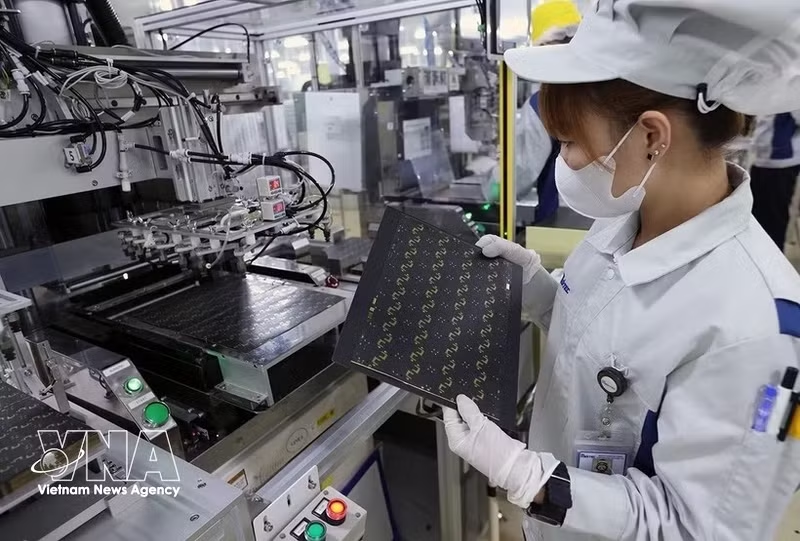
Vietnam Business Confidence Rebounds Amid Global Uncertainties: UOB
Business
2026年7月5日
4
VietnamPlus English

Vietnam Business Confidence Rebounds Amid Global Uncertainties: UOB

AI サマリー

Vietnamese business sentiment is showing a strong rebound, defying a challenging operating environment of rising costs and global uncertainties, according to a UOB study. Technology is noted as a key driver bolstering growth confidence among SMEs.

Business sentiment in Vietnam is rebounding strongly despite a challenging operating environment marked by rising costs and growing global uncertainties, including prolonged geopolitical tensions and trade-related pressures, according to the recently released Business Outlook Study 2026 by the United Overseas Bank (UOB). The study indicates that Vietnamese businesses maintain an optimistic outlook for the future, even as they acknowledge the challenges they face. Notably, the adoption of technology is identified as a key factor bolstering growth confidence among small and medium-sized enterprises (SMEs). Resolution 68 is also seen as a catalyst, boosting investor confidence in Vietnam’s long-term outlook. This policy, aimed at enhancing the business environment, likely contributes to the positive sentiment. Vietnam's economy, managed under a one-party system, has continued its state-led growth trajectory, demonstrating resilience even amidst global economic slowdowns and the repercussions of US-China trade tensions. The country has solidified its position as a manufacturing hub, actively attracting foreign direct investment (FDI), which has been a primary driver of its economic performance. However, Vietnam also grapples with challenges such as inflationary pressures and supply chain vulnerabilities. The UOB study's findings suggest that Vietnamese enterprises are adapting flexibly to these external shifts, leveraging domestic policy support and technological advancements to pursue sustainable growth. The emphasis on technology adoption by SMEs, in particular, highlights their efforts to enhance competitiveness and contribute to the overall strengthening of the domestic economy.

多角的分析

経済的影響

ベトナム経済は、グローバルなサプライチェーン再編の恩恵を受け、製造業を中心に堅調な成長を続けている。しかし、インフレ圧力の継続や、世界経済の不確実性が輸出に与える影響は無視できない。Resolution 68のような国内政策による投資環境の改善は、こうした外部リスクを緩和し、企業が長期的な成長戦略に集中できる基盤を提供する。テクノロジー導入による生産性向上は、コスト上昇を吸収し、競争力を維持するための重要な鍵となる。

投資家心理

ベトナムの投資環境は、Resolution 68のような国内政策による後押しと、地政学的リスクの顕在化という二律背反の状況にある。投資家は、ベトナムの長期的な成長ポテンシャルを評価する一方で、グローバルな不確実性による短期的な変動リスクにも注意を払う必要がある。特に、テクノロジー分野への投資は、中小企業の成長を牽引する可能性があり、注目すべきセクターと言える。

社会的影響

ベトナムの中小企業がテクノロジー導入に意欲的であることは、デジタル化が社会全体に浸透しつつあることを示唆している。これは、地方の雇用創出や、地域間の経済格差是正にも繋がりうる。一方で、テクノロジーへのアクセスやスキルの格差が、新たな社会的分断を生む可能性も孕んでいる。Resolution 68のような政策が、中小企業のデジタル変革をどれだけ支援できるかが、社会的な包摂性を高める上で重要となる。

市民の声

ベトナム国民、特に中小企業で働く人々にとって、企業景況感の回復は雇用機会の安定や所得向上に直結する。テクノロジーの活用が進むことで、より効率的な働き方や新たなスキル習得の機会が生まれる可能性がある。しかし、コスト上昇は依然として生活費に影響を与えており、企業がその負担をどこまで吸収できるかが、一般市民の生活実感に大きく関わってくる。

背景・歴史的文脈

ベトナムは、1986年のドイモイ政策以降、計画経済から市場経済への移行を進め、一貫して高い経済成長を遂げてきた。特に、製造業への外国直接投資(FDI)誘致に成功し、グローバルサプライチェーンにおける重要な一翼を担うようになった。近年は、米中貿易摩擦や地政学的な緊張の高まりを受け、サプライチェーンの多様化を目指す企業がベトナムに注目している。Resolution 68は、こうした外部環境の変化に対応し、国内投資を促進し、経済の持続的成長を確実にするための政策パッケージとして導入された。

原文ソース

VietnamPlus English

原文を読む