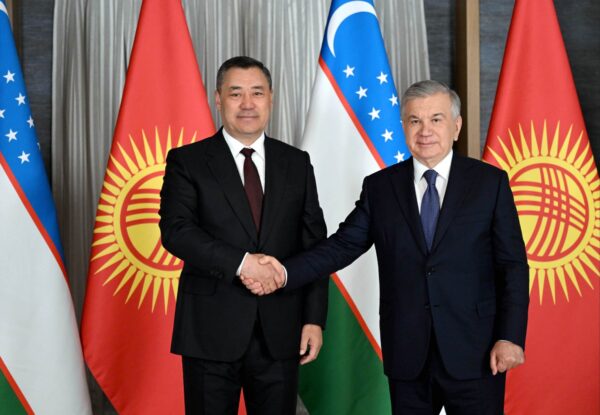
Uzbekistan-Kyrgyzstan Land Swaps Reshape Border Politics
Politics
2026年6月29日
5
The Diplomat Indonesia

Uzbekistan-Kyrgyzstan Land Swaps Reshape Border Politics

AI サマリー

Uzbekistan and Kyrgyzstan are adopting a new approach to resolving long-standing border issues through land swaps. The recent transfer of the Chongara and Tash-Tobo enclaves to Kyrgyzstan symbolizes this shift, aiming for increased regional cooperation and connectivity.

A region once associated with security crises, mined frontiers, and closed border crossings is increasingly characterized by negotiation, pragmatic compromise, and regional connectivity. The recent transfer of the Chongara and Tash-Tobo enclaves from Uzbekistan to Kyrgyzstan exemplifies a new approach to resolving long-standing border issues through land swaps, signaling a broader transformation beyond mere border adjustments. Following the dissolution of the Soviet Union, administrative boundaries became international borders, turning the Fergana Valley into one of Central Asia’s most complex border regions, marked by numerous enclaves and disputed segments. These enclaves created not only administrative challenges but also recurring tensions between Tashkent and Bishkek over access, security, and interethnic relations. This began to change after Shavkat Mirziyoyev came to power in 2016. Repairing relations with neighboring states became a key priority of Uzbekistan’s foreign policy. Political dialogue with Kyrgyzstan was revived, long-closed border crossings reopened, and long-standing border disputes returned to the negotiating table. Border issues gradually shifted from being viewed solely through a security lens to being addressed through mutual concessions, land swaps, and regional connectivity. The comprehensive border agreement signed between Uzbekistan and Kyrgyzstan in November 2022 marked a turning point. This agreement delimited most of their nearly 1,400-kilometer shared border, resolving many uncertainties and reaching mutually acceptable compromises, including on the Kempir-Abad Reservoir. The agreement went well beyond a technical exercise in border delimitation. Provisions on land swaps and the management of shared water resources demonstrated that both sides were prepared to resolve long-standing disputes through political will and mutual concessions. Ratification by both countries further underscored Tashkent and Bishkek’s ability to settle issues that had remained unresolved for decades. Nevertheless, the 2022 agreement did not resolve every issue. Although most uncertainties over the border had been eliminated, the future of the enclaves in the Fergana Valley remained an open question. The subsequent cases of Barak, Chongara, and Tash-Tobo demonstrated that Tashkent and Bishkek had begun addressing these thorny questions through negotiation and mutual compromise. A concrete application of this new approach was seen in the 2024 land swap agreement concerning Barak, Kyrgyzstan’s only enclave within Uzbekistan. Barak was transferred to Uzbekistan, and its residents were relocated to a new settlement in Kyrgyzstan’s Osh Region. In this way, the two countries resolved a long-standing enclave issue through mutual agreement, relocation, and a land swap. Following Barak, the second major example of this approach emerged in Chongara and Tash-Tobo. The Kyrgyz authorities announced in late June that the two enclaves, previously under Uzbekistan’s administration, had officially come under Kyrgyz jurisdiction. This time, however, the solution did not involve relocation. Instead, the enclaves will be directly integrated into Kyrgyzstan’s administrative system. Once the registration process is completed, the approximately 2,500 ethnic Kyrgyz residents will receive Kyrgyz citizenship. In return, Kyrgyzstan will transfer an equivalent area of land to Uzbekistan. The agreement extends beyond changing the status of the enclaves themselves. The two sides also agreed to an additional land swap to facilitate the construction of a new transport corridor between the villages of Sai and Tayan. As a result, the distance between settlements in the Batken region will be reduced from approximately 225 kilometers to just 55 kilometers. In this sense, the Chongara and Tash-Tobo agreement reflects not simply the redrawing of borders, but a new approach aimed at improving everyday life in border regions and strengthening regional connectivity. At the same time, larger Uzbek enclaves such as Sokh and Shakhimardan have different dynamics because of their population size, geography, and strategic significance. For that reason, it is difficult to assume that the solutions applied in Barak or Chongara and Tash-Tobo can be replicated there in the same way. Nevertheless, a region once associated with security crises, mined frontiers, and closed border crossings in the early 2000s is increasingly characterized by negotiation, pragmatic compromise, and regional connectivity. The map has largely remained the same; what has changed is the way Tashkent and Bishkek approach this complex borderland. Source: The Diplomat Indonesia

多角的分析

経済的影響

土地交換による国境紛争の解決は、経済的な安定と地域間の貿易促進に寄与する。国境付近のインフラ整備や輸送ルートの改善は、物流コストの削減と経済活動の活性化につながる。特に、新たな輸送回廊の建設は、バトケン地域のような辺境地域の経済発展を促進する可能性がある。また、飛び地住民の生活改善は、地域経済への貢献や消費の拡大にもつながるだろう。

投資家心理

この種の国境問題の平和的解決は、投資家にとってリスク低減要因となる。紛争リスクの低下は、中央アジア地域全体の投資環境を改善する。特に、インフラ開発や地域間接続性強化に関連するプロジェクトへの投資機会が増加する可能性がある。ただし、飛び地の管理や住民移転に伴うコスト、および将来的なさらなる土地交換の可能性については、引き続き注視が必要である。

社会的影響

長年の国境問題は、飛び地住民の日常生活に深刻な影響を与えてきた。バラク住民の移転や、チョンガラ・タシュ・トボ住民のキルギス市民権取得は、彼らの移動の自由や行政サービスへのアクセスを改善する。これにより、民族間の緊張緩和にもつながる可能性がある。しかし、ソフなどの大規模な飛び地では、人口規模や地理的要因から、同様の解決策の適用が困難であり、住民の不安が残る可能性も否定できない。

市民の声

今回の土地交換は、国境付近に住む市民の生活に直接的な影響を与える。バラク住民のように、長年の孤立と移動の困難から解放され、より良い生活環境を得られるケースがある。また、チョンガラ・タシュ・トボの住民は、キルギス市民権を得ることで、行政サービスや社会保障へのアクセスが改善される。しかし、大規模な飛び地住民にとっては、将来的な生活や権利に関する不確実性が残る場合もある。

背景・歴史的文脈

ソ連崩壊後、旧ソ連の行政区画がそのまま国境線となったことで、中央アジア、特にフェルガナ盆地には多数の飛び地と係争地域が生じた。これらの地域は、住民の移動、物資の供給、治安維持において複雑な問題を引き起こし、ウズベキスタンとキルギスの間には長年にわたり緊張関係が存在した。2016年以降、ウズベキスタンが近隣諸国との関係改善を外交政策の柱としたことで、境界問題の平和的解決に向けた対話が本格化した。2022年の包括的国境合意を経て、2024年にはバラク、チョンガラ、タシュ・トボといった飛び地を対象とした土地交換が実現し、紛争解決の新たなモデルケースとなっている。

原文ソース

The Diplomat Indonesia

原文を読む