General articles are free for 24 hours after publish.
China's Governance Model Discussed in Laos: Experts Highlight 'Self-Reform'
A lecture for international journalists in Laos highlighted "self-reform" and "anti-corruption" as key to China's long-term governance. Experts urged understanding China's system within its own context, not solely against Western models, and explained achievements like poverty eradication.
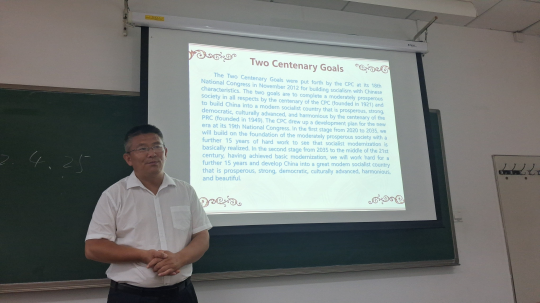
A lecture for international journalists in Laos featured insights into China's governance model, according to KPL Laos News. Professor Han Donglin of Renmin University of China stated that China's political system should be understood through its own historical and institutional context, rather than solely measured against Western democratic models. The professor emphasized that institutional self-reform and anti-corruption are central pillars of China's approach to long-term governance. "Continuous self-correction is essential to maintaining public trust and political stability," he argued. The lecture was part of the 2026 Asia-Pacific Media Partnership (APMP) program. Attending international journalists also learned about China's people-centered approach to poverty alleviation, with experts outlining the policies and economic reforms that enabled the country to eliminate absolute rural poverty. A tour of JD.com's headquarters provided insights into the company's transformation from a small electronics retailer into one of China's largest e-commerce and technology firms. This discourse suggests the interest in China's governance ideology and development model within Laos, a nation maintaining a socialist one-party system and prioritizing relations with China and Vietnam. Laos is currently navigating economic challenges including reliance on infrastructure development, external debt, and increasing economic influence from China. Insights from China's governance experience may hold relevance for future policy decisions in Laos.
Original source
KPL Laos News