Vietnam's Gasoline Prices Rise Amid Global Energy Market Fluctuations
Politics
2026年7月23日
3
VnExpress

General articles are free for 24 hours after publish.

Vietnam's Gasoline Prices Rise Amid Global Energy Market Fluctuations

Share
AI Summary

Vietnam has seen a price hike of approximately 900 VND per liter for gasoline, influenced by global energy market volatility and escalating tensions in the Middle East. E10 RON 95-III now costs 21,430 VND. The government is utilizing the price stabilization fund to mitigate the impact.

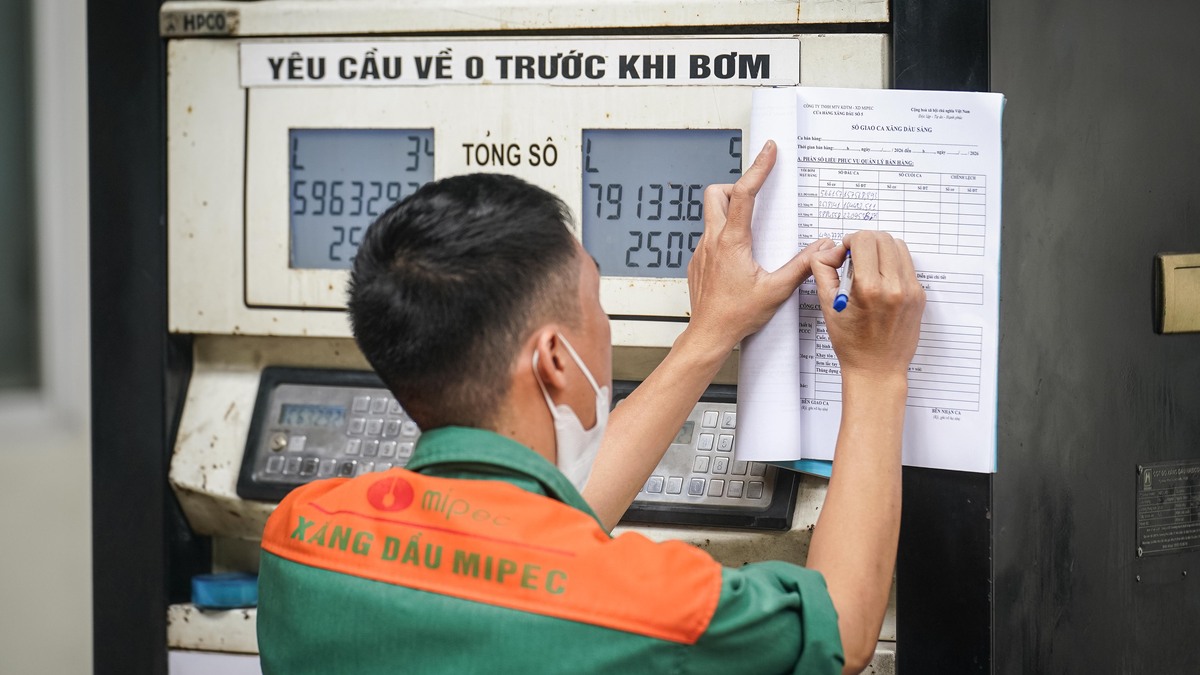
Effective from 3 PM today, gasoline and oil prices in Vietnam have increased by VND 880 to VND 2,440 per liter/kg, reflecting global energy market fluctuations. The Ministry of Industry and Trade and the Ministry of Finance jointly stated that recent global energy market trends show an upward movement due to escalating conflicts between the US and Iran, and the Houthi group's declaration of blockading sea lanes in the Red Sea. These factors have led to a surge in international oil prices. Specifically, RON 95 used for E10 RON 95 increased by 11.4% to USD 115.5 per barrel, diesel oil rose by 10.8% to USD 150.9 per barrel, and mazut (heavy fuel oil) climbed by 12.3% to USD 546.3 per ton. Following the adjustments, E10 RON 95-III now costs VND 21,430 per liter, an increase of VND 880. E5 RON 92 is priced at VND 20,880 per liter, up by VND 1,060. Similarly, diesel oil and mazut prices have risen by VND 1,110-2,440 per liter/kg, with diesel oil at VND 25,760 per liter and mazut at VND 15,560 per kg. The regulatory bodies have decided to continue drawing from the price stabilization fund. The fund will contribute VND 1,000 per liter for bio-gasoline, VND 1,500 per liter for diesel oil, and VND 1,000 per kg for mazut to help cushion the price increase. Nearly two months after E10 gasoline became widely available, a representative from the Ministry of Industry and Trade noted a gradual decrease in consumer feedback regarding this fuel type. The ministry assures that fuel samples are stored at all stages, from central depots to retail outlets. In case of any irregularities after using E10, relevant agencies can inspect these samples and compare them against current standards to assess fuel quality throughout the supply chain. Source: VnExpress

0

Original source

VnExpress

原文を読む