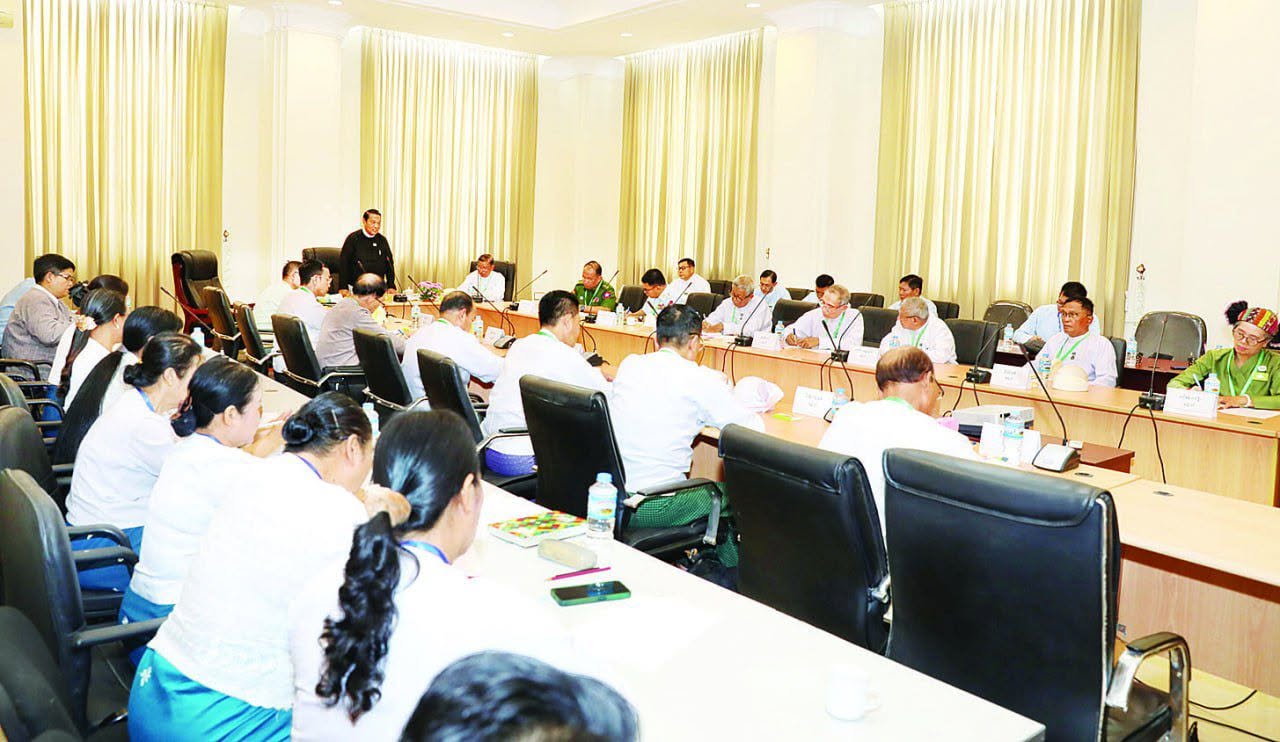
Speaker of the Pyithu Hluttaw says a system should be considered to be established by incorporating ethnic languages from basic education, which will lead to friendship and peace among ethnic groups
It should be considered to establish a system that will lead to friendship and peace among ethnic groups by incorporating ethnic languages from basic education, said Speaker of the Pyithu Hluttaw U Khin Ri. On July 8, Sp
It should be considered to establish a system that will lead to friendship and peace among ethnic groups by incorporating ethnic languages from basic education, said Speaker of the Pyithu Hluttaw U Khin Ri. On July 8, Speaker of the Pyithu Hluttaw U Khin Ri said this while meeting with members of the Education Promotion Committee at the Pyithu Hluttaw Office (I-13) along with officials from the Pyithu Hluttaw Office. The Speaker of the Pyithu Hluttaw said that he saw that the committee had prepared in detail its objectives, future work plans, and strategic goals. He said that the activities of our Hluttaw are extensive, so the committees must work with goals to assist the Hluttaw. He said that the committees are the pillars of the Hluttaw, and the success and progress of the Hluttaw's objectives depend on the committees. He said that education is important for the development of the country, so he wants the Education Promotion Committee to conduct extensive deliberations in carrying out its duties. He said that regarding education, efforts must be made to strengthen the foundation of the basic education system. Among the existing laws, there are nine laws related to the Education Promotion Committee, and the committee must review these laws and work on them according to priority. Among these laws, the National Education Law of 2014 must be prioritized for review and efforts must be made to make it an education law that is in line with the current situation. Regarding education, the state is prioritizing the education of all school-aged children, and the Hluttaw is asking questions and submitting proposals to conduct school surveys so that those who are out of school can continue their education. He further said that we must work together to develop Technical and Vocational Education and Training (TVET), which connects education with the workplace and is truly needed for the development of the country. He further said that it should be considered to establish a system that will lead to friendship and peace among ethnic groups by incorporating ethnic languages from basic education. He said that he was pleased to learn that this committee is working to enact comprehensive laws regarding the rights of teachers and school violence. He urged that the Hluttaw, along with the state, should work together to bring about a shift in the education sector. The Speaker of the Pyithu Hluttaw said that he wants the Education Promotion Committee to analyze the current situation and do its best in the most delicate ways.
多角的分析
直接の経済ニュースではありませんが、治安と司法の信頼は地域経済の土台です。職場での暴力や未成年者保護への不安が強まると、夜間営業、観光、雇用、地域サービス業のリスク認識が高まります。
投資家目線では、個別事件よりも法執行の予見可能性が焦点です。加害者への対応が曖昧になれば、ローカルビジネスの統治リスクや従業員保護の弱さとして評価されやすくなります。
ミャンマーの現場では、教育を「個人間の事件」で片づけず、誰が守り、誰が説明するのかを可視化する圧力が強まります。関係者の動きは、被害者側が孤立しやすい環境で、沈黙より手続きを選ぶための足場になります。
市民にとっては、自分や家族が被害に遭った時に公正な手続きへアクセスできるのかが最大の関心です。地域団体が声を上げることで、事件の風化を防ぎ、被害者側の孤立を和らげる意味があります。
背景・歴史的文脈
このニュースは、ミャンマーの地域社会で法の支配と弱者保護がどこまで機能しているかを映す事案です。暴力事件そのものに加え、女性団体や市民社会が司法手続きを求めて声を上げている点が重要です。軍政下では警察・司法への信頼が揺らぎやすく、個別事件が地域の不安や統治への不信に直結します。
原文ソース
Eleven Media