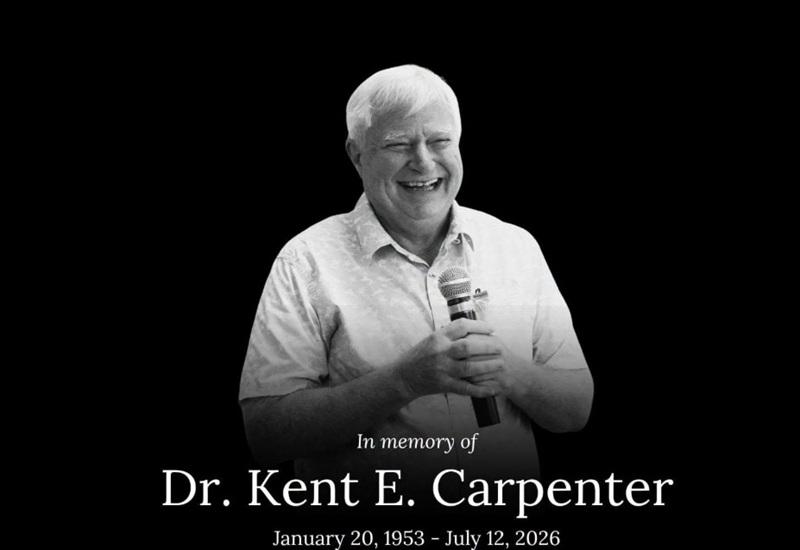
Tributes, Call for Justice Pour In for Slain Marine Biologist Kent Carpenter
Environment
2026年7月15日
5
GMA News Philippines

Tributes, Call for Justice Pour In for Slain Marine Biologist Kent Carpenter

AI サマリー

The shooting death of renowned marine biologist Kent Carpenter has sent shockwaves through the scientific community. Dr. Carpenter, known for his pioneering work on coral reef ecology, was a strong advocate for the protection of the Verde Island Passage. Colleagues are calling for a thorough investigation and a continuation of his conservation efforts.

The shooting death of renowned marine biologist Kent Carpenter has sent shockwaves through the marine science community. "It was through Dr. Carpenter's work that the Philippines earned the acclaim of being the 'center of the center of marine shore fish biodiversity,'" said the UP Marine Science Institute in a statement. Carpenter, the Institute said, was an advocate for the designation of the Verde Island Passage (VIP) as a National Protected Area and a UNESCO World Heritage Site. In a separate statement, Protect VIP lead convenor Fr. Edwin Gariguez said, "Dr. Kent Carpenter dedicated his life to revealing the extraordinary richness of the Verde Island Passage to the world. His work reminded us that the Philippines carries a global responsibility to protect this irreplaceable marine treasure.” He called on authorities to conduct a thorough investigation into the shooting incident. “As we mourn his passing, we reaffirm our commitment to the cause that Dr. Carpenter championed: protecting the Verde Island Passage and all of our country’s biodiverse ecosystems and all communities who defend and rely on them,” said Gariguez. Silliman University (SU), where Carpenter was a research associate, said "We join his family, colleagues, students, and the international scientific community in mourning the loss of an exceptional scientist whose life’s work advanced the understanding and conservation of marine biodiversity around the world." According to the university, Carpenter maintained a close relationship with SU for nearly five decades. His collaboration with the University began in 1976 when he worked alongside the late National Scientist Dr. Angel C. Alcala and fellow marine scientists in pioneering studies on the rich marine ecosystems of the Philippines. Among his most significant recent contributions was his leadership of the Albatross Re-Collection Project, a landmark evolutionary genomics research initiative that revisits the historic collections of the U.S. Fish Commission Steamer Albatross, which surveyed Philippine waters more than a century ago. Working with Silliman researchers, Carpenter conducted studies addressing contemporary environmental challenges, including coral reef conservation, fisheries management, and marine pollution. His work on the ecology and fisheries of rabbitfish (Siganus fuscescens), including investigations into the impacts of microplastics on marine organisms in Negros Oriental, exemplified his commitment to producing science that directly informs conservation and sustainable resource management. The Department of Agriculture - Bureau of Fisheries and Aquatic Resources (DA-BFAR) said that Carpenter's work "will continue to shape how we care for our seas, and his legacy will live on in every scientist he mentored, every ecosystem he helped safeguard, and every life he touched with quiet integrity." "Our deepest sympathies to his family, friends, and all who were blessed to know him. The ocean is richer because of him, and the world is better because he walked it." The UP Marine Institute also said that Carpenter also served as a scientific advisor to the Philippines during the arbitration case for the South China Sea, as he provided reports, testimonials, satellite imagery, and video evidence on the state of coral reefs in the area. He also worked on the Tubbataha Reefs Natural Park as he joined fish surveys and published papers on the area since 2018.

多角的分析

経済的影響

カーペンター氏の研究は、フィリピンの海洋生物多様性が持つ経済的価値、特に漁業資源やエコツーリズムの可能性を浮き彫りにしていた。ベルデ島海峡のような生物多様性のホットスポットの保全は、持続可能な漁業や観光業を通じて地域経済に直接貢献する。彼の死は、こうした貴重な海洋資源の保全活動への影響だけでなく、フィリピンの海洋経済の将来に対する懸念も引き起こす可能性がある。過去には、環境保護活動家や科学者が、開発プロジェクトや違法漁業など、経済的利害が絡む問題に反対する中で標的となる事例が報告されており、今回の事件も同様の文脈で捉えられる可能性がある。

投資家心理

カーペンター氏の研究は、フィリピンの海洋生態系の価値を科学的に裏付け、持続可能な開発や環境保全への投資を促す根拠となっていた。特に、ベルデ島海峡のような地域は、エコツーリズムや海洋バイオテクノロジー分野での投資機会を提供する可能性がある。彼の死は、こうした地域における環境リスクの増大を示唆し、潜在的な投資家にとって不確実性を高める要因となり得る。国際的な環境保護団体や、ESG投資を重視するファンドは、フィリピンの海洋保全への取り組みとその安全性を注視するだろう。

社会的影響

カーペンター氏の活動は、ベルデ島海峡周辺の地域社会にとって、生計を立てるための漁業資源の持続可能性や、自然災害からの保護といった生活の根幹に関わる問題であった。彼の死は、地域住民に深い悲しみをもたらすとともに、彼らが長年守ってきた環境が脅かされることへの不安を増大させる。また、彼は科学者として、地域住民や学生に環境保全の重要性を伝え、次世代の育成にも貢献していた。彼の不在は、教育や啓発活動の停滞を招く可能性があり、地域社会における環境意識の維持・向上に対する課題を提起している。

市民の声

カーペンター博士の死は、フィリピン国民、特に海洋資源に依存する沿岸コミュニティの生活と将来に暗い影を落としている。博士が長年守ろうとしたベルデ島海峡は、多くの漁師や地域住民にとって貴重な収入源であり、生態系の豊かさは彼らの生活基盤そのものである。博士の研究は、これらの資源が将来にわたって持続可能であることを示し、地域経済の安定に貢献するものであった。彼の無念の死は、単なる科学者の喪失にとどまらず、彼らが依存する海洋環境の安全と、その保全活動の将来に対する不安を国民に抱かせている。過去、環境保護活動家が脅迫や暴力の対象となる事件がフィリピンで発生しており、市民は同様の懸念を抱かざるを得ない。

背景・歴史的文脈

ケント・カーペンター博士は、フィリピンの海洋生物多様性、特にサンゴ礁生態学における世界的な権威であった。1970年代からフィリピンで研究活動を開始し、シレマン大学の故アンヘル・C・アルカラ博士らと共に、フィリピンの豊かな海洋生態系に関する先駆的な研究を行った。彼の長年の研究は、フィリピンが海洋生物多様性の「中心地の中枢」であるという認識を確立する上で決定的な役割を果たした。特に、ベルデ島海峡の生物多様性の豊かさを世界に示し、同海峡の国立保護区およびユネスコ世界遺産への登録を強く提唱していた。また、南シナ海におけるフィリピンの仲裁裁判において、サンゴ礁の状態に関する科学的証拠を提供するなど、国家的な課題にも貢献していた。近年では、1世紀以上前の調査に基づく進化ゲノミクス研究プロジェクトを主導するなど、最先端の研究にも取り組んでいた。彼の研究は、環境保全、漁業管理、海洋汚染といった喫緊の課題に対する科学的知見を提供し、持続可能な資源管理に貢献してきた。彼の突然の死は、フィリピンの海洋保全活動と科学研究コミュニティに大きな損失をもたらした。

原文ソース

GMA News Philippines

原文を読む